
Arizona Compression Fracture Treatment Guide
When Your Back Pain Might Be More Than a Muscle Strain
Compression fracture treatment in Arizona is available across the Greater Phoenix Area — and getting the right care early can make a major difference in your recovery.
Here’s a quick overview of your main treatment options:
| Treatment Type | What It Is | Best For |
|---|---|---|
| Conservative care | Rest, bracing, pain medication | Mild to moderate fractures |
| Physical therapy | Core strengthening, posture work | Ongoing recovery and prevention |
| Vertebroplasty | Bone cement injected into fractured vertebra | Stable fractures with severe pain |
| Kyphoplasty | Balloon inflates to restore height, then cement fills space | Fractures with height loss or kyphosis |
| Surgical referral | Fusion, instrumentation for severe instability | Neurological deficits, major trauma |
Back pain is easy to dismiss. You might assume it’s a pulled muscle or just part of getting older. But sudden, sharp back pain — especially after a minor fall or everyday activity — can be a sign of something more serious: a vertebral compression fracture.
These fractures are far more common than most people realize. Over 750,000 Americans suffer one every year, yet only one-third are ever properly diagnosed. Many people live with undiagnosed fractures for months, their pain written off as general back strain.
Left untreated, a compression fracture can lead to loss of height, a hunched posture, chronic pain, and an increased risk of future fractures. In fact, having one osteoporotic compression fracture raises your risk of another by fivefold.
The good news? With the right diagnosis and treatment plan, most people recover well — and many minimally invasive options exist that can relieve pain quickly with very little downtime.
I’m Dr. Nasser, a double board-certified PM&R and pain medicine physician with advanced training in minimally invasive spine interventions, including vertebroplasty and kyphoplasty for compression fracture treatment in Arizona. At Pain Arizona, I work with patients across the Greater Phoenix Area to find the root cause of their pain and build a plan that actually works.
What is a Vertebral Compression Fracture?
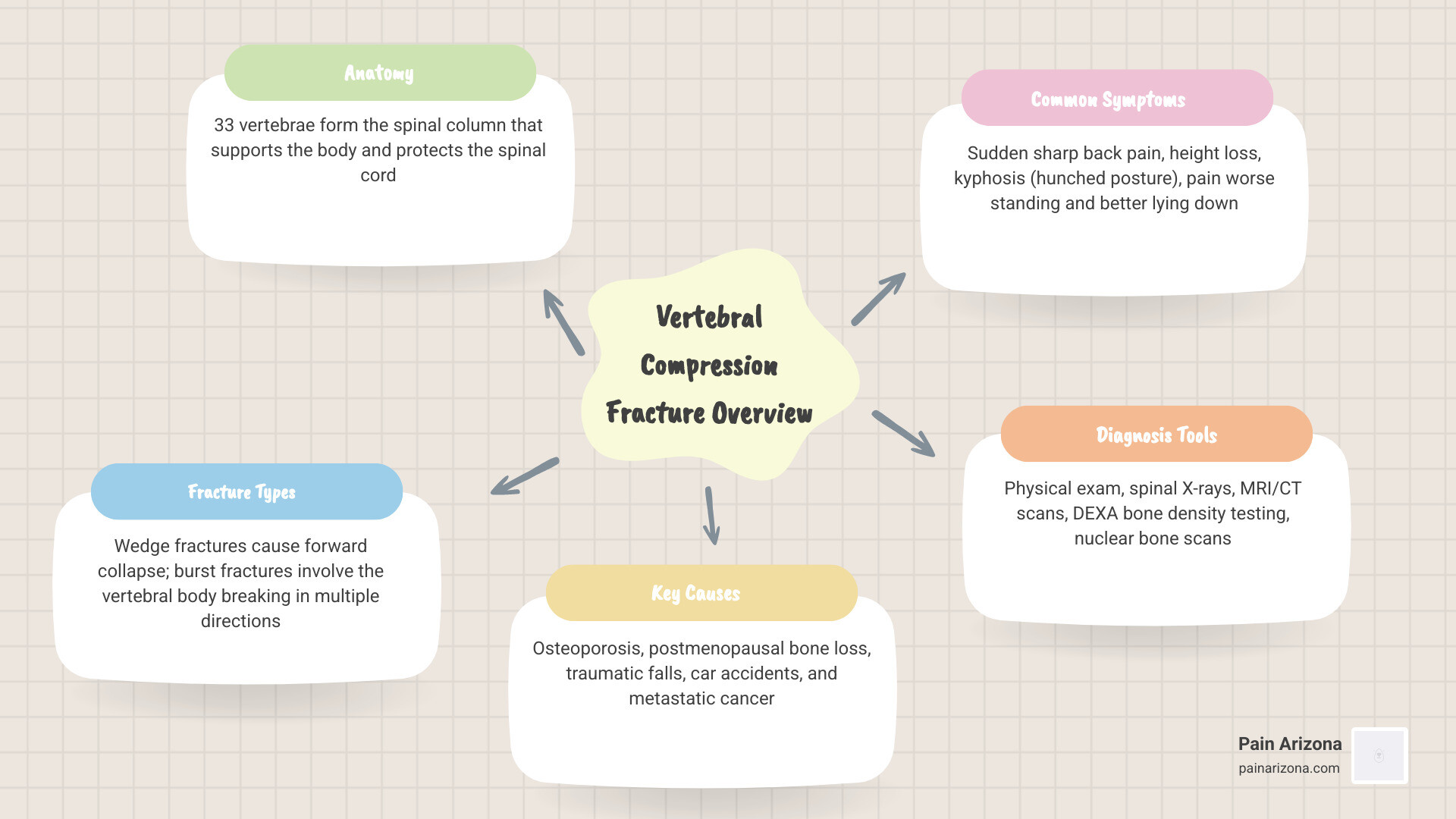
To understand a vertebral compression fracture (VCF), it helps to look at how your spine is built. Your spinal column is made up of 33 individual bones called vertebrae, which stack on top of one another like a highly engineered tower of blocks. This tower supports your entire upper body, protects your spinal cord, and allows you to bend, twist, and walk.
The middle section of your back is the thoracic spine, and the lower section is the lumbar spine. These two areas bear the brunt of your body weight and physical movement, making them the most common locations for compression fractures.
A vertebral compression fracture occurs when the vertebral body—the thick, drum-shaped front portion of the bone—weakens and collapses under pressure. Instead of maintaining its sturdy, box-like shape, the bone gets squished.
Depending on how the bone collapses, these injuries are generally classified into different types:
- Wedge Fractures: This is the most common type of compression fracture. The front of the vertebra collapses while the back remains intact, turning the bone into a wedge shape. This forward slant is what ultimately causes people to lose height or develop a hunched posture.
- Burst Fractures: These are more severe injuries where the vertebra loses height in both the front and the back. Because the bone crushes uniformly under extreme force, fragments can “burst” outward and press against the spinal cord, threatening spinal column stability.
When vertebrae collapse, the structural integrity of your entire spine is compromised. This collapse is heavily accelerated by bone density loss, a natural part of aging that makes bones increasingly porous, fragile, and unable to support normal daily forces.
Understanding Spinal Fractures vs. Collapsed Vertebrae
It is common to hear the terms “spinal fracture” and “collapsed vertebra” used interchangeably, but they can mean very different things in a clinical setting.
A traditional spinal fracture is often associated with high-impact trauma—like a high-speed car accident on the I-10 or a severe fall from a ladder. These high-velocity injuries can break healthy, strong bones and frequently require intensive stabilization to prevent spinal cord compression and permanent neurological damage.
A collapsed vertebra, on the other hand, is a specific type of spinal fracture that often happens silently. When bone density is severely depleted, the vertebrae become so fragile that they can collapse under the simple weight of gravity or during routine movements like bending over to pick up a newspaper or coughing.
While a traumatic spinal fracture is immediately obvious, a collapsed vertebra can slowly deform your spine over time, leading to a progressive structural deformity known as kyphosis. To learn more about how these issues differ from other common back issues, explore our Back Pain Treatment Complete Guide.
Symptoms and Causes of Spinal Compression Fractures

Identifying a vertebral compression fracture starts with recognizing the underlying causes and the warning signs your body sends you.
The primary culprit behind most compression fractures is osteoporosis. As we age, our bodies naturally lose more bone than they build. This bone thinning is especially prevalent in postmenopausal women, who can lose up to 20% of their bone density during the menopause transition due to dropping estrogen levels.
However, osteoporosis is not the only cause. Compression fractures can also result from:
- Traumatic Falls: A slip on a slick patio or a trip down the steps can exert enough sudden force to crack a weakened vertebra.
- Car Accidents: High-impact collisions can compress the spine violently, causing fractures even in relatively healthy bones.
- Metastatic Cancer: Certain cancers can spread to the bones of the spine, weakening the vertebral structure from the inside out until it collapses under normal body weight.
When to Seek Compression fracture treatment Arizona
Because VCFs are so frequently misdiagnosed as simple muscle strains, knowing when to seek professional compression fracture treatment in Arizona is vital. If you experience any of the following symptoms, it is time to schedule an evaluation:
- Sudden, Sharp Back Pain: A sudden onset of severe back pain, particularly after a minor movement like reaching, twisting, or sneezing.
- Pain That Worsens When Standing: Because gravity puts pressure on the collapsed bone, standing or walking usually intensifies the pain.
- Relief When Lying Down: Lying flat on your back takes the physical load off the fractured vertebra, typically offering noticeable relief.
- Loss of Height: If you notice you are suddenly shorter or that your clothes are fitting differently, it may be due to multiple vertebrae losing height.
- Hunched Posture (Kyphosis): A visible curve or “dowager’s hump” in your upper back is a classic sign of progressive wedge fractures.
- Neurological Symptoms: If the collapsed bone is pressing on nearby nerves or the spinal cord, you may experience numbness, tingling, or weakness radiating down your arms or legs.
If you are experiencing these signs, reading a clinical overview of vertebral compression fractures can help you understand the physiological changes happening in your spine.
How Compression Fractures Are Diagnosed in Arizona

If you visit our clinics in Phoenix, Mesa, or any of our other Greater Phoenix locations suspecting a spinal issue, we begin with a thorough, hands-on diagnostic process.
Our first step is always a comprehensive physical examination. During this exam, we will assess your posture, check your range of motion, and carefully palpate your spine. Spinal tenderness—specifically pain when gently tapping on the affected vertebra—is a strong clinical indicator of an active fracture. We also conduct a detailed mobility assessment to see how movement affects your pain levels and to check for any signs of nerve irritation.
Advanced Imaging and Bone Density Testing
While a physical exam gives us clues, we rely on advanced imaging to confirm the diagnosis and determine the exact age and severity of the fracture. This step is critical because treatment plans differ wildly for an acute (new) fracture versus a chronic (old, healed) one.
- Spinal X-rays: This is usually the first-line imaging tool. It allows us to clearly see the shape of your vertebrae and identify any obvious loss of height or wedge deformities.
- MRI Scans: An MRI is the gold standard for diagnosing acute compression fractures. It shows bone marrow edema (swelling), which tells us if the fracture is fresh and still actively healing (and therefore a candidate for minimally invasive procedures).
- CT Scans: If we need a highly detailed, 3D look at the bone structure—especially if we suspect a burst fracture or need to evaluate the spinal canal—a CT scan is incredibly helpful.
- DEXA Bone Density Scan: To address the root cause, we use Dual-Energy X-ray Absorptiometry (DEXA) to measure your bone mineral density. This test tells us if you have osteoporosis or osteopenia, allowing us to build a preventive treatment plan.
- Nuclear Bone Scan: In rare cases where an MRI cannot be performed, a bone scan can help locate areas of active bone turnover to pinpoint the fracture.
Compression fracture treatment Arizona: Non-Surgical and Minimally Invasive Options
At Pain Arizona, we believe in personalized medicine. There is no one-size-fits-all approach to compression fracture treatment in Arizona. Your treatment plan will be carefully customized based on your age, the severity of the fracture, your overall bone density, and your personal lifestyle goals. Our primary focus is to relieve your pain quickly while optimizing your long-term bone health to prevent future injuries.
Non-Surgical Back Treatment and Conservative Care
For many patients with stable, mild fractures, conservative care is highly effective. The body has an incredible ability to heal itself when given the right support. Non-surgical treatment typically includes:
- Activity Modification: We don’t recommend complete bed rest, as inactivity can actually accelerate bone loss. Instead, we teach you how to modify your daily movements to avoid twisting, heavy lifting, or bending.
- Pain Medications: Over-the-counter anti-inflammatories or short-term prescribed medications can help manage discomfort so you can stay mobile.
- Temporary Back Brace: A custom-fitted brace supports your spine, restricts painful movements, and takes the physical load off the healing vertebra.
- Physical Therapy: Once the initial pain subsides, targeted physical therapy focused on core strengthening and posture work is essential to stabilize your spine.
To learn more about these non-invasive paths to relief, read our guide on Non-Surgical Back Treatment.
Minimally Invasive Spine Procedures and Cement Options
When conservative measures do not provide enough relief, or if the pain is too severe to allow for basic mobility, we look to minimally invasive, outpatient procedures. These highly effective treatments use medical-grade bone cement to stabilize the fracture from the inside out.
The two main procedures we offer are vertebroplasty and kyphoplasty. Both are performed using local anesthesia and conscious sedation, meaning you are relaxed and comfortable but awake, and you can go home the very same day.
- Vertebroplasty: Under precise X-ray guidance (fluoroscopy), a small needle is inserted directly into the fractured vertebra. We then inject a specialized bone cement that hardens within minutes, instantly stabilizing the bone fragments and relieving pain.
- Kyphoplasty: This advanced variation is designed to restore lost vertebral height. A small balloon is inserted into the collapsed bone and gently inflated to create a cavity and push the vertebra back toward its original height. The balloon is deflated and removed, and the remaining cavity is filled with bone cement.
| Feature | Vertebroplasty | Kyphoplasty |
|---|---|---|
| Primary Goal | Stabilize fracture, relieve pain | Restore height, correct alignment, relieve pain |
| Method | Direct cement injection | Balloon inflation followed by cement |
| Anesthesia | Local anesthetic + sedation | Local anesthetic + sedation |
| Recovery Time | Return to light activity in days | Return to light activity in days |
| Height Restoration | Minimal | Moderate to High |
For more details on how these innovative techniques can help you avoid major open surgeries, explore our resource on Minimally Invasive Spine Surgery.
If you are looking for local care options, you can read about kyphoplasty in Gilbert or explore specialized interventional therapies for compression fractures available in our communities.
When is a Surgical Referral Necessary?
While we always exhaust conservative and minimally invasive options first, there are times when traditional spine surgery is required.
If a patient presents with severe spinal instability, a burst fracture that threatens the spinal cord, or progressive neurological deficits (such as loss of bowel or bladder control or worsening leg weakness), we immediately collaborate with trusted local neurosurgeons and orthopedic spine surgeons. This close coordination ensures that if you do require a procedure like a spinal fusion or laminectomy, your transition to surgical care is seamless, safe, and fully coordinated.
Recovery Timeline, Risks, and Prevention Strategies
Understanding what lies ahead on your road to recovery can help ease anxiety and set realistic expectations for your healing process.
What to Expect During Recovery from Compression fracture treatment Arizona
The healing duration for a vertebral compression fracture depends heavily on the treatment path chosen:
- Conservative Care: If you are treating the fracture naturally with rest and bracing, it typically takes about two to three months for the bone to fully heal and stabilize. During this time, physical therapy protocols will slowly introduce gentle stretching and core exercises to protect your back.
- Minimally Invasive Procedures (Kyphoplasty/Vertebroplasty): Patients who undergo cement stabilization often experience dramatic, immediate pain relief—frequently within 24 to 48 hours of the procedure. While you can typically return to light daily activities within a few days, we still advise avoiding strenuous lifting or high-impact exercise for several weeks while the surrounding muscles recover.
To dive deeper into the recovery milestones and what to expect week-by-week, refer to our comprehensive Vertebral Compression Fracture Guide.
Risks, Complications, and Prevention of Future Fractures
Like any medical procedure, vertebroplasty and kyphoplasty carry some risks, though they are statistically very low. Potential complications include infection at the injection site, localized bleeding, nerve irritation, or cement leakage (where a small amount of cement escapes the bone, though this rarely causes clinical symptoms).
However, the most significant risk for anyone who has suffered a compression fracture is the subsequent fracture risk. Because the underlying cause—osteoporosis—is systemic, a fracture in one vertebra means your other vertebrae are also highly vulnerable.
To protect your spine and prevent future fractures, we recommend a multi-faceted prevention strategy:
- Calcium and Vitamin D: These are the building blocks of strong bones. Ensure you are getting adequate amounts through your diet or high-quality supplements.
- Weight-Bearing Exercise: Walking, hiking, and resistance training stimulate your bones to stay dense and strong.
- Avoiding Smoking and Excessive Alcohol: Both smoking and heavy drinking accelerate bone loss and weaken skeletal structure.
- Estrogen Replacement Therapy: For postmenopausal women, discussing hormone therapy or other bone-building medications with your doctor can drastically reduce your fracture risk.
Frequently Asked Questions about Spinal Compression Fractures
Do compression fractures ever fully heal?
Yes, they do. With proper rest, bracing, and bone-building support, the body is fully capable of natural healing and bone remodeling over a period of 8 to 12 weeks. However, without medical intervention, a collapsed bone will often heal in its deformed, compressed shape. This can lead to permanent structural changes, a stooped posture, and chronic muscular pain as your back muscles work overtime to keep you upright. Seeking early treatment is the best way to prevent these long-term issues.
How do insurance coverage and costs work for treatment in Arizona?
At Pain Arizona, we believe financial stress shouldn’t stand in the way of pain relief. We accept most insurance plans, including Medicare and a wide variety of commercial insurance providers. Because diagnostic imaging (like MRIs) and minimally invasive procedures (like kyphoplasty) usually require pre-authorization, our dedicated team handles the paperwork to ensure your treatments are covered. If you have questions about your specific plan, deductibles, or potential out-of-pocket costs, please check with our office manager, who will be happy to verify your benefits.
How do I choose the right spine specialist in Arizona?
Your spine is the foundation of your mobility, so you want to place your care in the hands of highly qualified experts. Look for double board-certified physicians who specialize in interventional pain management and have extensive experience performing minimally invasive spine procedures. It is also important to choose a specialist who offers a comprehensive approach—someone who doesn’t just treat the fracture with cement, but also addresses the underlying osteoporosis to protect your future health. For more guidance, read our article on Spine and Pain Management: How to Choose Your Specialist.
Conclusion
A vertebral compression fracture can feel like a sudden, overwhelming roadblock to your active Arizona lifestyle. Whether your pain started after a minor slip on the golf course in Scottsdale or a fall at home in Mesa, you do not have to live with debilitating back pain or watch your posture slowly change.
At Pain Arizona, our double board-certified physicians specialize in compassionate, evidence-based chronic pain management. From advanced diagnostic imaging in our Phoenix and Glendale clinics to state-of-the-art, minimally invasive procedures like kyphoplasty, we are dedicated to finding the root cause of your pain and helping you reclaim your quality of life.
Don’t let a spinal fracture keep you on the sidelines. Schedule a consultation for Pain Arizona’s Vertebral Compression Fracture Treatment today, and let us help you stand tall again.