
Happy Heels: What Really Works for Chronic Foot Discomfort
What Is the Solution for Heel Pain? Your Quick Answer Guide
What is the solution for heel pain? The answer depends on the cause, but most cases improve with conservative treatments.
Immediate Home Solutions:
- Rest and Ice: Avoid aggravating activities and apply ice for 15-20 minutes, 2-3 times daily.
- Supportive Footwear & Orthotics: Wear shoes with good arch support and add heel pads or orthotics.
- Stretching: Perform gentle calf and plantar fascia stretches daily.
- Pain Relief: Use over-the-counter medications like ibuprofen as needed.
When to Seek Professional Help:
- Pain lasts more than 2-3 weeks despite home care.
- Severe pain, inability to walk, or signs of infection (fever, redness).
Advanced Medical Treatments:
- Physical therapy, night splints, and corticosteroid or PRP injections.
- Extracorporeal Shockwave Therapy (ESWT).
- Surgery (rarely needed).
Heel pain is an extremely common foot complaint, affecting roughly 10% of adults. That sharp stab with your first morning step or the burning ache after a long day can make life miserable. If this sounds familiar, you’re not alone, and you’re not stuck with this pain forever.
Most heel pain responds well to conservative treatment once the cause is identified. The majority of people recover within several months using simple strategies. Even chronic cases have multiple effective treatment options available.
I’m Dr. Nasser, Chief Medical Officer at Pain Arizona. For over 15 years, I’ve helped patients in the Greater Phoenix area find lasting relief from complex pain. In this guide, we’ll explore what is the solution for heel pain by looking at what works, what doesn’t, and when to seek professional help.
Understanding Your Heel Pain: Common Causes and Symptoms
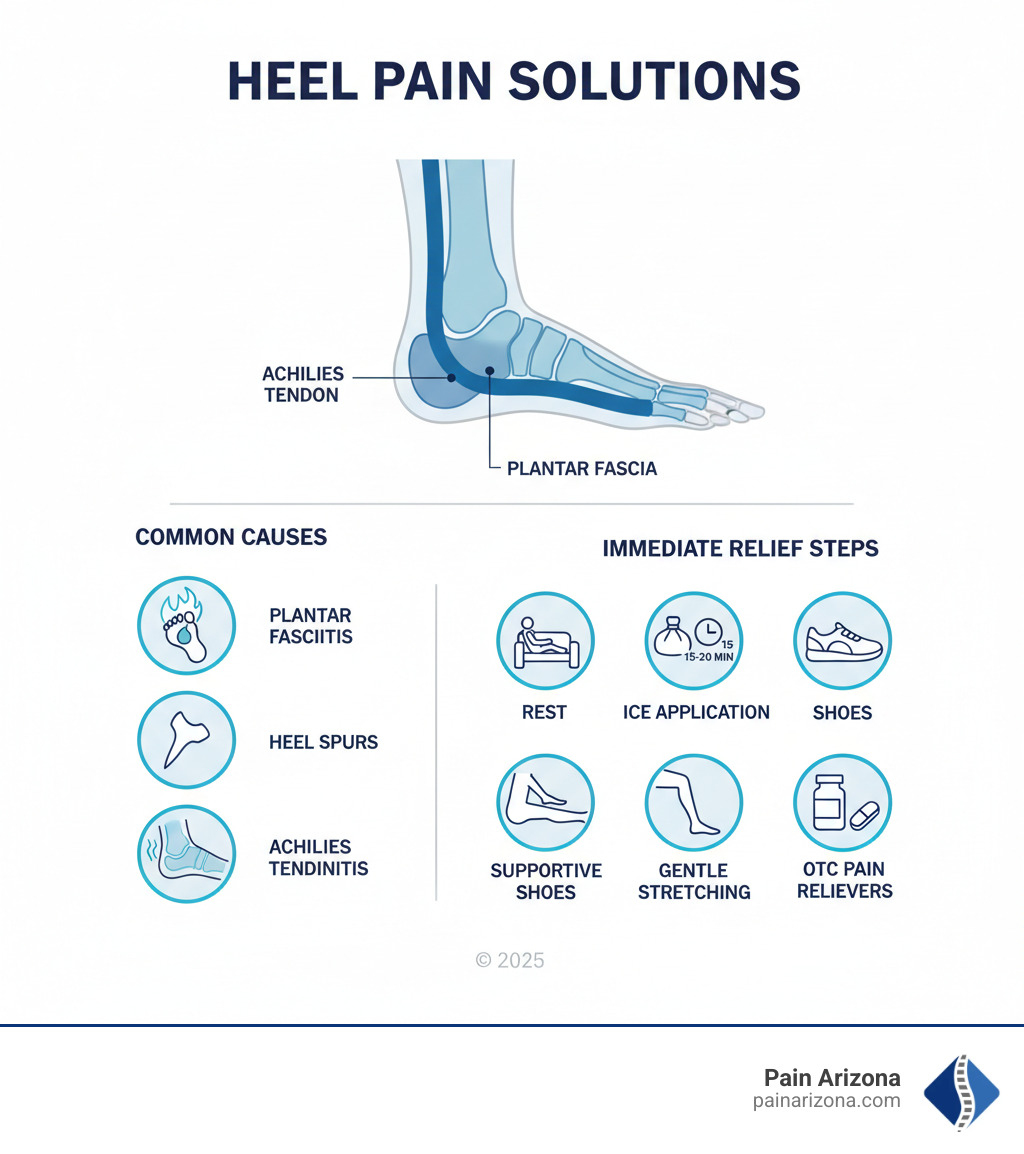
Your feet are complex structures, and the heel is their foundation. The largest bone in your foot, the calcaneus, is connected to two crucial structures: the plantar fascia (a thick tissue band on the bottom of your foot) and the Achilles tendon (connecting calf muscles to your heel). When these structures face repetitive strain from activities like prolonged standing, running on hard surfaces, or wearing unsupportive shoes, pain develops.

Common Culprits Behind Heel Discomfort
Identifying the cause is the first step to finding what is the solution for heel pain. Here are the most common conditions:
- Plantar Fasciitis: The leading cause of heel pain. Inflammation or tiny tears in the plantar fascia cause a signature sharp pain with the first steps in the morning. While many people with this condition have heel spurs, the spurs are a result of the condition, not the cause of the pain. More info about Plantar Fasciitis
- Achilles Tendinitis: Causes pain at the back of the heel. Overuse, especially in athletes, leads to inflammation of the Achilles tendon. Pain typically worsens during or after activity. More info about Tendinitis
- Heel Spurs: These bony growths on the heel bone rarely cause pain themselves. The pain comes from the inflammation of the surrounding soft tissue, like the plantar fascia.
- Bursitis: Inflammation of the bursa (a fluid-filled sac) at the back of the heel, often from pressure from tight shoes, causes pain and tenderness.
- Stress Fractures: Tiny cracks in the heel bone from repetitive force, common in athletes. Pain worsens with activity and improves with rest.
- Fat Pad Atrophy: The natural fatty cushion in the heel thins out over time, leading to more pressure on the heel bone.
- Tarsal Tunnel Syndrome: Compression of the tibial nerve on the inside of the ankle causes numbness, tingling, or sharp pain in the heel, arch, and toes.
Recognizing the Signs: What Your Pain is Telling You
Your symptoms are important clues:
- Sharp morning pain: The classic sign of plantar fasciitis.
- Dull ache throughout the day: May indicate overuse, muscle fatigue, or fat pad atrophy.
- Pain at the back of the heel: Usually points to Achilles tendinitis or bursitis.
- Swelling and tenderness: Universal signs of inflammation accompanying many conditions.
- Stiffness after rest: Similar to morning pain, this suggests plantar fasciitis.
- Numbness or tingling: Suggests nerve involvement, such as tarsal tunnel syndrome.
Understanding these clues helps us determine the right solution for your specific case. Heel pain symptoms explained
Immediate Relief: At-Home Solutions for Heel Pain
For many cases of heel pain, effective treatment starts at home. The foundation is the R.I.C.E. method:
- Rest: Give your foot a break from activities that cause pain, like running or prolonged standing.
- Ice: Apply an ice pack (wrapped in a towel) to your heel for 15-20 minutes, 2-3 times a day to reduce inflammation. Rolling a frozen water bottle under your foot is also effective.
- Compression: Wrap your heel and ankle with an elastic bandage to provide support and control swelling.
- Elevation: Prop your foot up above heart level when resting to reduce swelling.
For short-term pain management, over-the-counter medications like Ibuprofen (Advil) or Acetaminophen (Tylenol) can help. Always follow package directions.
What is the solution for heel pain using supportive devices?
The right devices can significantly aid your recovery.
- Supportive shoes are non-negotiable. Choose footwear with good arch support, ample cushioning, and a stable, low heel. Avoid walking barefoot on hard surfaces.
- Orthotics are shoe inserts that support your arch and redistribute pressure. Over-the-counter versions work for many, while custom orthotics provide custom support. More info about Orthotics And Bracing
- Heel pads and cups add extra cushioning to absorb shock, which is helpful for fat pad atrophy.
- Night splints hold your foot in a gentle stretch overnight, preventing the plantar fascia from tightening and reducing morning pain.
- Athletic taping can provide temporary arch support to relieve pressure on the plantar fascia.
| Device | How It Helps | Best For |
|---|---|---|
| Orthotics | Supports arch, corrects alignment, distributes pressure | Plantar fasciitis, flat feet, high arches |
| Heel Pads | Adds cushioning, absorbs shock | Fat pad atrophy, general heel pain |
| Night Splints | Stretches plantar fascia overnight | Plantar fasciitis, especially morning pain |
The Role of Stretching and Self-Care
Regular stretching is crucial for recovery and prevention.
- Calf stretches: Stand facing a wall, step one foot back with the heel flat on the floor. Bend your front knee until you feel a stretch in your back calf. Hold for 30 seconds and repeat on each leg.
- Plantar fascia stretches: While seated, cross one ankle over the opposite knee. Gently pull your toes back toward your shin to stretch the bottom of your foot. Hold for 30 seconds and repeat.
Do:
- Rest and lift your heel.
- Apply ice regularly.
- Wear supportive shoes and insoles.
- Stretch consistently.
Don’t:
- Stand for long periods or walk barefoot on hard floors.
- Wear high heels or tight, pointy shoes.
- Push through the pain, as this can worsen the injury.
Patience and consistency are key. Most heel pain improves within several months with diligent home care.
What is the Solution for Heel Pain When Home Care Isn’t Enough?
If your pain persists for more than 2-3 weeks despite consistent home treatment, it’s time to seek professional help. You should also see a doctor if your symptoms worsen, the pain is severe enough to prevent normal activities, or you cannot bear weight on your foot. Other warning signs include tingling, loss of sensation, or any foot pain if you have diabetes. When to see a doctor for heel pain
What is the solution for heel pain through professional diagnosis?
At Pain Arizona, finding the right solution starts with an accurate diagnosis.
- Physical Examination: We’ll examine your foot and ankle, checking for tenderness, swelling, and range of motion to pinpoint the problem.
- Medical History & Gait Analysis: We discuss your symptoms, activity levels, and footwear. Watching you walk helps us spot biomechanical issues contributing to your pain.
- Diagnostic Imaging: We use imaging conservatively. An X-ray can rule out fractures or arthritis. If we suspect soft tissue damage (like a plantar fascia tear) or nerve compression, an MRI or ultrasound provides a more detailed view.
This comprehensive approach ensures we identify the true cause of your pain and create a targeted treatment plan. More info about Sports Injuries
Urgent Red Flags for Heel Pain
While most heel pain isn’t an emergency, some symptoms require immediate medical attention. Go to an urgent care center or ER if you experience:
- Severe pain and swelling immediately following an injury.
- Inability to bear any weight on your foot.
- A popping or grinding sound at the time of injury.
- A visible deformity in your foot or ankle.
- Signs of infection, such as fever, redness, and warmth.
- Sudden numbness or loss of sensation in your foot.
These could indicate a serious injury like a fracture or ruptured tendon that needs prompt evaluation.
Advanced Medical Treatments and Prevention Strategies
When home remedies aren’t enough, we have powerful tools to provide relief for even the most stubborn heel pain.
- Physical Therapy: A physical therapist creates a custom program of targeted stretching and strengthening exercises for your foot, ankle, and lower leg to correct underlying biomechanical issues. More info about Physical Therapy
- Corticosteroid Injections: A powerful anti-inflammatory medication is injected directly into the painful area. We use ultrasound guidance for precise placement to maximize effectiveness and minimize risks. More info about Cortisone Shots
- Extracorporeal Shockwave Therapy (ESWT): This non-invasive procedure uses high-energy sound waves to stimulate the body’s natural healing process and promote tissue regeneration. It has a high success rate for chronic plantar fasciitis.
- Regenerative Medicine (PRP Therapy): We use your own concentrated blood platelets (Platelet-Rich Plasma) and inject them into the damaged tissue. The growth factors in PRP accelerate healing and reduce inflammation at a cellular level. More info about PRP Therapy
- Surgery: This is a last resort, considered only for severe cases that haven’t responded to 9-12 months of comprehensive conservative treatment. Less than 5% of patients require surgery.
Preventing Future Flare-Ups
Once your pain is gone, prevention is key.
- Maintain a healthy weight: Excess weight multiplies the stress on your feet. Losing even a small amount of weight can significantly reduce pressure on your heels.
- Wear appropriate footwear: Continue to choose shoes with good arch support and cushioning. Replace athletic shoes regularly and avoid walking barefoot on hard surfaces. Tips to prevent running injuries
- Increase activity gradually: When returning to exercise, follow the “10% rule” by increasing your weekly mileage or duration by no more than 10% each week to allow your body to adapt.
- Stretch daily: Make calf and plantar fascia stretches a regular part of your routine, especially in the morning.
- Address muscle imbalances: Weakness in your core, hips, or legs can alter your gait. A physical therapist can identify and help you correct these issues.
Consistent, daily habits are the best solution for preventing heel pain. We accept most insurance plans for our treatment services; check with our office to see if your plan is accepted.
Frequently Asked Questions about Heel Pain Solutions
How long does it take for heel pain to go away?
The recovery timeline depends on the cause and your consistency with treatment. For plantar fasciitis, the most common cause, most people see significant improvement within three to six months of starting conservative home care. Chronic cases may take longer. The key to a faster recovery is consistency—doing your stretches, wearing supportive footwear, and following your treatment plan every day.
Are heel spurs the real cause of my pain?
Almost never. While X-rays often show heel spurs in people with plantar fasciitis, the spur itself is rarely the source of pain. Heel spurs are bony growths that form in response to long-term strain on the plantar fascia. The pain you feel comes from the inflammation of the soft tissue (the plantar fascia), not the bone. We focus on treating the inflammation, and the pain resolves without needing to address the spur.
Can being overweight cause heel pain?
Yes, absolutely. Being overweight is a major risk factor for heel pain. Your feet support your entire body weight, and extra pounds significantly increase the strain on your plantar fascia and other heel structures. Research shows that for every pound you lose, you reduce the peak pressure on your heel by up to four pounds when walking. Therefore, weight management is a powerful tool for both treating and preventing heel pain.
Take the Next Step Towards Pain-Free Living
You don’t have to live with heel pain. We’ve covered the full range of solutions, from home care like rest and stretching to advanced medical interventions. The path to relief begins with understanding the cause and taking consistent action.
While many people find relief with home strategies, persistent pain requires professional guidance. At Pain Arizona, our double board-certified physicians specialize in identifying the root cause of your discomfort. We create personalized, evidence-based treatment plans that focus on minimally invasive approaches to help you achieve your goals.
If you’re in the Greater Phoenix Area and struggling with heel pain, we have the expertise to help. From physical therapy and ultrasound-guided injections to regenerative therapies like PRP, we offer comprehensive solutions.
Don’t wait for the problem to worsen. Explore our advanced treatment options and learn how we can help you get back on your feet, pain-free. We accept most insurance plans; please check with our office to confirm your coverage. Your journey to pain-free living starts now—let’s take it together.