
The Left Side Blues: A Guide to Post-Injury Abdominal Pain
Introduction
Abdominal pain left post injury is one of the most important — and most easily underestimated — warning signs after any trauma to the belly or torso.
Quick answer: Common causes of left-sided abdominal pain after injury include:
- Splenic injury — the spleen is the most commonly damaged organ in blunt abdominal trauma
- Abdominal muscle strain or avulsion — tears to the oblique or rectus muscles along the left side
- Rib fractures — can cause referred pain deep into the left abdomen
- Kidney or flank injury — especially after falls or direct blows to the back
- Vascular injury — rare but serious; includes damage to the celiac axis or mesenteric vessels
- Hollow organ injury — stomach or intestinal perforation, which can be life-threatening
- Delayed complications — hematoma rupture, abscess, or bowel obstruction appearing days or even weeks later
Not all of these show up right away. Some injuries feel mild at first and become dangerous later. That’s exactly why left-sided abdominal pain after trauma always deserves a thorough evaluation — not a “wait and see.”
I’m Dr. Nasser, a double board-certified physician in Physical Medicine and Rehabilitation and Pain Medicine, and I’ve spent my career diagnosing and treating the full spectrum of pain conditions — including complex post-traumatic abdominal pain left post injury — using minimally invasive, evidence-based approaches. Understanding what’s driving your pain is always the first step toward lasting relief.
Common Causes of Abdominal Pain Left Post Injury
When we talk about blunt trauma to the left side of the abdomen, we have to look at the anatomy. The upper left quadrant is home to the spleen, the stomach, the tail of the pancreas, and the left kidney. Below that, in the lower left, you have parts of the colon and the abdominal wall itself.

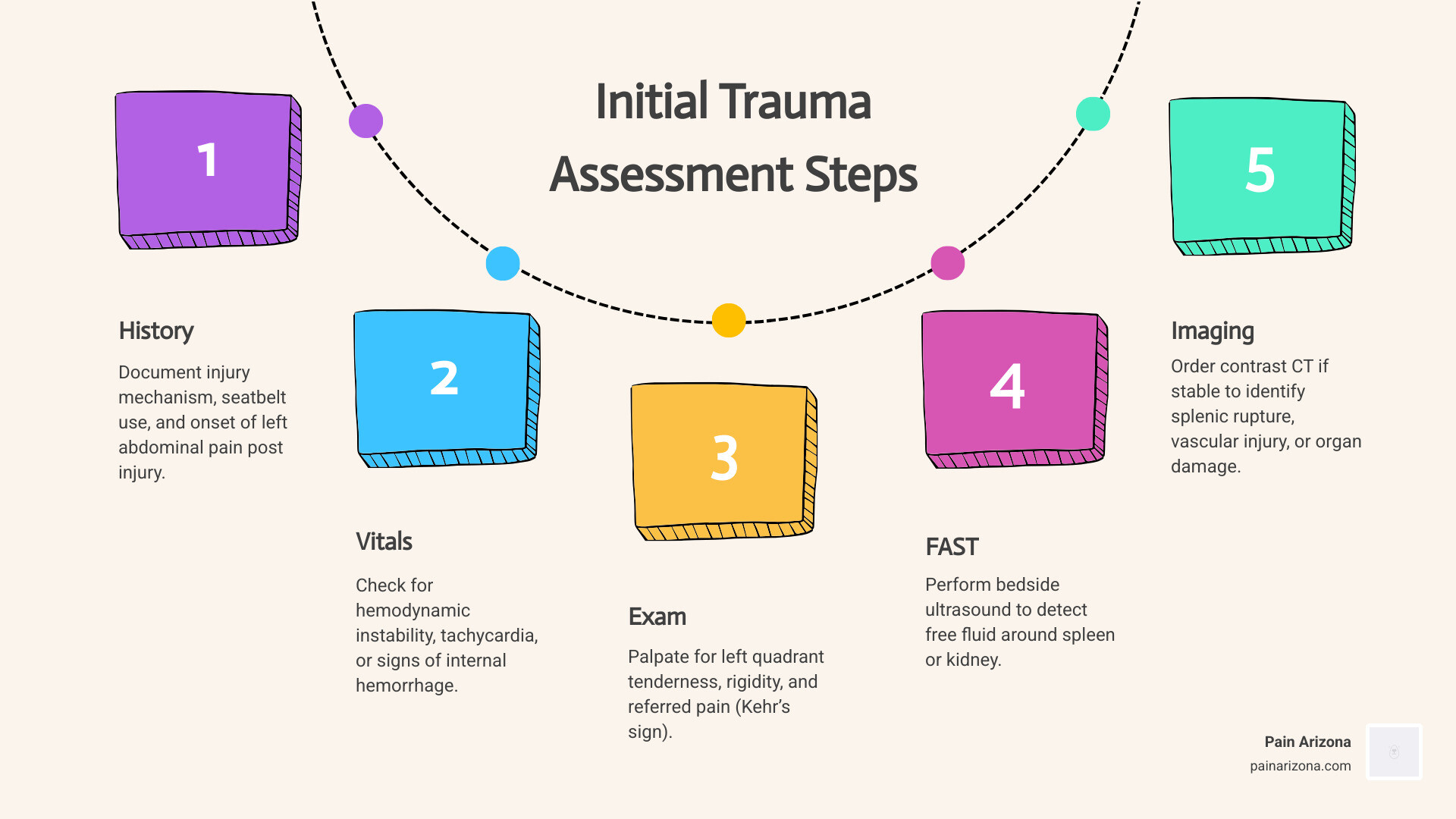
The most frequent culprit in blunt abdominal trauma is the spleen. Because it is highly vascularized (filled with blood), even a minor impact can cause a hematoma or a full rupture. If you were in a car accident and noticed a “seatbelt sign” — that tell-tale diagonal bruising across your torso — your risk for internal organ damage, particularly to the spleen or liver, increases significantly.
Beyond internal organs, we often see injuries to the structural framework of the body. Rib fractures on the left side can cause sharp, stabbing pain that radiates down into the abdomen. Furthermore, the muscles themselves can be severely damaged. While many people think of a “pulled muscle” as a minor nuisance, a high-impact injury can lead to an avulsion, where the muscle actually tears away from the bone. For instance, research on Successful Repair of M. obliquus Internus Abdominis Avulsion at the Iliac Crest highlights how professional athletes often require surgical reattachment when the internal oblique muscle is torn from the hip bone (iliac crest).
To understand the broader context of what might be hurting, you can explore our guide on Left Side Abdominal Pain Causes & How to Treat.
Differentiating Muscle Strain and Abdominal Pain Left Post Injury
How do you know if you just “tweaked” a muscle or if something more serious is happening? A muscle strain (or “pulled” muscle) usually presents as localized tenderness. You might feel a sharp pain when you twist, cough, or sit up.
However, trauma can also cause a traumatic hernia. This occurs when the blunt force is so strong it creates a hole in the muscle wall, allowing internal organs to bulge through. These are often found in the lumbar or flank region. According to a systematic review on the Management of post-traumatic non-iatrogenic lumbar/flank hernias, a hernia defect larger than 8 cm is a major red flag, as it is 100% sensitive for predicting associated mesenteric (intestinal) injuries.
If you feel a “bulge” or a soft mass that wasn’t there before the injury, it isn’t just a strain — it’s a medical priority.
Identifying Spleen vs. Stomach Pain in the Upper Left Quadrant
Distinguishing between stomach pain and spleen pain is a classic diagnostic challenge.
- Spleen Pain: Often feels deep and sharp. A unique sign of splenic injury is Kehr’s sign — pain that is felt in the left shoulder. This happens because blood from the spleen irritates the diaphragm, and the nerves there “refer” the pain up to the shoulder.
- Stomach Pain: Issues like gastritis or a gastric ulcer usually feel more like a burning or gnawing sensation. This pain is often triggered by meals (either getting better or worse after eating) and is rarely associated with shoulder pain.
If your abdominal pain left post injury started immediately after a blow to the ribs, the spleen is the primary suspect. You can read more about these differences in this overview of Lower Left Abdominal Pain: Causes, Symptoms & Red Flags.
Hidden Complications: Vascular Injuries and Anatomical Variants
Sometimes the injury isn’t to an organ, but to the “plumbing” that feeds it.
| Feature | Vascular Injury (e.g., Celiac Axis) | Organ Rupture (e.g., Spleen) |
|---|---|---|
| Commonality | Rare (5-10% of vascular trauma) | Most Common (Spleen is #1) |
| Pain Type | Vague, deep, or “angina-like” | Sharp, localized, or referred to shoulder |
| Onset | Can be delayed (days) | Often immediate (but can be delayed) |
| Risk | Ischemia (tissue death) | Hemorrhagic shock (bleeding out) |
The celiac axis is the least likely vessel to be injured in blunt trauma, but when it happens, it can be tricky. An “intimal flap” (a small tear in the inner lining of the artery) can cause a blood clot to form over several days, leading to delayed pain.
Anatomical surprises can also complicate things. In a fascinating case of Left side perforated appendicitis with intestinal non-rotation, a patient had their appendix on the left side due to a congenital condition called midgut malrotation. While rare (occurring in about 1 in 6,000 births), it reminds us that “standard” pain locations aren’t always standard for everyone.
Delayed Complications of Abdominal Pain Left Post Injury
One of the most dangerous aspects of abdominal trauma is the “hidden” timeline. You might feel okay for a few days, only to collapse later.
- Delayed Splenic Rupture: A hematoma (bruise) on the spleen can grow and eventually burst days or weeks after the initial accident.
- Intra-abdominal Abscess: If a small amount of intestinal content leaks out, an infection can brew slowly.
- Bowel Obstruction: Trauma can cause the intestines to twist or develop adhesions (scar tissue). In fact, statistics show a 6% readmission rate for bowel obstruction following trauma surgeries.
In extreme cases, complications can hide for decades. A case report detailed Paroxysmal epigastric pain 30 years after abdominal trauma surgery, where a patient developed severe duodenal issues thirty years after a motorcycle accident due to the way their original emergency surgery was performed.
When to Seek Emergency Care for Left-Sided Trauma
We cannot stress this enough: internal bleeding doesn’t always scream. Sometimes it whispers. However, if you experience any of the following “Red Flags,” you need an ER immediately:
- A Rigid, Board-Like Abdomen: This is a sign of peritonitis (inflammation of the abdominal lining), often caused by a ruptured organ.
- Hemodynamic Instability: Feeling faint, dizzy, having a rapid heart rate, or looking extremely pale.
- Severe Nausea and Vomiting: Especially if you are unable to keep fluids down.
- The “Seatbelt Sign”: Significant bruising across the belly.
For a deeper dive into these warning signs, see Know the Signs of When to Go to The ER For Stomach Pain.
A real-world example of how serious this can be is the Update Emerges Over Taiwo Awoniyi’s Condition. The professional footballer suffered a gastrointestinal perforation after a collision with a goalpost. This type of injury carries a 50% risk of death if not treated immediately due to the risk of sepsis.
Management Strategies: From Observation to Intervention
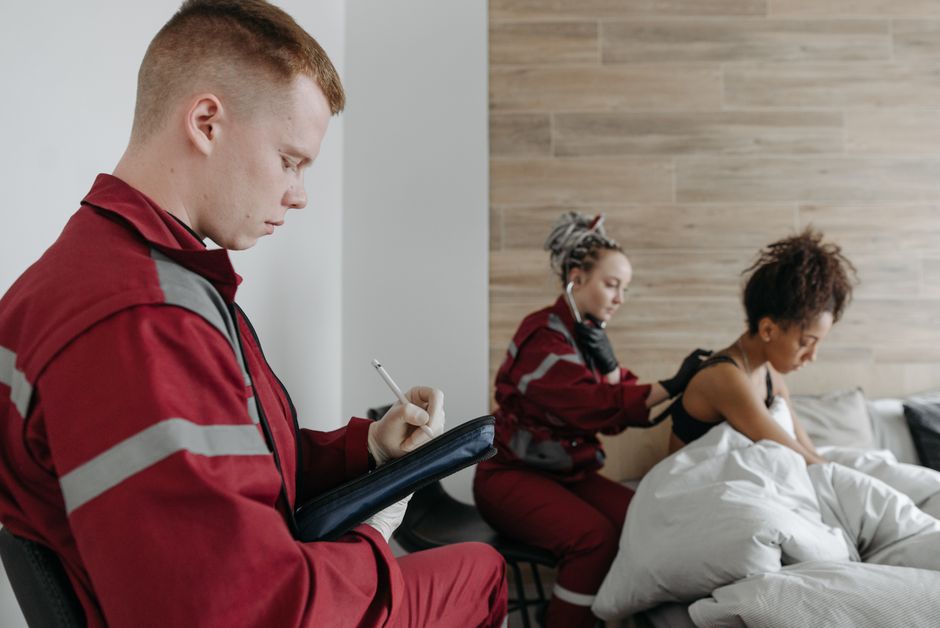
If you arrive at a clinic or hospital with abdominal pain left post injury, the first step is usually a FAST ultrasound (Focused Assessment with Sonography for Trauma) to look for free fluid (blood) in the abdomen. If you are stable, a contrast-enhanced CT scan is the gold standard. It allows us to see “intimal flaps” in vessels or small tears in the spleen that an ultrasound might miss.
Management generally falls into two categories:
- Conservative Management: For stable patients with minor splenic or vascular injuries, we may use “watchful waiting,” bed rest, and sometimes antiplatelet therapy (like aspirin) to prevent clots.
- Intervention: This includes endovascular repair (using a catheter to fix a vessel) or a laparotomy (open surgery) for those with active bleeding or perforated organs.
For patients dealing with long-term, chronic pain after the initial injury has “healed,” we look at different options. For example, Intractable Abdominal Pain in a Patient With Spinal Cord Injury shows how complex nerve-related pain can persist long after the physical tissue has mended.
Stable vs. Unstable Patient Protocols for Abdominal Pain Left Post Injury
Our protocol depends entirely on your “hemodynamic” status — basically, how well your heart and blood pressure are holding up.
- Unstable Patients: If blood pressure is crashing, the patient goes straight to surgery for “damage control resuscitation.” The goal is to stop the bleeding and contamination immediately.
- Stable Patients: We prefer Non-Operative Management (NOM). This involves serial exams and ICU monitoring. It’s often safer to let a small splenic tear heal on its own than to remove the organ entirely, as the spleen is vital for your immune system.
Frequently Asked Questions about Post-Traumatic Abdominal Pain
How long after an accident can internal injuries appear?
While most major injuries show up within the first 24 hours, delayed complications like a ruptured splenic hematoma or a bowel obstruction can appear days, weeks, or even months later. Always monitor for new fever, worsening pain, or dizziness in the weeks following a crash.
Can a minor “handlebar injury” cause major vascular damage?
Yes. Handlebar injuries are notorious in pediatric and adult medicine for concentrating a high amount of force into a small area. This can cause “isolated” injuries to the celiac axis or the pancreas while the rest of the abdomen looks perfectly fine.
What is the role of a celiac plexus block in chronic post-injury pain?
If an injury has caused chronic inflammation or nerve damage around the pancreas and upper GI tract, a celiac plexus block can be a game-changer. This involves injecting a local anesthetic and steroid near the bundle of nerves (ganglia) that send pain signals from the abdomen to the brain. It’s a minimally invasive way to “reset” the pain signals when traditional medications haven’t worked.
Conclusion
At Pain Arizona, we understand that abdominal pain left post injury isn’t just a physical symptom – it’s a source of anxiety and disruption to your life. Whether you are dealing with the aftermath of a recent accident or chronic pain that has lingered for years, our team of double board-certified physicians is here to help.
We serve the Greater Phoenix Area, including Mesa, Gilbert, Scottsdale, and Glendale, offering compassionate, evidence-based, and minimally invasive treatments. We accept most insurance plans – please check with our office manager to see if your plan is accepted.
If you’re ready to stop living with the “left side blues,” more information about left-sided abdominal pain is just a click away. Let us help you find the root cause of your pain and get you back to the life you love.