
Finding the Best Lumbar Radiculopathy and Sciatica Treatment in Phoenix
Sharp Pain Down Your Leg? Here’s What to Know About Sciatica Treatment in Phoenix
If you’re looking for lumbar radiculopathy sciatica treatment in Phoenix, here’s a quick overview of your options:
| Treatment Type | Examples | Best For |
|---|---|---|
| Non-surgical | Physical therapy, medications | Mild to moderate symptoms |
| Interventional | Epidural steroid injections, nerve root blocks | Persistent nerve pain |
| Advanced/Surgical | Microdiscectomy, endoscopic decompression | Severe or unresolved cases |
Most patients start with conservative care and see meaningful improvement within weeks.
That shooting pain running from your lower back down through your buttock, thigh, and calf is one of the most recognizable — and disabling — types of pain there is. It’s called sciatica, or more precisely, lumbar radiculopathy. It happens when a nerve root in your lower spine gets pinched or irritated, sending pain signals all the way down your leg.
Up to 40% of people will experience it at some point in their lives. It most often strikes between the ages of 30 and 50 — often during the years when work, family, and life demand the most from you.
The good news? Most cases don’t require surgery. With the right diagnosis and a personalized treatment plan, lasting relief is absolutely achievable.
I’m Dr. Nasser — a double board-certified physician in Physical Medicine and Rehabilitation and Pain Medicine, with over a decade of hands-on experience performing minimally invasive procedures for lumbar radiculopathy and sciatica treatment in Phoenix and the surrounding Greater Phoenix area. As Chief Medical Officer at Pain Arizona, I’ve guided thousands of patients from debilitating nerve pain back to the lives they love.
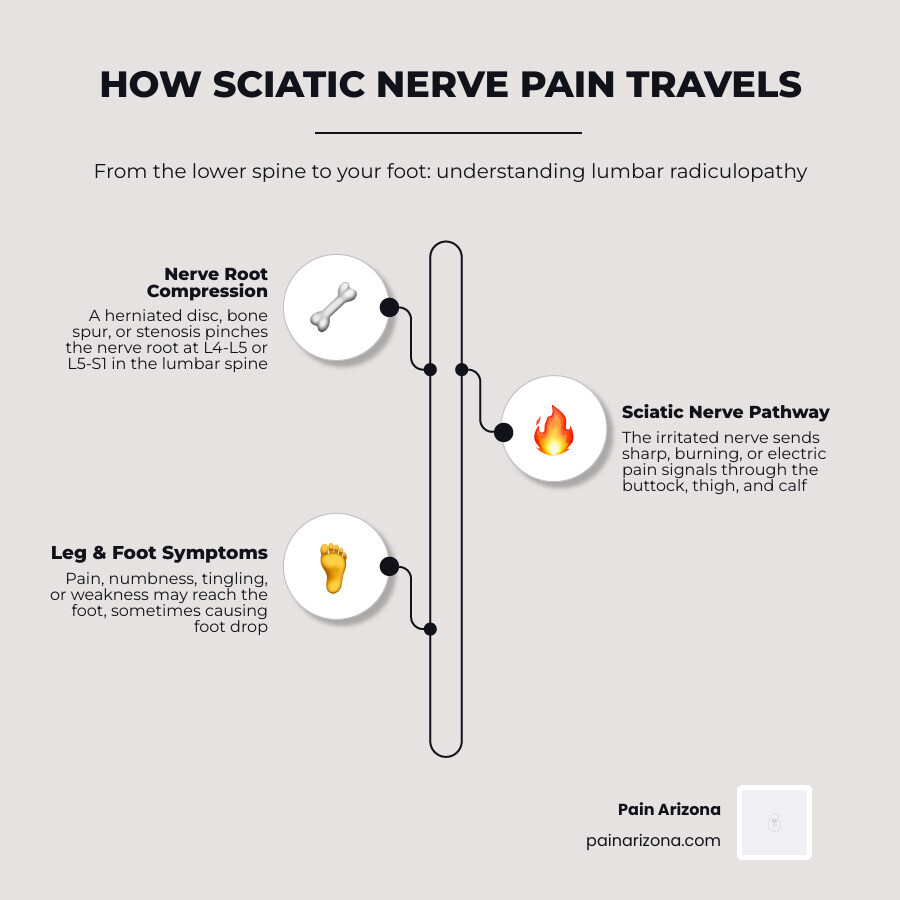
Understanding Lumbar Radiculopathy and Sciatica
To find the right lumbar radiculopathy sciatica treatment phoenix, you first have to understand what’s actually happening in your back. Many people use the terms “sciatica” and “lumbar radiculopathy” interchangeably, and while they describe the same painful experience, there’s a slight technical difference.
Sciatica is a description of symptoms—that zinging, electric shock feeling that travels along the sciatic nerve, which is the longest and thickest nerve in your body (about the width of your pinky finger!). Lumbar radiculopathy, on the other hand, is the medical diagnosis. It refers to the compression or irritation of the nerve roots as they exit the spinal column.
Most often, this happens at the L4-L5 or L5-S1 levels of your spine. These are the “high-traffic” areas of your lower back that bear the most weight and movement. When a nerve root here is squeezed, the pain doesn’t just stay in your back; it follows a specific “map” on your skin called a dermatome, which is why you might feel pain in your big toe even though the problem is in your spine.
For a deeper dive into the mechanics of this condition, you can read our guide on Understanding Lumbar Radiculopathy or explore our overview of Sciatica Causes, Symptoms, and Treatment.
Common Causes for Phoenix Patients
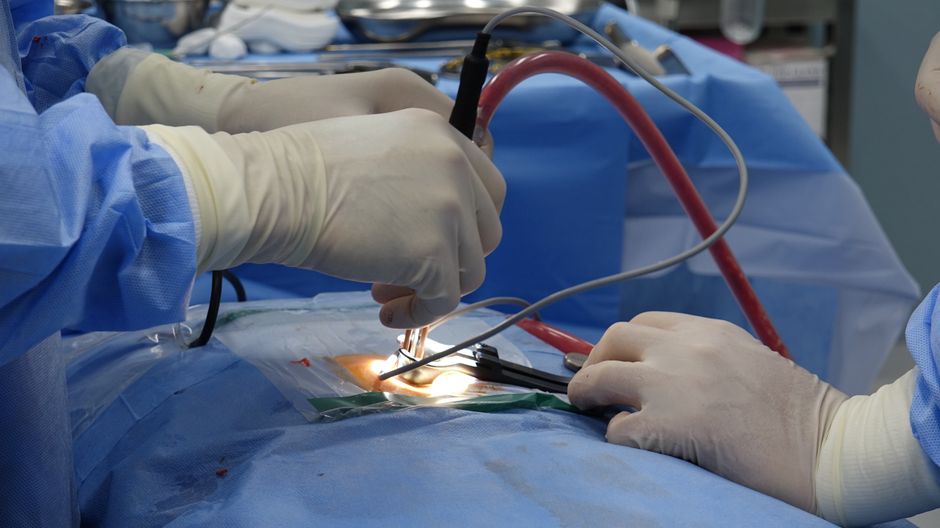
In our Phoenix area clinics, we see several recurring culprits behind nerve compression. Think of your spine like a busy Arizona freeway; when there’s an obstruction, everything gets backed up.
- Herniated Discs: This is the most common cause. More than three million people in the U.S. develop a herniated disc annually. According to the American Academy of Orthopaedic Surgeons, it occurs when the soft, jelly-like center of a spinal disc pushes through a tear in the tougher exterior, pressing directly on the nerve.
- Spinal Stenosis: This is a narrowing of the spaces within your spine, often due to age-related changes. It’s like the “lanes” of the freeway getting narrower, leaving less room for the nerves to pass through.
- Bone Spurs: Also known as osteophytes, these are bony growths that can develop due to osteoarthritis, poking into the space where your nerves live.
- Degenerative Disc Disease: Over time, discs lose their water content and height, which can lead to bone-on-bone friction and nerve irritation.
- Spondylolisthesis: This happens when one vertebra slips forward over the one below it, effectively “kinking” the nerve path.
Identifying Symptoms That Require Professional Care
How do you know if your back pain is just a “pulled muscle” or true radiculopathy? Muscle pain usually stays localized in the back. Radiculopathy, however, has a very distinct “neuropathic” flavor. You should look for:
- Electric Shocks: Sudden, sharp jolts of pain that shoot down the leg.
- Burning Sensations: A feeling of intense heat or “throb” in the calf or foot.
- Numbness and Tingling: The “pins and needles” feeling that doesn’t go away.
- Muscle Weakness: Difficulty lifting your foot (foot drop) or feeling like your leg might “give out.”
If you are experiencing weakness in your leg or foot, it is a sign that the nerve is being significantly compressed. For more details on specific nerve levels, check out our L5 Radiculopathy Treatment Complete Guide.
Comprehensive Lumbar Radiculopathy Sciatica Treatment Phoenix Options
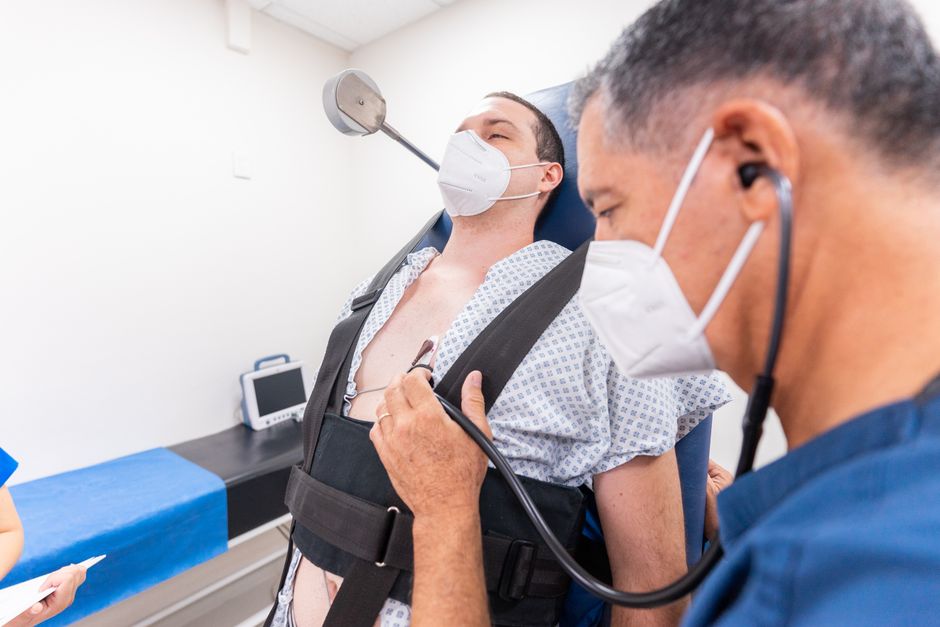
When you visit us at Pain Arizona, we don’t just treat the “pain”—we treat the person. The first step in lumbar radiculopathy sciatica treatment phoenix is a precise diagnosis. We use a combination of physical examinations, medical history reviews, and advanced imaging like MRI scans or EMG (electromyography) testing to pinpoint exactly which nerve is the “pain generator.”
Our goal is to use what we call Personalized Pain Diagnostics to ensure your treatment plan is as unique as your spine. You can learn more about our approach by meeting a Back Pain Specialist Phoenix.
Non-Surgical Sciatica Treatment Phoenix
The vast majority of our patients—about 80% to 90%—find relief without ever needing a scalpel. We typically start with a “conservative first” approach:
- Physical Therapy: This isn’t just “exercise.” It’s targeted movement designed to decompress the spine and strengthen the core muscles that support your back. Learn more about Effective Physical Therapy for Lumbar Radiculopathy.
- Medications: We focus on non-opiate options, including anti-inflammatories and nerve-stabilizing medications that calm down the “fire” in the nerve.
- Activity Modification: We teach you how to move, sit, and lift in ways that don’t aggravate the nerve. Sometimes, small ergonomic changes can lead to big results. You can find more Sciatica Treatment strategies here.
Interventional Procedures for Lasting Relief
If physical therapy and medications aren’t enough, we move to minimally invasive interventional procedures. These are performed right here in our Phoenix area offices using fluoroscopic (live X-ray) guidance to ensure the medication goes exactly where it’s needed.
- Epidural Steroid Injections (ESIs): We deliver a powerful anti-inflammatory directly into the epidural space surrounding the irritated nerve. This reduces swelling and “puts out the fire.” Check out our guide on Injections for Sciatica.
- Selective Nerve Root Blocks: This is both a diagnostic and therapeutic tool. By numbing a specific nerve root, we can confirm it’s the source of your pain while providing immediate relief.
- Radiofrequency Ablation (RFA): For some patients with chronic nerve-related back pain, we use heat energy to “turn off” the pain signals from specific nerves.
These procedures are part of our Effective Treatment Protocol for Lumbosacral Radiculopathies, designed to get you back on your feet quickly.
When to Consider Advanced or Surgical Interventions
While we specialize in non-surgical care, as a double board-certified specialist, I know when it’s time to call in our surgical colleagues. Surgery is generally considered a “last resort” unless certain “red flags” are present.
| Feature | Conservative Care | Surgical Intervention |
|---|---|---|
| Timeline | 4-12 weeks | Immediate (if red flags) or after 3 months |
| Success Rate | High for most patients | Excellent for structural decompression |
| Recovery | Gradual, movement-based | Variable, involves post-op rehab |
| Procedures | PT, Injections, Meds | Microdiscectomy, Laminectomy |
When is surgery necessary?
- Cauda Equina Syndrome: This is a medical emergency. According to the Mayo Clinic, if you experience sudden loss of bowel or bladder control or “saddle anesthesia” (numbness in the groin area), you need immediate surgery.
- Progressive Weakness: If your leg weakness is getting worse despite treatment.
- Intractable Pain: If the pain is so severe that it prevents any quality of life and hasn’t responded to injections or therapy after about 3 months.
Common procedures include microdiscectomy (removing the part of the disc that’s poking the nerve) or laminectomy (removing a small piece of bone to create more room). For more on these options, see Top Herniated Disc Treatments in Phoenix.
Recovery Timelines and Prevention Strategies
Recovery from sciatica isn’t a race; it’s a process. Most patients see significant improvement within a few weeks of starting lumbar radiculopathy sciatica treatment phoenix, but full healing of a nerve can take several months.
Because 40% of people will face this at some point, prevention is key to making sure it doesn’t come back. Here is my “Phoenix Spine Safety Checklist”:
- Core Strength: Think of your core as a natural back brace. Strong abs and back muscles take the pressure off your discs.
- Weight Management: Every extra pound you carry puts more “PSI” on your lumbar discs.
- Ergonomics: If you’re working a desk job in Scottsdale or Glendale, make sure your chair supports your lumbar curve.
- Low-Impact Exercise: Walking, swimming, and cycling are great for keeping the spine mobile without the jarring impact of running.
- Proper Lifting: Always bend at the knees, not the waist. If it’s heavy, get help!
For more tips on staying pain-free, read our Unlock Comfort: Top Strategies for Sciatica Pain Relief.
Frequently Asked Questions about Lumbar Radiculopathy Sciatica Treatment Phoenix
How long does it take to recover from sciatica without surgery?
Most patients feel a significant reduction in pain within 4 to 12 weeks. While the “zinging” pain often subsides quickly with injections and therapy, the nerve itself may take longer to fully “calm down.” Consistency with your physical therapy exercises is the biggest factor in long-term success.
Are epidural steroid injections safe for long-term management?
Yes, when performed by a specialist. We use fluoroscopic guidance to ensure precision and safety. To protect the health of the local tissues, we generally limit these injections to 3-4 times per year. They are best used as a “bridge” to allow you to participate in physical therapy without excruciating pain.
Does insurance cover sciatica treatment in the Phoenix area?
Absolutely. At Pain Arizona, we accept most major insurance plans. This typically includes coverage for your initial consultation, diagnostic imaging (like MRIs), physical therapy, and interventional procedures like epidural injections. We recommend checking with our office manager to confirm your specific plan’s details.
Conclusion
Living with the “zing” of sciatica can make even the simplest tasks—like driving to the grocery store or playing with your grandkids—feel impossible. But you don’t have to just “live with it.” At Pain Arizona, we are dedicated to providing the most advanced, evidence-based lumbar radiculopathy sciatica treatment phoenix has to offer.
Our double board-certified expertise and minimally invasive approach mean we focus on fixing the root cause of your pain, not just masking it with pills. Whether you are in Phoenix, Mesa, Gilbert, Scottsdale, or Glendale, relief is closer than you think.
Don’t let nerve pain dictate your life any longer. Schedule your consultation for Lumbar Radiculopathy Treatment with us today and let’s get you back to the active Arizona lifestyle you deserve.