
How Scottsdale Pain Management Clinics Tackle Lumbar Radiculopathy
Understanding Lumbar Radiculopathy: Root Causes and Primary Symptoms
I’m Dr. Nasser. Lumbar radiculopathy occurs when a nerve root in your lower spine becomes compressed, irritated, or inflamed. The lumbar spine consists of five vertebrae (L1 through L5) resting atop the sacrum (S1). Between these bony vertebrae sit intervertebral discs, which act as flexible shock absorbers. When structural shifts or degeneration reduce the space where nerve roots exit the spinal column through small openings called foramina, the resulting pressure triggers nerve pain.
Understanding why this nerve compression occurs is the first step toward effective relief. While many people experience similar radiating lower body pain, the underlying anatomical trigger can vary substantially from person to person.
Here are the primary causes of nerve root compression in the lower back:
- Herniated or Bulging Discs: When the gel-like nucleus of a spinal disc breaks through or bulges against its tough outer ring, it directly presses against nearby spinal nerve roots.
- Spinal Stenosis: A gradual narrowing of the spinal canal or neural foramina, often caused by age-related wear and tear, which squeezes spinal nerve fibers.
- Bone Spurs (Osteophytes): Overgrowth of bone caused by osteoarthritis in the facet joints, which protrudes into the nerve exit pathways.
- Spondylolisthesis: A condition where one vertebra slips forward over the one beneath it, pinching the nerve passing through the offset spinal alignment.
- Degenerative Disc Disease: As discs lose water content and collapse over time, the spacing between vertebrae shrinks, tightening the exit routes for spinal nerves.
For a deeper look into how these conditions manifest, check out our In-Depth Guide To Lumbar Radiculopathy Symptoms.
Sciatica and Radiating Pain Manifestations
When a lower back nerve is pinched, it sends abnormal signals all the way along its neural path. This radiating distribution of symptoms is widely known as sciatica, particularly when it affects the sciatic nerve roots (L4, L5, or S1). Rather than remaining localized in your lower back, pain shoots downward into the buttock, hip, back of the thigh, calf, and sometimes directly into the foot or toes.
Patients seeking lumbar radiculopathy treatment scottsdale often describe a wide spectrum of sensations. Some experience a dull, deep ache that never quite settles, while others face sharp, electric-shock bursts triggered by simple movements like coughing, sneezing, or sitting down.
Common symptoms include:
- Sharp or Burning Pain: Shooting down one leg (or occasionally both legs).
- Numbness and Loss of Sensation: Reduced feeling along specific patches of skin served by the affected nerve root.
- Paresthesia: Constant or intermittent “pins and needles” or tingling sensations in the leg or foot.
- Motor Weakness: Difficulty lifting the foot (foot drop), bending the knee, or pushing off the toes while walking.
To learn more about recognizing these severe body signals, read our article Is Your Lower Back Screaming? Understanding Lumbar Radiculopathy.
Comprehensive Lumbar Radiculopathy Treatment Scottsdale Options
At Pain Arizona, we advocate for a personalized, multi-modal care plan tailored to your specific diagnostic imaging and symptoms. The modern medical approach to lumbar radiculopathy treatment scottsdale focuses heavily on conservative, non-surgical relief that restores function while avoiding invasive spine procedures whenever possible.
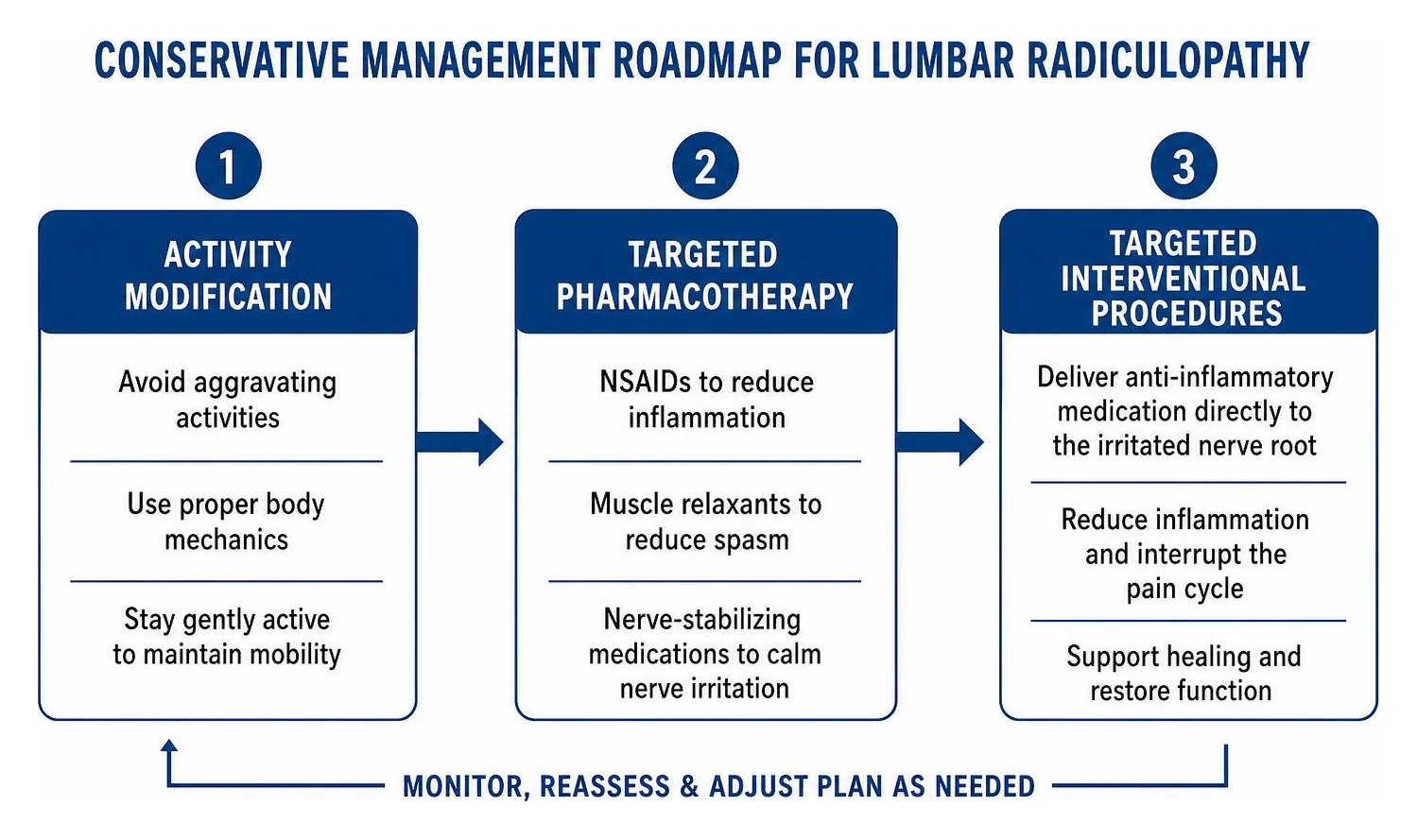
A comprehensive non-surgical management protocol usually incorporates several synchronized strategies:
- Activity Modification: Identifying and temporarily limiting activities that exacerbate nerve compression while keeping you active enough to avoid stiffness.
- Targeted Pharmacotherapy: Utilizing non-steroidal anti-inflammatory drugs (NSAIDs), muscle relaxants, or nerve-stabilizing medications to calm hyperactive nerve signaling.
- Targeted Interventional Procedures: Directing anti-inflammatory medication directly onto the irritated nerve root to break the pain cycle quickly.
- Active Physical Rehabilitation: Strengthening supporting core muscles and improving spinal flexibility to relieve mechanical stress on the lower back.
Explore our full breakdown of non-invasive therapies in our Non-Surgical Back Treatment Overview.
Interventional Injections for Lumbar Radiculopathy Treatment Scottsdale
When oral medications and early physical therapy don’t provide sufficient relief, interventional pain techniques offer a powerful middle ground between standard conservative care and surgery. For patients pursuing lumbar radiculopathy treatment scottsdale, outpatient epidural steroid injections are among the most reliable procedures available.

An lumbar epidural steroid injection delivers targeted anti-inflammatory corticosteroid medication directly into the epidural space surrounding the irritated nerve roots. To maximize safety and precision, our double board-certified physicians perform all injections using real-time fluoroscopic (X-ray) guidance and contrast dye. This ensures the therapeutic medication reaches the exact location of nerve compression.
Benefits of interventional injections include:
- Rapid Inflammation Reduction: Steroids decrease swelling around the nerve root, relieving pressure and reducing pain.
- Therapeutic Window for Physical Therapy: By blunting acute pain, injections allow patients to comfortably participate in physical therapy.
- Minimally Invasive Outpatient Convenience: Performed in a comfortable clinic setting with little to no downtime required.
To learn more about these outpatient options, consult our Outpatient Lumbar Epidural Injections Guide and read about our specialized Sciatica Treatment Services.
Customized Physical Therapy for Lumbar Radiculopathy Treatment Scottsdale
Physical therapy is a vital component of long-term recovery for lumbar radiculopathy. While injections relieve acute nerve inflammation, physical rehabilitation corrects the mechanical imbalances that caused or worsened the nerve compression in the first place.

A physical therapy program tailored for lumbar radiculopathy focuses on several key areas:
- Core and Lumbar Stabilization: Strengthening deep abdominal muscles, gluteals, and spinal erects to form a protective natural brace around your lumbar spine.
- Directional Preference Exercises: Techniques like the McKenzie Method identify specific movements (such as extension or flexion) that help centralize radiating leg pain back toward the low back.
- Mechanical Traction and Mobilization: Gentle spinal traction expands nerve exit pathways, creating space around compressed nerve roots.
- Nerve Gliding Techniques: Gentle neural mobilization exercises restore smooth movement to trapped nerve fibers within surrounding soft tissues.
To review targeted exercise routines, read our guide on Physical Therapy for Lumbar Radiculopathy.
When Surgical Intervention Is Recommended
The vast majority of patients with lumbar radiculopathy recover successfully without spine surgery. However, surgical evaluation is an important consideration when conservative measures fall short or when progressive neurological symptoms develop.
Surgery is primarily intended to relieve mechanical nerve decompression when structural pressure causes ongoing motor loss or intractable pain.
Red-flag signs requiring immediate emergency medical evaluation include Cauda Equina Syndrome, characterized by progressive leg weakness, loss of bowel or bladder control, and saddle anesthesia (numbness in the groin and buttocks).
Finding a Qualified Spine Specialist in Scottsdale
When searching for effective lumbar radiculopathy treatment scottsdale, selecting the right medical specialist is critical. A qualified physician should thoroughly investigate your spinal structure rather than simply treating symptoms surface-level.
When selecting a spine care provider across Scottsdale, Phoenix, Mesa, Gilbert, or Glendale, consider these essential qualifications:
- Double Board Certification: Seek out physicians double board-certified in Physical Medicine & Rehabilitation (PM&R) and Pain Medicine. This dual training balances non-surgical biomechanical rehabilitation with advanced interventional pain procedures.
- Advanced Diagnostic Tools: Ensure your provider utilizes precision imaging, including high-resolution MRI scans, CT myelograms, or electromyography (EMG) nerve conduction velocity studies to accurately map nerve irritation.
- Comprehensive Care Model: Select a clinic that offers multi-modal treatment plans combining active physical rehab, medication management, and image-guided treatments under one roof.
Learn more about selecting the right care team in our guide on Finding Lumbar Radiculopathy Treatment in Phoenix Area.
Expected Recovery Timeline and Long-Term Prognosis
The recovery timeline for lumbar radiculopathy varies depending on the underlying cause, symptom severity, and overall physical health. Fortunately, the long-term prognosis for most individuals is very positive.
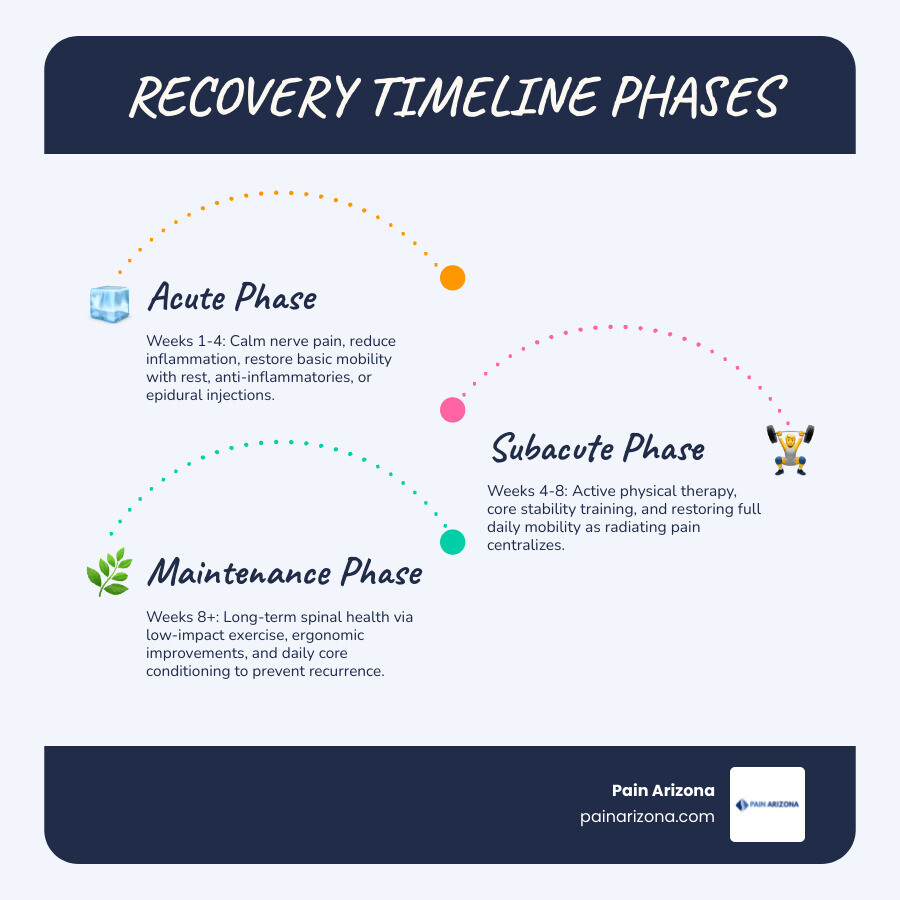
- Acute Phase (Weeks 1 to 4): Focuses on calming severe nerve pain, reducing tissue inflammation, and restoring basic mobility using short-term rest, anti-inflammatory medications, or epidural injections.
- Subacute Phase (Weeks 4 to 8): Shifts toward active physical therapy, core stability training, and restoring full daily mobility as radiating leg pain centralizes.
- Maintenance Phase (Weeks 8 and Beyond): Focuses on long-term spinal health through regular low-impact exercise, ergonomic improvements, and daily core conditioning to prevent symptoms from recurring.
For additional insight into acute recovery strategies, check out our Acute Lumbosacral Radiculopathy Guide.
Frequently Asked Questions About Lumbar Radiculopathy
What is the most effective approach for L5 radiculopathy?
The L5 nerve root is one of the most common sites of nerve compression in the lumbar spine. It often causes pain radiating down the outer thigh and calf into the top of the foot, sometimes accompanied by weakness when lifting the big toe (foot drop).
The most effective treatment for L5 radiculopathy combines targeted image-guided transforaminal epidural injections precisely at the L5-S1 nerve exit zone with direction-specific physical therapy. This dual approach addresses immediate nerve swelling while improving lumbar spinal mechanics. Read our complete details in our L5 Radiculopathy Complete Guide.
How long does non-surgical recovery usually take?
Most patients experiencing acute lumbar radiculopathy notice meaningful symptom improvement within 4 to 8 weeks using structured conservative care. Nerve tissue heals relatively slowly compared to muscles, so residual mild tingling or tightness can linger even after severe radiating pain resolves. Consistent rehabilitation significantly speeds up this healing window.
Can spinal nerve pain recur after successful care?
Yes, spinal nerve pain can return if the underlying mechanical triggers—such as poor sitting ergonomics, core muscle weakness, or repetitive heavy twisting—are left unaddressed. Maintaining strong core stability, practicing safe lifting mechanics, and staying active long-term are essential for keeping lower back nerve pain from coming back.
Conclusion
Living with nerve compression and radiating leg pain can make simple daily activities feel overwhelming. However, with modern diagnostic imaging, image-guided interventional procedures, and targeted physical rehabilitation, relief is well within reach.
At Pain Arizona, our team of double board-certified physicians delivers comprehensive, evidence-based care tailored to your daily lifestyle and physical goals. We accept most insurance plans—simply check with our office manager to verify if your plan is accepted at our Scottsdale, Phoenix, Mesa, Gilbert, or Glendale clinics.
Ready to take control of your spinal health? Learn more about our specialized approach to Comprehensive Lumbar Radiculopathy Care and schedule your diagnostic evaluation with Pain Arizona today.