
How to Find Reliable Back Fracture Support in Glendale
Finding Reliable Vertebral Fracture Support in Glendale
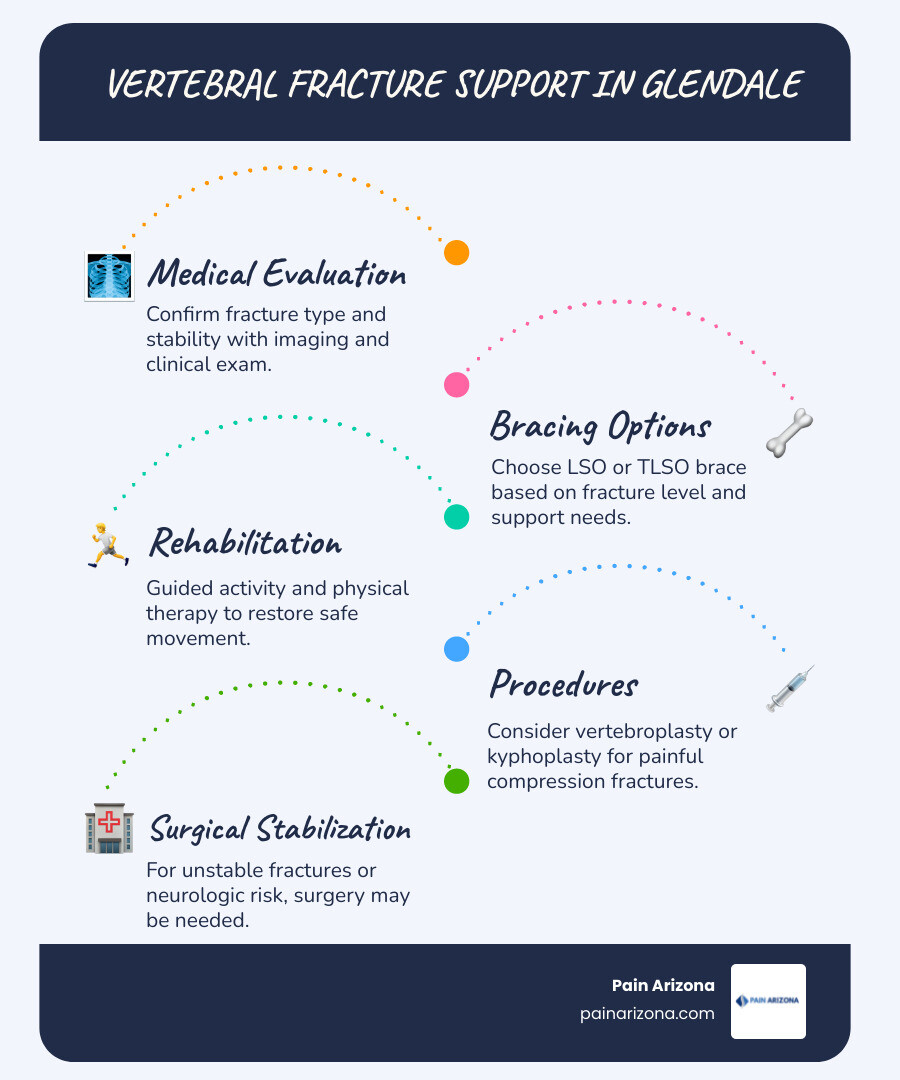
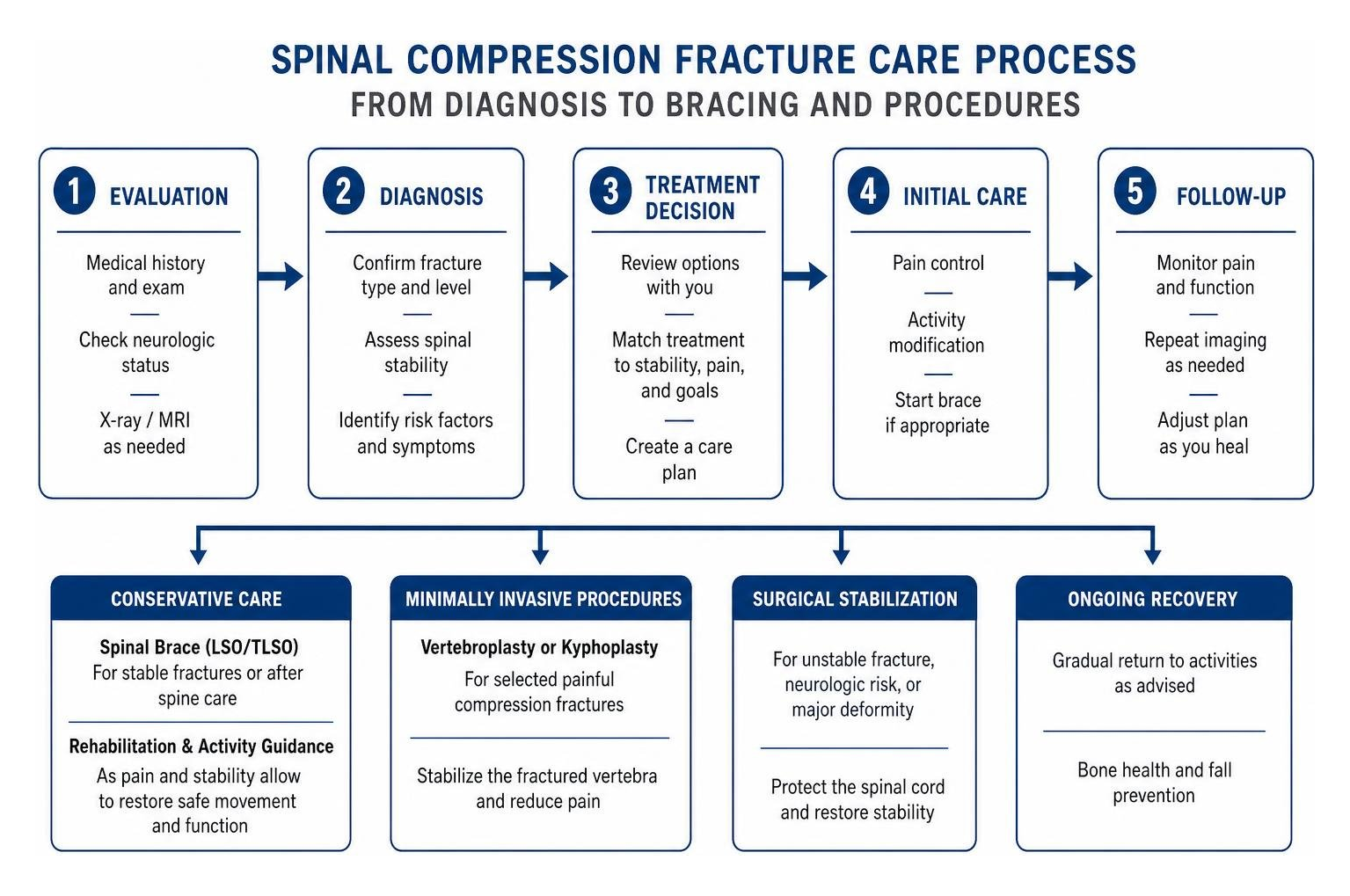
Vertebral fracture support Glendale should start with a medical evaluation to confirm the fracture type, check spinal stability, and compare the right treatment options. Many stable fractures can be managed with a prescribed spinal brace, pain control, and guided activity, while unstable fractures, nerve symptoms, or severe deformity may need urgent specialist care or a procedure.
| Treatment option | Often considered when | Main goal |
|---|---|---|
| Spinal brace, such as an LSO or TLSO | Stable fractures or recovery after spine care | Limit painful motion and support the spine |
| Rehabilitation and activity guidance | As pain and stability allow | Restore safe movement and function |
| Vertebroplasty or kyphoplasty | Selected painful compression fractures | Stabilize the fractured vertebra and reduce pain |
| Surgical stabilization | Unstable fracture, neurologic risk, or major deformity | Protect the spinal cord and restore stability |
A brace is not a one-size-fits-all solution. The best choice depends on where the fracture is, whether the thoracic spine needs support, your body shape, and your clinician’s plan. Modern options may use firm front and back panels plus dense elastic material for stronger abdominal and front-to-back compression than a basic lumbar support.
I’m Dr. Nasser, a double board-certified PM&R and pain medicine physician with experience caring for people with complex spine pain and guiding evidence-based recovery plans. For patients seeking Vertebral fracture support Glendale, I focus on identifying the source of pain, protecting function, and choosing the least invasive appropriate option.
Vertebral fracture support Glendale basics:
- Compression fracture treatment Arizona
- back brace for compressed vertebrae
- compression fracture back
Understanding Back Fractures and Recovery Options
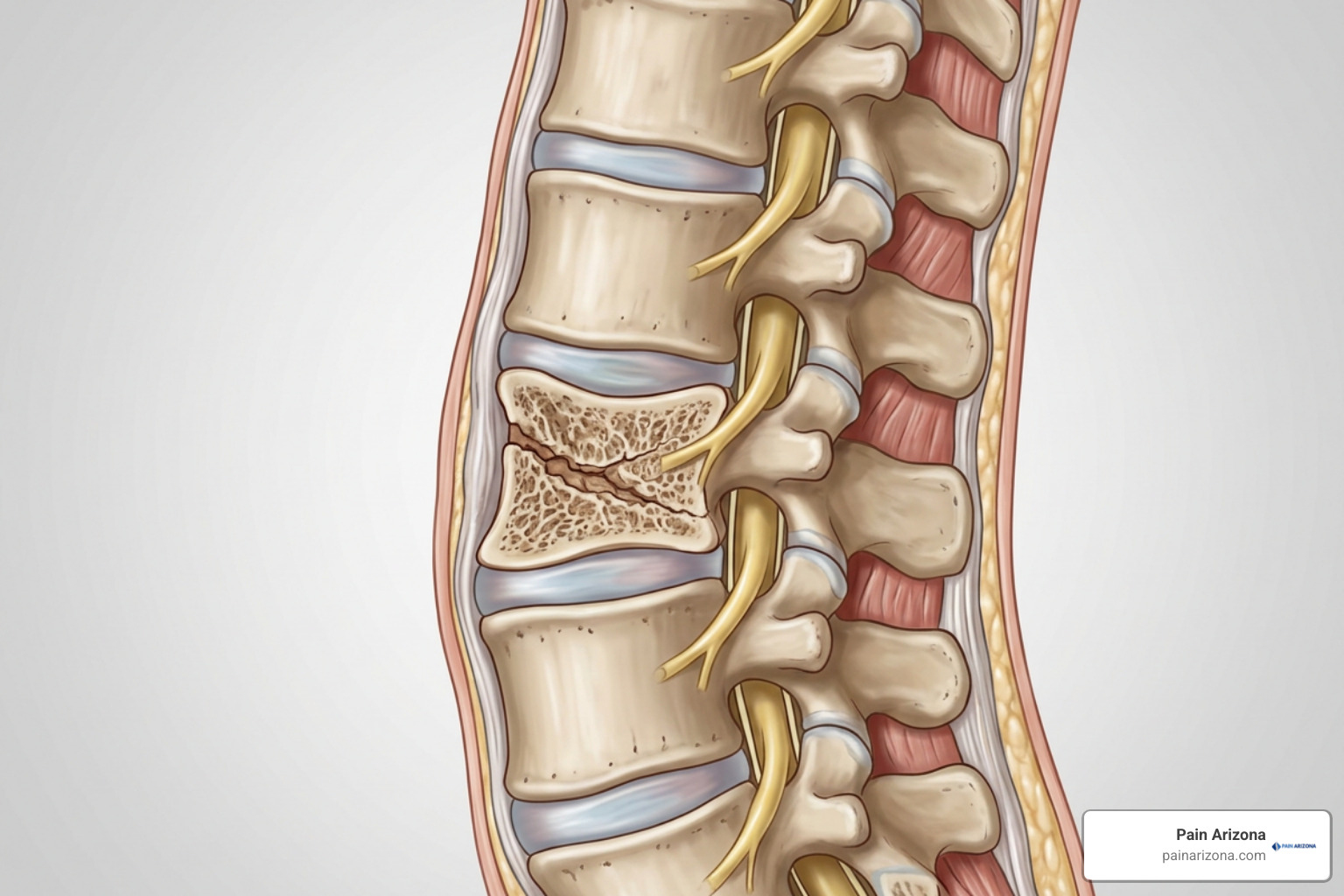
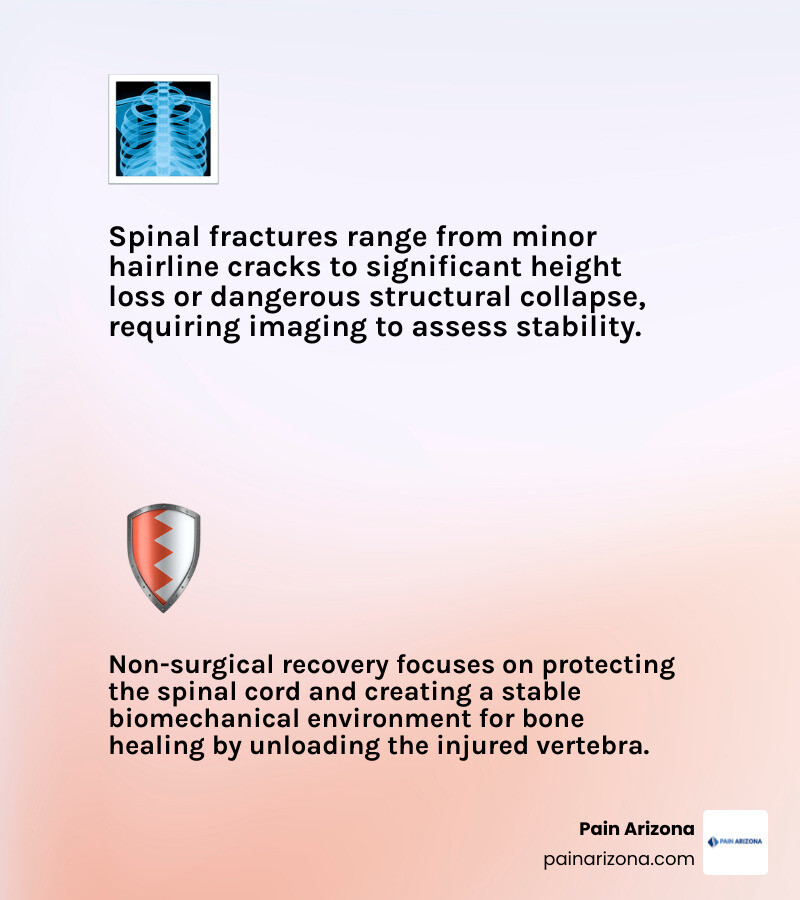
When a spinal bone fractures, the spinal column loses a degree of structural integrity. Depending on how much force was applied and the underlying health of your bones, spinal fractures can range from minor hairline cracks to significant height loss or dangerous structural collapse. Understanding the specific nature of your fracture helps us determine whether conservative management with high-level bracing is sufficient or if procedural interventions are needed.
The primary goal of non-surgical recovery is twofold: protect the spinal cord and exiting nerves while creating a quiet, stable biomechanical environment for the bone to heal. When bone tissue breaks, localized tissue swelling and mechanical instability trigger intense pain signals whenever you tilt, twist, or stand upright. Proper conservative care centers on unloading the injured vertebra. By reducing the physical pressure resting on the damaged bone, we give your body a chance to knit the osseous matrix back together without continuous mechanical trauma.
Evaluating Options for Vertebral Fracture Support in Glendale
Finding effective vertebral fracture support Glendale patients can rely on requires a clear clinical pathway. When you visit our specialists, we conduct physical examinations and review diagnostic imaging (such as X-rays, CT scans, or MRIs) to assess fracture age and structural stability.
Different fracture types dictate distinct care strategies:
- Wedge or Compression Fractures: Common in osteoporosis, these involve collapse of the anterior (front) portion of the bone while the back remains intact.
- Burst Fractures: More severe injuries where the bone is compressed in multiple directions, potentially sending bone fragments toward the spinal canal.
- Flexion-Distraction Injuries: Often resulting from high-impact events like car collisions, affecting ligaments and multiple spinal segments.
For detailed medical insights into how these injuries present, read our comprehensive overview on Vertebral Compression Fracture Conditions.
Advanced Orthotic Solutions for Vertebral Fracture Support in Glendale
When conservative stabilization is indicated, prescribing a medical-grade orthosis is often our primary line of defense. Advanced orthotic systems, such as the VertaMax LSO and TLSO developed by VERTAMAX LSO & TLSO – Optec USA, offer biomechanical stability that far surpasses off-the-shelf elastic waist bands.
Unlike standard drugstore corsets, advanced medical braces incorporate rigid anterior (front) and posterior (back) plastic panels embedded within high-grade elastic structures. This creates a supportive shell around the abdomen and lower back, offloading heavy axial loads from your injured spinal segments and restricting micro-movements that provoke sharp pain.
LSO vs. TLSO Braces and the Role of the DLK
Selecting the right orthosis requires matching the brace’s mechanical height to the exact level of your vertebral injury.
- LSO (Lumbar-Sacral Orthosis): Designed to support injuries situated low in the spine, specifically the lower lumbar levels ($L1$ through $L5$) and sacrum.
- TLSO (Thoracic-Lumbar-Sacral Orthosis): Designed for fractures located higher up, near the mid-back transition zone (thoracic levels $T8$ through $T12$).
To transform a standard LSO into a full TLSO, clinicians utilize a specialized Dorsal Lumbar Kit (DLK). The DLK attaches to the back panel and extends upward along the thoracic spine, securing over the shoulders with padded straps. This upper extension stops you from bending forward (flexion), which is the exact motion that places destructive forces on fractured thoracic and upper lumbar vertebrae.
| Feature / Specification | VertaMax LSO | VertaMax TLSO (with DLK) |
|---|---|---|
| Anatomical Target | Lumbar and Sacral spine ($L1 – L5$) | Upper/Mid Thoracic down to Sacrum ($T8 – L5$) |
| Thoracic Extension | Not included | Included (Dorsal Lumbar Kit / DLK) |
| Motion Restriction | Flexion, extension, lateral side-bending | Flexion, extension, rotation, upper spine postural slump |
| Primary Fracture Indications | Low lumbar compression fractures, $L-S spine post-op | Thoracic burst fractures, mid-spine compression fractures |
| Compression Material | Dense high-strength elastic | Dense high-strength elastic |
| Heat Molding Required | No (Self-adjusting contoured panels) | No (Self-adjusting contoured panels) |
Key Features and Biomechanics of Modern Spinal Braces
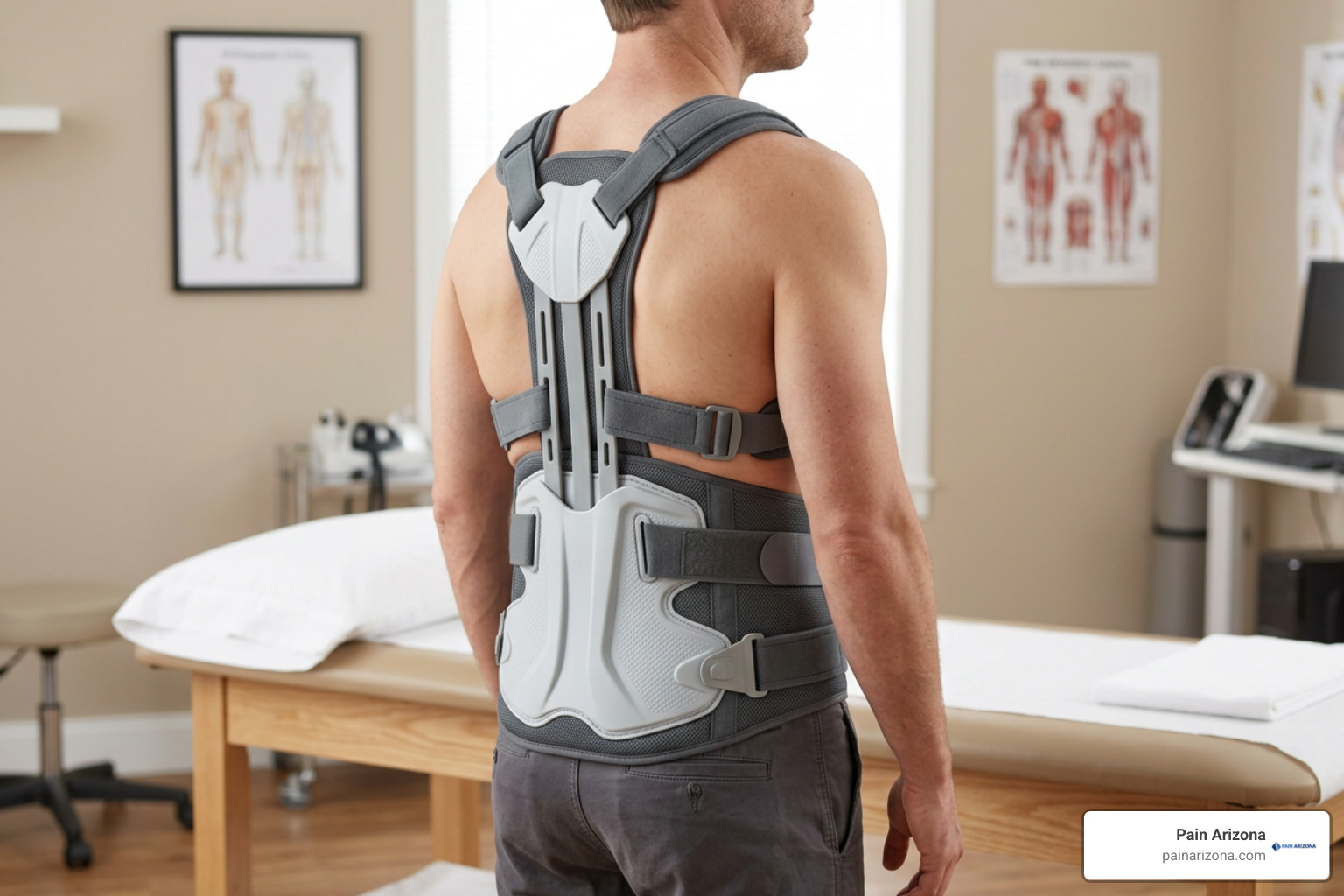
The underlying mechanics of modern spinal bracing center on intra-abdominal pressure and circumferential rigidity. When a brace compresses the soft abdominal cavity, it creates a rigid cylinder of fluid and air pressure in front of the spine. This “fluid cylinder” acts as an anterior column, bearing a significant portion of your body weight and dramatically lowering the load on your vertebral bodies.
The VertaMax achieves this through its construction using dense elastic materials. Standard lumbar wraps stretch easily, losing their tension after a few hours of wear. The dense elastic fabric in high-performance orthoses retains dynamic tension while resisting stretch, giving you firm abdominal pressure and anterior-posterior (front-to-back) support throughout the day. Crucially, the embedded plastic panels are pre-contoured to match natural lordotic curves, providing a tight fit without needing cumbersome heat molding or custom plastic baking.
Indications for Burst Fractures and Post-Op Stabilization
High-performance LSO and TLSO braces are indicated for a broad spectrum of acute and chronic spinal conditions. Beyond primary osteoporotic compression fractures, these medical orthoses are prescribed for:
- Burst Fractures: Providing essential circumferential pressure to prevent bone shifting during non-surgical healing.
- Post-Operative Spinal Stabilization: Protecting surgical implants, hardware, or bone grafts following fusion, laminectomy, or discectomy.
- Spondylolisthesis & Spondylolysis: Restricting motion across unstable, slipped vertebrae to alleviate nerve impingement.
- Spinal Stenosis & Degenerative Disc Disease: Unloading compressed intervertebral discs and relieving facet joint strain.
- Severe Chronic Lower Back Pain: Offering mechanical rest during painful inflammatory flare-ups.
To learn more about managing these injuries, explore our complete Vertebral Compression Fracture Guide.
Streamlined Design, Sizing, and Daily Wearing Compliance
A spinal brace can only speed up your recovery if you actually wear it. In the past, bulky back braces felt like wearing heavy medieval armor under your shirt, causing many patients to abandon them due to discomfort.
Modern orthotics solve this compliance problem with streamlined, low-profile designs. Sleek edge finishes and compact pull-tabs allow the VertaMax to fit comfortably beneath regular daily clothing without creating visible bulges. Furthermore, broad sizing ranges—spanning from S/M up to 4XL/5XL—along with neutrals like Gray, Black, and Beige, ensure that every patient in Glendale can achieve a tailored, discreet fit that matches their anatomical shape and lifestyle.
Medical Management, Procedures, and Insurance Coding
Navigating healthcare and medical equipment often brings up billing questions. When prescribing back fracture orthoses, our medical team works closely with insurance providers to ensure complete clarity regarding your coverage. In pain management, medical devices are verified through standardized healthcare coding systems to streamline reimbursement.
At Pain Arizona, we accept most insurance plans. Check with our office manager to see if your plan is accepted and how your specific Durable Medical Equipment (DME) coverage applies to prescribed bracing.
Navigating PDAC Billing Codes for Vertebral Fracture Support in Glendale
Medical-grade spinal orthoses like the VertaMax are evaluated and approved by the Pricing, Data Analysis, and Coding (PDAC) contractor for Medicare and commercial insurance billing. Knowing the appropriate Healthcare Common Procedure Coding System (HCPCS) codes helps ensure your brace is covered correctly:
- L0627: Lumbar-sacral orthosis, sagittal control, with rigid anterior and posterior panels, movement restriction, fabric canvas or elastic material, prefabricated, off-the-shelf.
- L0631: Lumbar-sacral orthosis, sagittal-coronal control, with rigid posterior frame/panel extending from $S1$ to $T9$, lateral strength panels, prefabricated, off-the-shelf.
- L0637: Lumbar-sacral orthosis, sagittal-coronal control, with rigid anterior and posterior frame/panels, lateral strength, custom fitted.
- L0642: Lumbar-sacral orthosis, sagittal control, with rigid anterior and posterior panels, prefabricated, off-the-shelf.
Having these standardized PDAC approvals guarantees that the brace prescribed at our Glendale clinic meets rigorous insurance standards for quality and anatomical support. For an in-depth breakdown of brace categories, read our article on the Top Braces for Lumbar Compression Fracture Recovery.
Complementary Procedures: Vertebroplasty and Kyphoplasty
While high-compression bracing effectively manages many fractures, some severe or unhealing fractures require direct structural intervention. If severe pain persists despite bracing, or if imaging shows progressive bone collapse, minimally invasive outpatient procedures can help restore comfort and spinal height.
- Vertebroplasty: A minimally invasive image-guided procedure where medical-grade bone cement is injected directly into the fractured vertebra, stabilizing the bone fragments and rapidly dulling pain.
- Kyphoplasty: Similar to vertebroplasty, but utilizes a small orthopedic balloon that is gently inflated inside the collapsed bone to restore lost vertebral height before filling the void with bone cement.
Combining a temporary post-procedure orthosis with these targeted therapies helps ensure the spine stays balanced while you get back on your feet.
Proper Fitting, Donning, and Wear Protocols
Putting on (donning) and removing (doffing) your brace correctly is critical to keeping your spine safe and getting the support you need. Putting a brace on incorrectly can press on painful areas or fail to limit spinal motion.
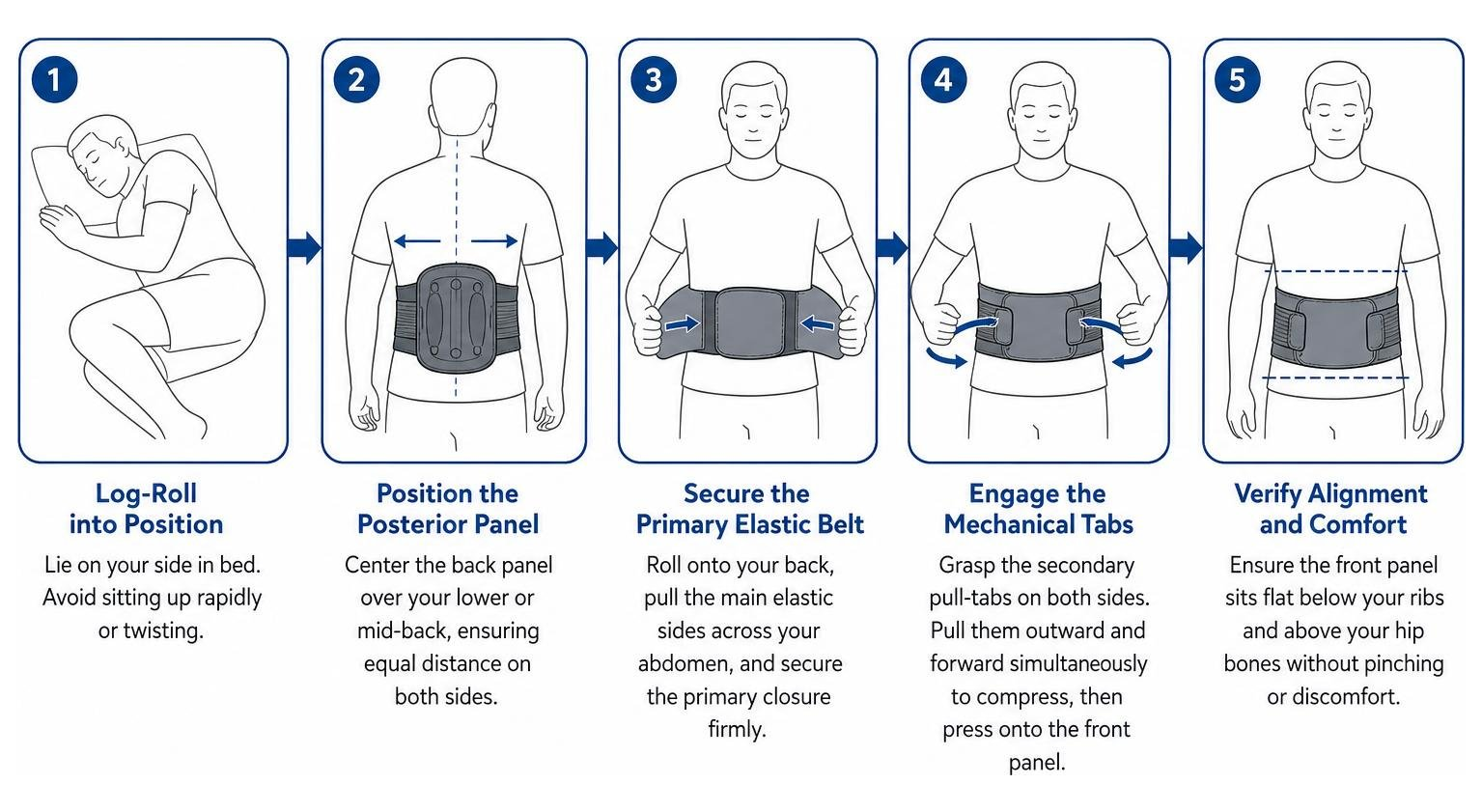
- Log-Roll into Position: If you are in acute pain, lie down on your side in bed. Avoid sitting up rapidly or twisting your torso while unbraced.
- Position the Posterior Panel: Center the back plastic panel over your lower back or mid-back, ensuring equal distance on both sides of your spine.
- Secure the Primary Elastic Belt: Roll onto your back, pull the main elastic sides across your abdomen, and secure the primary hook-and-loop closure firmly.
- Engage the Mechanical Fastening Tabs: Grasp the secondary compression pull-tabs on both sides. Pull them outward and forward simultaneously to compress the dense elastic walls, then press them onto the front panel.
- Verify Alignment and Comfort: Ensure the front panel sits flat below your ribs and above your hip bones without pinching your skin when sitting.
Always follow your physician’s specific instructions regarding whether your brace should be put on before getting out of bed in the morning.
Frequently Asked Questions About Back Fracture Support
Does the VertaMax brace require heat molding for a proper fit?
No, the VertaMax brace does not require any heat molding or thermal modification. Its flexible plastic panels and ergonomic contouring allow it to naturally adjust to various patient anatomies and spinal curves straight out of the package.
How long do patients typically need to wear a spinal brace after a fracture?
Most patients wear a prescribed spinal orthosis for 6 to 12 weeks, depending on the severity of the fracture, bone healing rates, and density health. Your physician will monitor your progress with follow-up imaging before clearing you to gradually taper off brace wear.
What is the main difference between an LSO and a TLSO brace?
The primary difference lies in the height of spinal support. An LSO focuses on the lower back and sacrum ($L1 – L5$), whereas a TLSO includes an upper extension (such as a Dorsal Lumbar Kit) that stabilizes the thoracic spine ($T8$ and above), restricting upper back bending and stooping.
Conclusion
Finding trusted, high-quality vertebral fracture support Glendale starts with expert medical care tailored to your specific injury. At Pain Arizona, our team of double board-certified physicians specializes in diagnosing spine injuries, fitting advanced orthotics, and offering modern minimally invasive procedures to restore your quality of life.
Whether you need a specialized orthosis or advanced procedural options like kyphoplasty, we are here to support your recovery every step of the way. Visit our dedicated Pain Management Glendale center or explore our Vertebral Compression Fracture Conditions resource page to schedule a consultation today.