
The Painless Guide to Trigger Point Injection Costs and Coverage
How Much Do Trigger Point Injections Cost? Quick Answer for 2026
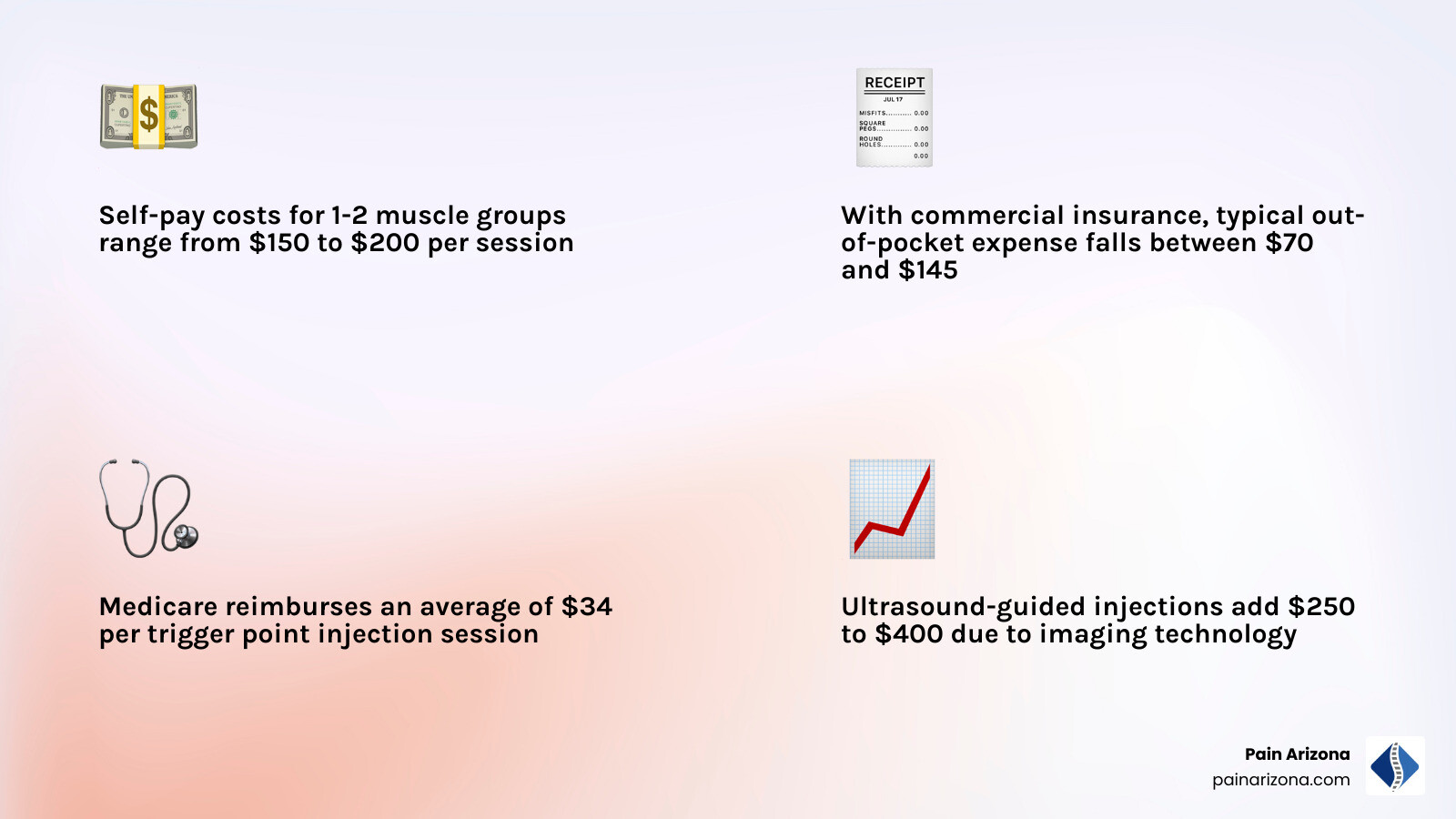
Trigger point injections cost between $100 and $500 per session without insurance, depending on how many muscle groups are treated, the type of medication used, and where you receive care. Here’s a fast breakdown:
| Situation | Estimated Cost |
|---|---|
| 1-2 muscle groups (self-pay) | $150 – $200 |
| 3+ muscle groups (self-pay) | $200 – $300+ |
| Ultrasound-guided injection | $250 – $400 |
| With commercial insurance (est.) | $70 – $145 out-of-pocket |
| Medicare average payment | ~$34 per session |
Costs vary by provider, facility, and location. We accept most insurance plans — check with our office manager to see if your plan is accepted.
If chronic muscle pain has been holding you back — and stretching, rest, or medication just aren’t cutting it — you’re probably searching for real answers about whether trigger point injections are worth pursuing, and what they’ll actually cost you. That’s a fair question, and one more patients in the Greater Phoenix Area are asking as they look for targeted, lasting relief from painful muscle knots and myofascial pain.
Trigger point injections are a relatively low-cost, minimally invasive procedure. But pricing can vary significantly depending on your insurance, your provider, and how many areas need treatment. Understanding the full picture before your first visit puts you in control.
I’m Dr. Nasser, a double board-certified PM&R and pain medicine physician with over a decade of experience performing trigger point injections and other interventional procedures for patients with complex, chronic pain. I’ve guided thousands of patients through the trigger point injections cost conversation — helping them understand exactly what to expect financially so they can focus on getting better.
What Are Trigger Point Injections and How Do They Work?

To understand the cost of this procedure, it helps to understand what you are actually paying for. Within your muscles, you have bands of tight, highly sensitive fibers. When these fibers stay contracted, they form hard, painful knots known as myofascial trigger points.
These knots do not just hurt when you press on them. They often cause referred pain, meaning a knot in your shoulder might trigger a tension headache, or a knot in your lower back might radiate pain down into your glutes. This continuous muscle tension can lead to painful muscle spasms and severely limit your range of motion.
A trigger point injection (TPI) is a quick, in-office procedure designed to disrupt this painful cycle. During the treatment, we insert a very small needle directly into the trigger point. The injection typically contains:
- Local anesthetics: Medications like lidocaine or bupivacaine provide immediate, targeted pain relief and help the tight muscle fibers finally relax.
- Corticosteroids: In some cases, we may add a small amount of steroid medication to reduce deep-seated tissue inflammation.
By physically disrupting the knot and bathing the tissue in a local anesthetic, we can break the cycle of muscle spasm and pain. This provides rapid relief and opens up a window of opportunity for you to progress with stretching, physical therapy, and daily activities. To learn more about how we target these stubborn knots, explore our guide on how to Relieve Muscle Knots with Phoenix Trigger Point Therapy.
While TPIs are highly effective for muscular issues, they are distinct from procedures targeting the joints. If you are experiencing structural joint pain alongside muscle tension, you can read Everything You Need to Know About Joint Injections to see how different injection therapies compare.
Average Trigger Point Injections Cost Without Insurance
For patients who do not have health insurance, or those choosing to pay out-of-pocket, understanding the baseline cash prices of medical procedures is essential.
Medical providers bill trigger point injections using specific Current Procedural Terminology (CPT) codes. The cost of your session is primarily determined by which CPT code is used, which is based on the number of muscle groups treated:
- CPT Code 20552: Injection of trigger points in 1 or 2 muscle groups.
- CPT Code 20553: Injection of trigger points in 3 or more muscle groups.
The table below highlights the average cash prices and national payment benchmarks for these procedures:
| Billing Code & Description | Average Provider Billed Charge | Estimated Cash/Self-Pay Price | National Medicare Payment Rate |
|---|---|---|---|
| CPT 20552 (1-2 Muscle Groups) | $234.75 | $98.57 – $150.00 | $34.28 |
| CPT 20553 (3+ Muscle Groups) | $433.00 (Median) | $200.00 – $433.00 | $36.00 (Physician Fee) |
There is often a massive gap between what a clinic or hospital bills to insurance and what they actually accept as a cash-pay rate. For example, while the national average billed charge for CPT 20552 is $234.75, the actual cash price paid by patients often hovers around $98 to $150. If you want to compare hospital-specific rates across the country, you can Compare hospital cash prices for trigger point injections to see how widely these numbers can swing.
For a closer look at the national pricing benchmarks for simpler sessions, check out the data on the Average cost of trigger point injections for 1-2 muscles.
Out-of-Pocket Trigger Point Injections Cost for Uninsured Patients
Without insurance, the total out-of-pocket trigger point injections cost typically ranges from $150 to $500 per session.
Your overall price will depend on the complexity of your treatment. If you only need a single session targeting one or two muscle groups in your neck or shoulder, you can generally expect to pay on the lower end of that spectrum. You can review the Estimated rates for 1-2 muscle groups to see how basic self-pay structures are calculated.
However, if your pain is widespread—such as with fibromyalgia or severe myofascial pain syndrome—and requires treating three or more muscle groups, the price will naturally increase. Across hundreds of hospitals and clinics nationwide, the Median cash price for 3 or more muscles sits at approximately $433, with some hospital-based facilities charging significantly more.
Factors That Influence the Price of Trigger Point Injections
If you have started calling clinics in the Greater Phoenix Area for quotes, you have probably noticed that prices are rarely identical. Several distinct factors influence the final price of your treatment:
- Provider Experience: Highly trained specialists, such as double board-certified pain management physicians, may command higher fees than general practitioners due to their advanced training and precision.
- Facility Type: Where you receive your injection matters. Private pain clinics are almost always the most cost-effective option. Hospital outpatient departments often charge an additional “facility fee” that can add $100 to $300 or more to your final bill for the exact same procedure.
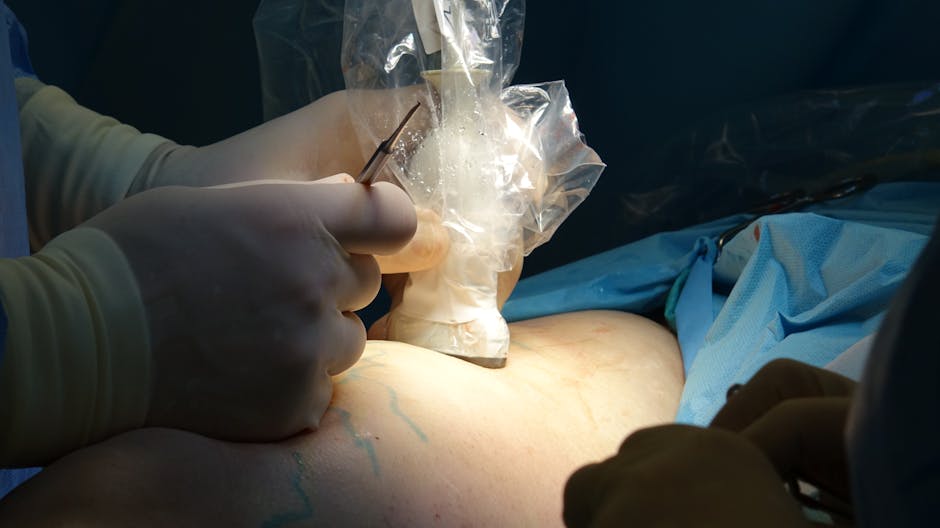
- Imaging Guidance: Most trigger point injections are performed using physical palpation (the doctor feels the muscle knot with their hands). However, if a knot is located in a deep or sensitive muscle group, we may use ultrasound guidance to ensure perfect needle placement. Because ultrasound-guided injections require specialized equipment, they typically cost between $250 and $400 per session.
- Medication Additives: Standard injections using local anesthetics like lidocaine are highly affordable. If we add a corticosteroid to address underlying inflammation, the cost may rise slightly.
If you are curious about how these medication choices impact overall treatment costs, you can read about The Real Cost of Cortisone Injections and How to Save to understand how steroid-based therapies are priced.
Hidden Fees That Affect Your Total Trigger Point Injections Cost
When budgeting for your care, it is important to remember that the injection itself is rarely the only line item on your bill. To avoid surprise charges, always ask if your quote includes the following:
- Initial Consultation Fee: Before we can administer an injection, we must perform a comprehensive evaluation to diagnose the root cause of your pain. A typical specialist consultation can range from $50 to $150.
- Facility/Room Fees: Some clinics and hospitals charge a flat fee for the use of the procedure room, which can add $30 to $100.
- Medical Supplies: A minor charge of $20 to $50 is sometimes added to cover the cost of needles, syringes, sterile drapes, and skin preparation solutions.
- Follow-Up Visits: To monitor your progress and plan any necessary long-term care, follow-up evaluations are billed at approximately $50 to $100 per visit.
Insurance Coverage and Out-of-Pocket Expenses
The good news is that trigger point injections are covered by most major commercial insurance plans and Medicare, provided they are deemed medically necessary.
To prove medical necessity, insurance companies typically require documentation showing that:
- You have a diagnosed condition causing your pain (such as myofascial pain syndrome).
- Your pain has persisted despite conservative treatments, such as physical therapy, home stretching, or over-the-counter anti-inflammatory medications.
- The injections are not being performed too frequently (most plans limit the number of covered sessions within a 12-month period).
If you meet these guidelines, your insurance may cover up to 80% to 90% of the procedure. However, your actual out-of-pocket costs will depend heavily on your specific plan’s design:
- High-Deductible Health Plans (HDHPs): If you have not met your annual deductible, you will likely have to pay the clinic’s contracted rate with your insurance out-of-pocket until the deductible is satisfied.
- Copays and Coinsurance: Once your deductible is met, you may only be responsible for a small, flat copay (often $20 to $50) or a percentage-based coinsurance (typically 10% to 20% of the allowed amount).
Before scheduling, we highly recommend calling your insurance provider to verify your benefits, ask if pre-authorization is required, and find out how much of your deductible remains. For a deeper look at navigating insurance requirements for interventional pain procedures, check out our article on Demystifying Cortisone Injections: Pain Relief or Potential Pitfalls?.
Frequently Asked Questions About Trigger Point Injection Costs
Is there a difference in cost between trigger point injections and joint injections?
Yes, there is a notable difference in both complexity and cost. Trigger point injections target the soft, muscular tissues and are relatively simple to perform.
Joint injections, on the other hand, target the complex spaces inside joints like the knee, hip, or shoulder. Because joint injections often require advanced imaging guidance (like live X-ray fluoroscopy) and more expensive medications (such as viscosupplements or high-dose corticosteroids), they are generally more expensive than trigger point injections.
How many injection sessions will I need, and how does that affect the total price?
While some patients experience immediate, lasting relief from a single session, many chronic pain conditions require a series of treatments to completely break the cycle of muscle tension.
A typical treatment plan may involve 3 to 4 sessions spaced out over several weeks. During your initial consultation, we will map out a personalized plan so you can understand the cumulative cost of your care before treatment begins.
Can I use my HSA or FSA to pay for trigger point injections?
Yes! Because trigger point injections are a recognized medical treatment for chronic pain, they are fully eligible expenses under Health Savings Accounts (HSAs) and Flexible Spending Accounts (FSAs). You can use your HSA or FSA debit card to pay for co-pays, deductibles, and self-pay fees directly at our clinic.
Conclusion
Living with chronic muscle knots and myofascial pain can make even the simplest daily tasks feel like a mountain to climb. Fortunately, trigger point injections offer a highly effective, minimally invasive, and remarkably affordable pathway back to pain-free movement.
At Pain Arizona, our team of double board-certified pain management specialists is dedicated to helping patients across the Greater Phoenix Area—including Phoenix, Mesa, Gilbert, Scottsdale, and Glendale—find lasting relief. We believe in absolute transparency when it comes to your care and your costs.
We accept most insurance plans. Check with our office manager to see if your plan is accepted, and we will work directly with your insurer to verify your benefits and provide a clear, personalized cost estimate before your procedure.
Don’t let muscle pain hold you back any longer. Schedule a consultation for trigger point therapy with our compassionate team today, and let’s take the first step toward reclaiming your active life together.