
Unlock Relief: A Practical Guide to Joint & Soft Tissue Injections
Why a Practical Guide to Joint & Soft Tissue Injections Matters for Chronic Pain Sufferers
A practical guide to joint & soft tissue injections is exactly what you need if you’re dealing with persistent joint pain and wondering whether injections could finally give you real relief.
Here’s a quick overview of what these injections involve:
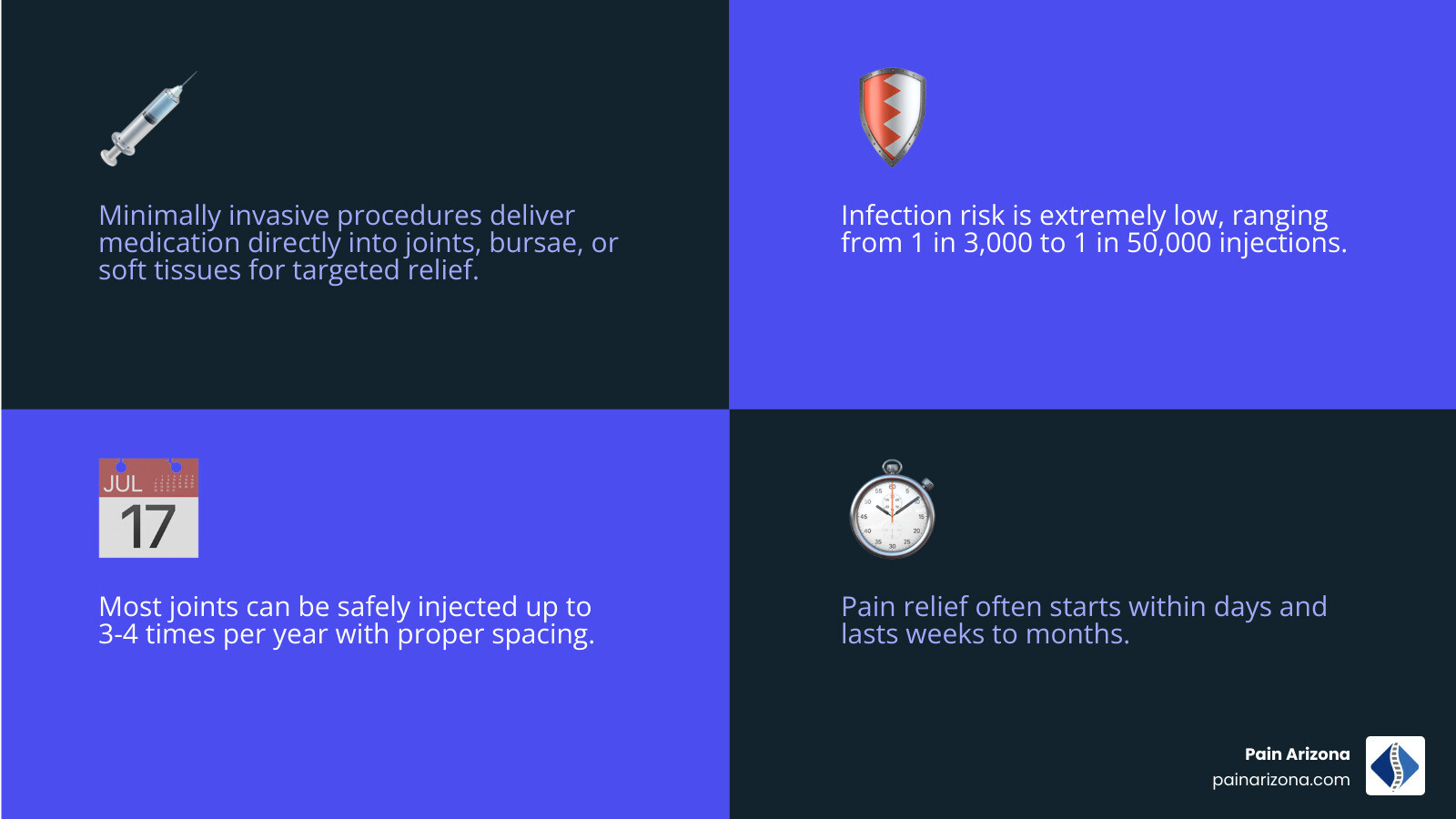
- What they are: Minimally invasive procedures that deliver medication directly into a joint, bursa, tendon sheath, or soft tissue
- Who they help: People with arthritis, bursitis, tendinitis, and other musculoskeletal conditions
- What’s injected: Corticosteroids, local anesthetics, hyaluronic acid, or orthobiologics like platelet-rich plasma (PRP)
- How safe they are: Infection risk ranges from just 1 in 3,000 to 1 in 50,000 injections
- How often: Most joints can be safely injected up to 3-4 times per year
- What to expect: Pain relief often begins within days and can last weeks to months
Nearly 48% of the population reports some form of musculoskeletal condition — and for many people in the Greater Phoenix area, that pain becomes a daily barrier to living a full life. Whether it’s a knee that aches with every step or a shoulder that limits your reach, joint and soft tissue injections can be a powerful tool — not just for relief, but also for diagnosing where your pain is actually coming from.
These procedures are among the most common performed in outpatient pain and musculoskeletal medicine settings. And when done correctly — with the right agent, the right technique, and the right follow-up — they can dramatically improve your quality of life.
I’m Dr. Nasser, a double board-certified PM&R and pain medicine physician with experience in fluoroscopy- and ultrasound-guided injections, having performed tens of thousands of minimally invasive procedures throughout my career — making me well-equipped to walk you through a practical guide to joint & soft tissue injections in a way that’s clear and actionable. In the sections below, we’ll cover everything from how to prepare for an injection to which agents work best for specific conditions.
A practical guide to joint & soft tissue injections terms you need:
Foundation Concepts: A Practical Guide to Joint & Soft Tissue Injections
Before we dive into the “how,” we need to understand the “why” and the “when.” Every successful procedure starts with a strong foundation. According to clinical guidelines from the American Academy of Family Physicians (AAFP), these procedures are vital for managing musculoskeletal pain. At Pain Arizona, we view these injections as a bridge that allows you to participate more fully in physical therapy and daily life.
Indications: Why Get an Injection?
There are two main reasons we perform these procedures:
- Diagnostic Indications: Sometimes, it’s hard to tell exactly which structure is causing your pain. By injecting a local anesthetic into a specific area, we can see if your pain disappears. If you experience >50% pain relief immediately after the numbing agent is injected, we’ve likely found the “pain generator.”
- Therapeutic Indications: This is about long-term relief. We use medications like corticosteroids to reduce inflammation or viscosupplements to lubricate a “rusty” joint. Common conditions include osteoarthritis, gout, soft tissue injuries, and trigger points.
Contraindications: When to Wait
Safety is our first priority. We generally avoid injections if you have:
- Absolute Contraindications: Active infection at the site, a known allergy to the medications, or an unstable fracture.
- Relative Contraindications: Uncontrolled diabetes (as steroids can raise blood sugar), bleeding disorders, or being on certain blood thinners. We always review your full medical history to ensure the timing is right.
The Preparation Process
Preparation is simple but vital. We start with informed consent, where we discuss the benefits, risks, and alternatives. For the procedure itself, we focus on:
- Positioning: We usually have you lie down (recumbent) to prevent any lightheadedness or vasovagal responses.
- Antiseptic Technique: We cleanse the skin thoroughly with chlorhexidine or alcohol to maintain a sterile environment.
- Equipment: We use specialized needles, syringes, and often ultrasound or fluoroscopy to ensure the medication goes exactly where it belongs.

Essential Agents and Pharmacology
What we put into the syringe depends entirely on your specific condition. A practical guide to joint & soft tissue injections must include a look at the “menu” of available agents.
Corticosteroids (The Anti-Inflammatories)
Corticosteroids are powerful anti-inflammatory agents. We often use “depot” preparations, which are less soluble. This means the medication stays in the joint longer—sometimes up to a month—providing sustained relief. Common choices include triamcinolone and methylprednisolone.
Local Anesthetics (The Numbing Agents)
We often mix steroids with local anesthetics like lidocaine (fast-acting) or bupivacaine (longer-lasting). This provides immediate relief, which helps us confirm our diagnosis, and dilutes the steroid so it spreads more evenly throughout the joint space.
Viscosupplementation (The Lubricants)
For knee osteoarthritis, we may use hyaluronic acid. Think of this as “oil for a squeaky hinge.” While its half-life is short, its effects can last for months by improving joint lubrication and reducing inflammation.
Orthobiologics (The Regenerative Options)
- Platelet-Rich Plasma (PRP): Using your own blood’s growth factors to stimulate healing. Studies suggest PRP can be superior to other injectables for knee OA function at the 6-to-12-month mark.
- Prolotherapy: Injecting a dextrose solution to irritate the tissue slightly, which triggers the body’s natural repair mechanisms.
Synovial Fluid Analysis
If we perform an arthrocentesis (removing fluid from a joint), we analyze that fluid. A “string test” helps us check viscosity—healthy fluid stretches about 2.5 cm, while thin, dripping fluid suggests inflammation. We also look at the color and cell count to rule out infection or gout.
| Agent Type | Primary Use | Duration of Effect |
|---|---|---|
| Lidocaine | Diagnostic / Immediate Numbing | 1–2 hours |
| Corticosteroids | Reducing Inflammation | Weeks to Months |
| Hyaluronic Acid | Lubricating OA Joints | 3–6 months |
| PRP | Tissue Repair / Regeneration | 6–12 months |
Step-by-Step Techniques for Common Injection Sites
Accuracy is everything. In the past, many injections were done “blind” using only surface landmarks. Today, we know that blind injections can miss the target 10% to 40% of the time. That’s why we frequently use imaging guidance.
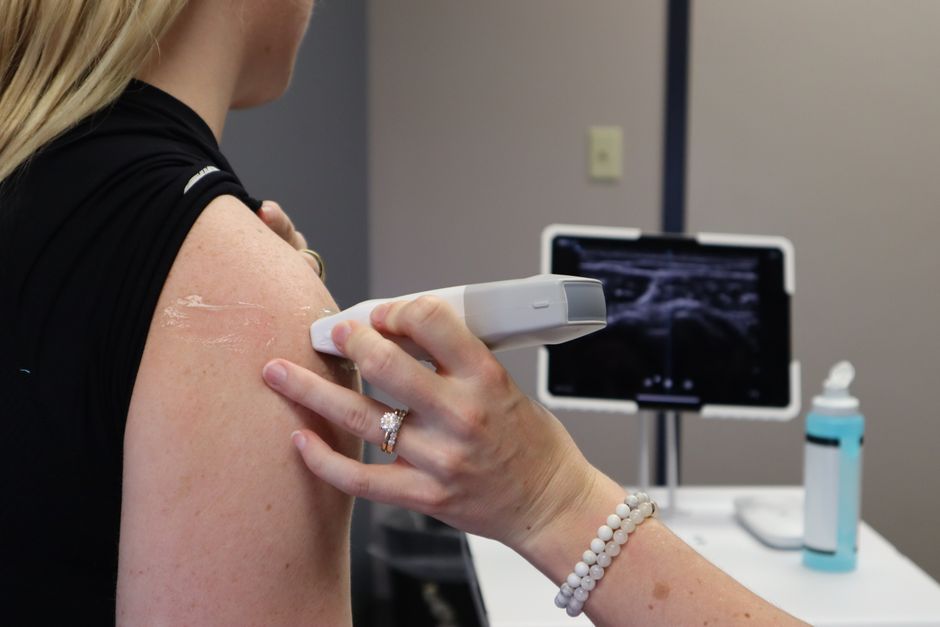
- Ultrasound: This allows us to see your soft tissues, nerves, and blood vessels in real-time. It’s like having X-ray vision for your muscles.
- Fluoroscopy: A live X-ray that is particularly helpful for deep joints like the hip or the facet joints in your spine.
A Practical Guide to Joint & Soft Tissue Injections for the Upper Extremity
The upper body is prone to repetitive strain. We commonly treat:
- Subacromial Space: For shoulder impingement and rotator cuff issues.
- Glenohumeral Joint: For “frozen shoulder” or arthritis.
- Carpal Tunnel: Injecting near the median nerve can provide significant relief from tingling and pain.
- Trigger Finger: A precise injection into the tendon sheath can often resolve the “locking” sensation without surgery.
- Lateral Epicondylitis: Commonly known as tennis elbow, though we often combine this with physical therapy for the best results.
A Practical Guide to Joint & Soft Tissue Injections for the Lower Extremity
The lower extremities bear our entire body weight, making them prime candidates for joint injections.
- Knee Arthrocentesis & Injection: We often drain excess fluid (effusion) before injecting medication. This provides immediate pressure relief.
- Hip Joint: Because the hip is deep, we almost always use fluoroscopy or ultrasound to ensure the needle reaches the intra-articular space.
- Trochanteric Bursa: For pain on the outside of the hip (Greater Trochanteric Pain Syndrome).
- Plantar Fascia: For that sharp, first-step-in-the-morning heel pain.
- Baker’s Cyst: We can use ultrasound to safely drain these cysts behind the knee.
Safety, Complications, and Post-Injection Care
While these procedures are very safe, no medical intervention is without risk. We believe in being fully transparent so you can monitor your recovery, consistent with patient education resources from the AAFP.
Potential Complications
- Infection: Extremely rare (1 in 3,000 to 1 in 50,000).
- Post-Injection Flare: About 1% to 6% of patients experience a temporary increase in pain for 24–48 hours after the numbing medicine wears off. This is a normal crystal-induced reaction to the steroid.
- Skin Changes: In about 5% of cases, you might notice thinning of the skin (atrophy) or a loss of pigment at the injection site.
- Systemic Effects: Diabetics should monitor their blood sugar, as it may rise temporarily for a few days following a steroid injection.
Aftercare Instructions
To get the most out of your treatment, follow these guidelines:
- Rest: Avoid heavy lifting or strenuous exercise for at least 24–48 hours.
- Ice: Apply ice for 15–20 minutes several times a day to manage any local soreness.
- Monitor: Keep the area clean and watch for signs of infection, such as fever or increasing redness.
- Pain Diary: We often ask you to keep a log of your pain levels for the first few days to help us determine how well the injection worked.
Frequently Asked Questions about Joint Injections
How frequently can injections be safely repeated?
We generally recommend limiting cortisone shots to no more than 3 or 4 times per year in the same joint. Repeatedly injecting steroids too often can lead to the thinning of joint cartilage or weakening of tendons. We usually space treatments at least 4 to 6 weeks apart.
What are the most common side effects of these procedures?
Beyond the “flare” mentioned above, some people experience facial flushing (up to 15% of patients) or a bit of local bruising. These are temporary and usually resolve on their own. If you ever feel “instant” relief, that’s likely the local anesthetic working—don’t overdo it immediately, as the numbing will wear off before the long-term medication kicks in!
When should I be referred to a subspecialist?
Most joint and soft tissue issues can be managed in our office. However, we may refer you to a surgeon if there is a complete tendon rupture, signs of a joint infection that requires surgical drainage, or if you have failed to respond to multiple conservative treatments. Our goal is always the most effective, least invasive path to recovery.
Conclusion
Joint and soft tissue pain shouldn’t be your “new normal.” Whether you’re dealing with a stubborn case of tennis elbow or the daily grind of knee osteoarthritis, a practical guide to joint & soft tissue injections shows that there are many effective ways to manage your symptoms and get back to the activities you love.
I’m Dr. Nasser, and at Pain Arizona, we take a compassionate, evidence-based approach to your care. Our team of double board-certified specialists is dedicated to finding the root cause of your pain and providing the most advanced, minimally invasive treatments available in the Phoenix area. We serve patients in Mesa, Gilbert, Scottsdale, Glendale, and throughout the Greater Phoenix Area.
If you’re ready to explore how joint injections can help you unlock relief, we’re here to help. We accept most insurance plans—just check with our office manager to see if your plan is accepted.
Schedule your consultation with Pain Arizona today and take the first step toward a pain-free life!