
How to Treat Left Abdominal Pain in Arizona Without Losing Your Mind
What You Need to Know About Left Abdominal Pain Treatment in Arizona
If you’re looking for left abdominal pain treatment in Arizona, here are the most important steps to take right now:
- Mild or occasional pain — Try hydration, heat therapy, and dietary changes first.
- Pain lasting more than a few days — See a specialist for a proper diagnosis.
- Severe, sudden, or worsening pain — Go to the emergency room immediately.
- Chronic or complex pain — A multidisciplinary pain clinic in Arizona can help identify the root cause and create a personalized plan.
Left-sided abdominal pain is one of the most frustrating things to deal with — especially when you don’t know why it’s happening. It could be something as manageable as irritable bowel syndrome or dehydration (a real issue in Arizona’s desert climate), or something that needs urgent medical attention like kidney stones or diverticulitis.
The tricky part? The left side of your abdomen contains a lot of important structures — your descending colon, left kidney, spleen, and (for women) the left ovary and fallopian tube. That means the same type of pain can have very different causes, and finding the right treatment starts with finding the right diagnosis.
Navigating the Arizona healthcare system to get answers can feel overwhelming — especially when you’ve already tried treatments that haven’t worked.
I’m Dr. Nasser, a double board-certified pain medicine physician and Chief Medical Officer at Pain Arizona, and I’ve spent over a decade helping patients across the Greater Phoenix Area find lasting relief from complex pain conditions, including left abdominal pain treatment in Arizona for chronic and hard-to-diagnose cases. This guide will walk you through everything you need to know — from common causes to the most effective treatment options available right here in Arizona.
Common Causes of Left-Sided Abdominal Pain in Arizona
When patients visit us in Phoenix, Mesa, or Gilbert complaining of left-sided abdominal pain, the first step is identifying exactly where the discomfort originates. The left side of the abdomen is divided into the upper and lower quadrants, each housing different organs and susceptibility to specific conditions.
Diverticulitis
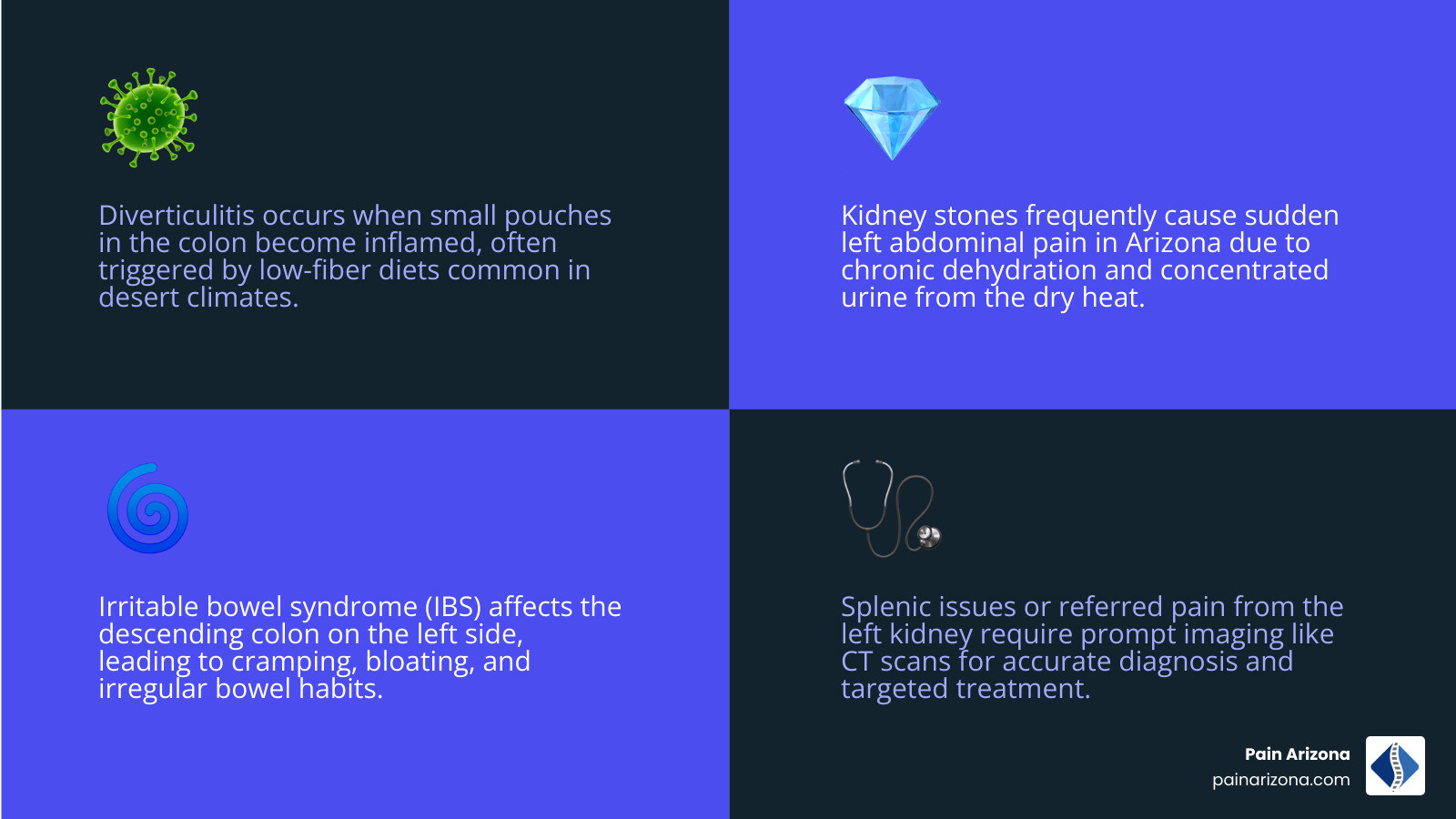
One of the most common culprits of lower left abdominal pain is diverticulitis. This condition occurs when small pouches (diverticula) that develop in the walls of your descending colon become inflamed or infected. Diverticular disease becomes increasingly common as we age, often presenting as a sharp, persistent ache in the lower left side, sometimes accompanied by fever, nausea, and a noticeable change in bowel habits.
Kidney Stones
If you have ever had a kidney stone, you know the pain is unforgettable. Kidney stones are highly prevalent in Arizona, largely due to our intense desert climate. When the body becomes dehydrated, urine becomes highly concentrated, allowing minerals to crystallize into hard stones. As these stones attempt to pass through the left ureter, they cause excruciating, colicky pain that starts in the left side or back and radiates down toward the groin.
Irritable Bowel Syndrome (IBS) and Digestive Conditions
Irritable Bowel Syndrome is a chronic disorder affecting the large intestine. It is characterized by cramping, abdominal pain, bloating, gas, and alternating bouts of diarrhea and constipation. IBS pain is often felt in the lower left abdomen because this is where the descending colon resides. Other chronic digestive issues like Celiac disease, lactose intolerance, and Inflammatory Bowel Disease (IBD)—which includes Crohn’s disease and ulcerative colitis—frequently manifest as left-sided pain.
Climate Factors and Desert Dehydration
Living in Arizona means we have to pay extra attention to our fluid intake. Dehydration does more than just cause thirst; it slows down the entire digestive tract. This sluggishness leads to severe constipation, which physically stretches the colon and causes localized left-sided cramping. Furthermore, chronic dehydration is a primary driver of the high rate of kidney stones we see across the Valley in June 2026.
To better understand the wide spectrum of potential issues, we recommend checking out The Complete Guide to Left Side Abdominal Pain for a deeper dive into how different organ systems contribute to discomfort. Understanding the complexity of abdominal pain is essential, as the duration and onset of your symptoms heavily dictate the treatment path.
| Pain Characteristic | Common Acute Causes | Common Chronic/Progressive Causes |
|---|---|---|
| Upper Left Quadrant | Spleen injury, acute gastritis, kidney stone | Chronic pancreatitis, gastric ulcers, splenomegaly |
| Lower Left Quadrant | Diverticulitis, ectopic pregnancy, hernia | Irritable Bowel Syndrome (IBS), IBD, endometriosis |
When Left Abdominal Pain Becomes a Medical Emergency
While many instances of left-sided abdominal pain stem from minor digestive hiccups, certain symptoms demand immediate, high-priority medical care. Ignoring these warning signs can lead to life-threatening complications.

If you or a loved one experiences left-sided abdominal pain alongside any of the following “red flag” symptoms, do not wait for a clinic appointment. Go directly to the nearest emergency department:
- Sudden, severe, or unbearable pain: Sharp, stabbing pain that strikes out of nowhere can indicate an acute rupture, such as a burst diverticular abscess, a splenic rupture, or a leaking abdominal aortic aneurysm (which often radiates through to the back or groin).
- High fever and chills: These are classic signs of a systemic infection, commonly seen in severe diverticulitis or a kidney infection.
- Persistent, uncontrollable vomiting: If you cannot keep fluids down, you run a high risk of rapid dehydration, especially in our warm Arizona summers.
- Blood in your stool or vomit: Passing black, tarry stools, bright red blood, or vomiting material that resembles coffee grounds points to active gastrointestinal bleeding.
- Ectopic pregnancy: For women of childbearing age, sudden lower left pelvic or abdominal pain could indicate an ectopic pregnancy—a medical emergency where a fertilized egg implants outside the uterus, risking life-threatening internal bleeding.
- Abdominal swelling or extreme tenderness: If your belly is visibly distended or hurts severely when lightly touched, it may indicate peritonitis (inflammation of the abdominal cavity lining).
Understanding the difference between a mild flare-up and an emergency is vital. To learn more about identifying these symptoms and what steps to take next, read our guide on Left Side Abdominal Pain Causes & How to Treat.
Navigating Left Abdominal Pain Treatment Arizona: When to See a Specialist
If your pain is not an emergency but has persisted for more than a few days, or if it keeps coming back, it is time to consult a specialist. Getting a precise diagnosis is the cornerstone of effective left abdominal pain treatment in Arizona.

The Diagnostic Toolkit
To get to the bottom of your pain, specialists utilize a variety of advanced diagnostic tests:
- Imaging studies: Ultrasound, CT scans, and MRIs allow us to visualize the internal organs, checking for inflamed diverticula, kidney stones, tumors, or ovarian cysts.
- Endoscopic evaluations: Procedures such as an upper endoscopy or a colonoscopy allow gastroenterologists to directly view the lining of your stomach and colon, which is essential for diagnosing IBD, celiac disease, or ulcers.
- Laboratory tests: Blood, urine, and stool analyses help identify infections, inflammatory markers, or food intolerances.
In the Phoenix Area, we work closely with top-tier diagnostic specialists, including interventional gastroenterologists like Dr. Mustafa Nawaz, DO, and HonorHealth specialists such as Dr. Rawad Mounzer and Dr. Abdul Nadir, to ensure our patients receive comprehensive diagnostic workups.
Once a structural or inflammatory cause is identified (or ruled out), we can focus on managing the pain itself. If you are tired of being shuffled from doctor to doctor without getting answers, take a moment to read Don’t Suffer in Silence: Your Guide to Choosing an Advanced Pain Medicine Doctor to learn how to find a provider who will listen and build a custom plan for you.
Advanced Interventional Left Abdominal Pain Treatment Arizona
For patients dealing with chronic or complex abdominal pain that has not responded to standard medical therapies, interventional pain management offers highly targeted relief. At Pain Arizona, we specialize in treating the nerves that transmit pain signals from your abdominal organs to your brain.
- Celiac Plexus and Sympathetic Blocks: These minimally invasive injections place numbing medication and anti-inflammatories directly around the network of nerves serving the abdominal organs. A sympathetic block can dramatically reduce visceral pain caused by chronic pancreatitis, Crohn’s disease, or post-surgical scarring.
- Spinal Cord Stimulator (SCS) Implants: For chronic, intractable abdominal pain, a spinal cord stimulator can be life-changing. This device delivers mild electrical pulses to the spinal cord, masking pain signals before they reach the brain.
- Peripheral Nerve Stimulation (PNS): This technique targets specific peripheral nerves in the abdominal wall that may have been damaged or irritated by previous surgeries or hernia repairs.
These advanced, minimally invasive treatments provide a path to Chronic Pain Relief AZ without relying on heavy doses of oral medications.
Why Multidisciplinary Care is Key for Left Abdominal Pain Treatment Arizona
Abdominal pain is rarely simple. It often involves a complex interplay between physical organs, the nervous system, and lifestyle factors. That is why we believe in an integrated, multidisciplinary approach.
By combining the expertise of interventional pain specialists, gastroenterologists, physical therapists, and lifestyle coaches, we treat the whole person rather than just masking symptoms. The data speaks for itself: comprehensive, integrated pain management has been shown to result in:
- A 33% decrease in patients completely discontinuing opioid medications.
- A 66% increase in the ability to return to work.
- An 80% increase in daily activities related to personal care (ADLs).
To learn more about how this collaborative approach can help you reclaim your quality of life, read our article on Integrated Pain Care: Finding Your Path to Comfort.
Home Remedies and Lifestyle Adjustments for Mild Pain
If your left-sided abdominal pain is mild, occasional, and has been cleared by a medical professional, several highly effective home remedies and lifestyle adjustments can help you manage and prevent future flare-ups.
- Prioritize Desert Hydration: In Arizona, dehydration is a constant threat. As a general rule, men should aim to drink about 3.7 liters of water daily, and women should aim for 2.7 liters. Avoid sugary, carbonated, or highly caffeinated beverages, which can irritate the gut and worsen cramping.
- Embrace a Low-FODMAP Diet: If your pain is tied to IBS or gas, reducing fermentable oligosaccharides, disaccharides, monosaccharides, and polyols (FODMAPs) can significantly reduce bloating and spasms. Focus on easy-to-digest, well-cooked meals.
- Utilize Heat Therapy: Applying a warm compress or a hot water bottle to your left abdomen can relax tense abdominal muscles and soothe painful intestinal spasms.
- Incorporate Natural Remedies: Peppermint tea and ginger root are natural antispasmodics that can calm an upset stomach, reduce gas, and ease indigestion.
- Practice Stress Reduction: The gut and the brain are deeply connected. High stress levels can trigger painful gut spasms. Incorporating daily mindfulness, yoga, or light stretching can help calm your nervous system.
For more practical tips on managing chronic discomfort at home, check out Phoenix’s Top Strategies for Lasting Chronic Pain Relief.
Frequently Asked Questions About Left Abdominal Pain
What organ is located in the lower left abdomen?
The lower left quadrant of your abdomen contains several key structures, including the descending colon, the sigmoid colon, the left ureter (the tube connecting your left kidney to your bladder), and the left iliac artery. For individuals born female, this area also houses the left ovary and fallopian tube. Because of this high concentration of vital organs, lower left pain can stem from digestive, urinary, or reproductive issues.
Can dehydration in Arizona cause left-sided stomach pain?
Absolutely. Arizona’s extreme heat makes dehydration very common. When you are dehydrated, your body absorbs more water from your colon, leading to dry, hard stools and painful constipation on the left side. Dehydration also causes your kidneys to produce highly concentrated urine, which dramatically increases your risk of developing painful kidney stones.
What should you expect during a specialist consultation in Phoenix?
During your initial consultation at our Phoenix area clinics, we will conduct a thorough medical history review and a physical examination. We will discuss the exact location, duration, and intensity of your pain, review any past imaging or lab work, and design a personalized diagnostic and treatment plan. We accept most insurance plans to ensure our care remains accessible; please check with our office manager to confirm if your specific plan is accepted.
Conclusion
Left-sided abdominal pain does not have to control your life or leave you feeling hopeless. Whether your pain is caused by a temporary digestive flare-up, a hydration issue, or a complex chronic condition, finding relief starts with an accurate diagnosis and a personalized, evidence-based treatment plan.
At Pain Arizona, our double board-certified physicians specialize in providing compassionate, cutting-edge care to patients across the Greater Phoenix Area, including Phoenix, Mesa, Gilbert, Scottsdale, and Glendale. We focus on identifying and treating the root cause of your pain using advanced, minimally invasive techniques so you can get back to doing what you love.
Do not wait for the pain to get worse. Book an appointment with Pain Arizona today and take your first step toward lasting relief.