
C5-C6 Bulging Disc Exercises: 5 Expert-Approved Stretches
When Your Neck Pain Won’t Quit: What to Know About C5-C6 Disc Bulges
The best exercises for a C5-C6 bulging disc can make a real difference in reducing neck pain, arm numbness, and stiffness — without surgery.
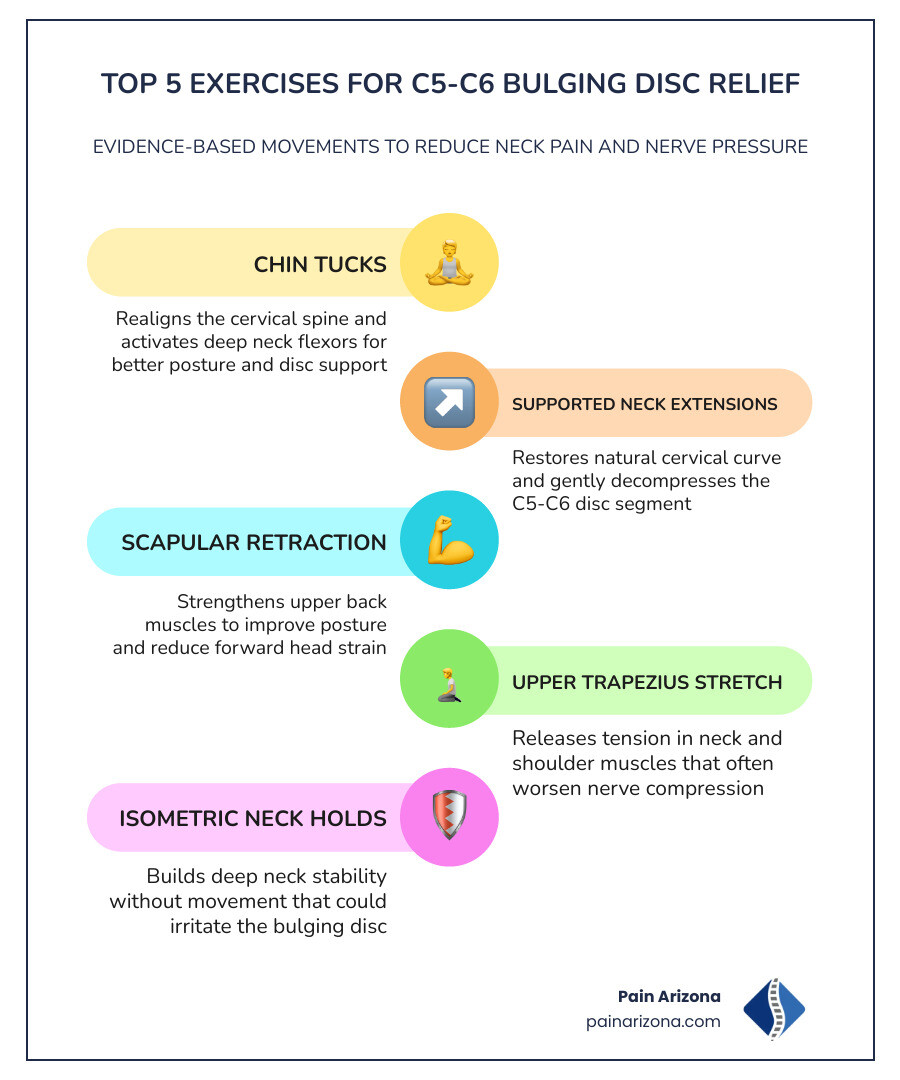
Here’s a quick look at the top five:
- Chin tucks — realigns the cervical spine and activates deep neck muscles
- Supported neck extensions — restores cervical lordosis and reduces disc pressure
- Scapular retraction (shoulder blade squeezes) — improves posture and upper back support
- Upper trapezius stretch — releases muscle tension along the neck and shoulder
- Isometric neck strengthening — builds stability without stressing the disc
That persistent ache spreading from your neck into your shoulder, arm, or fingers isn’t random. The C5-C6 disc is one of the most mechanically stressed segments in your entire spine — it handles enormous daily loads from head movement and posture. When it bulges, it can press on the C6 nerve root, triggering pain, tingling, or weakness that travels into your thumb and forearm.
The good news? Most people improve without surgery. Research shows that roughly 83% of patients with cervical disc issues see meaningful improvement with consistent conservative care — and targeted exercise is a cornerstone of that process.
But not all neck exercises are created equal. Some movements can make things significantly worse. Knowing which exercises help, how to do them safely, and what to avoid is what this guide is all about.
I’m Dr. Nasser, a double board-certified physical medicine and pain medicine physician with extensive experience treating cervical disc conditions like C5-C6 bulging discs — and I’ve developed this guide to walk you through the most effective, evidence-based exercises for relief. Whether you’re in the early stages of neck pain or have been struggling for months, understanding the right approach to movement is the first step toward lasting recovery.
Understanding C5-C6 Bulging Discs vs. Herniated Discs
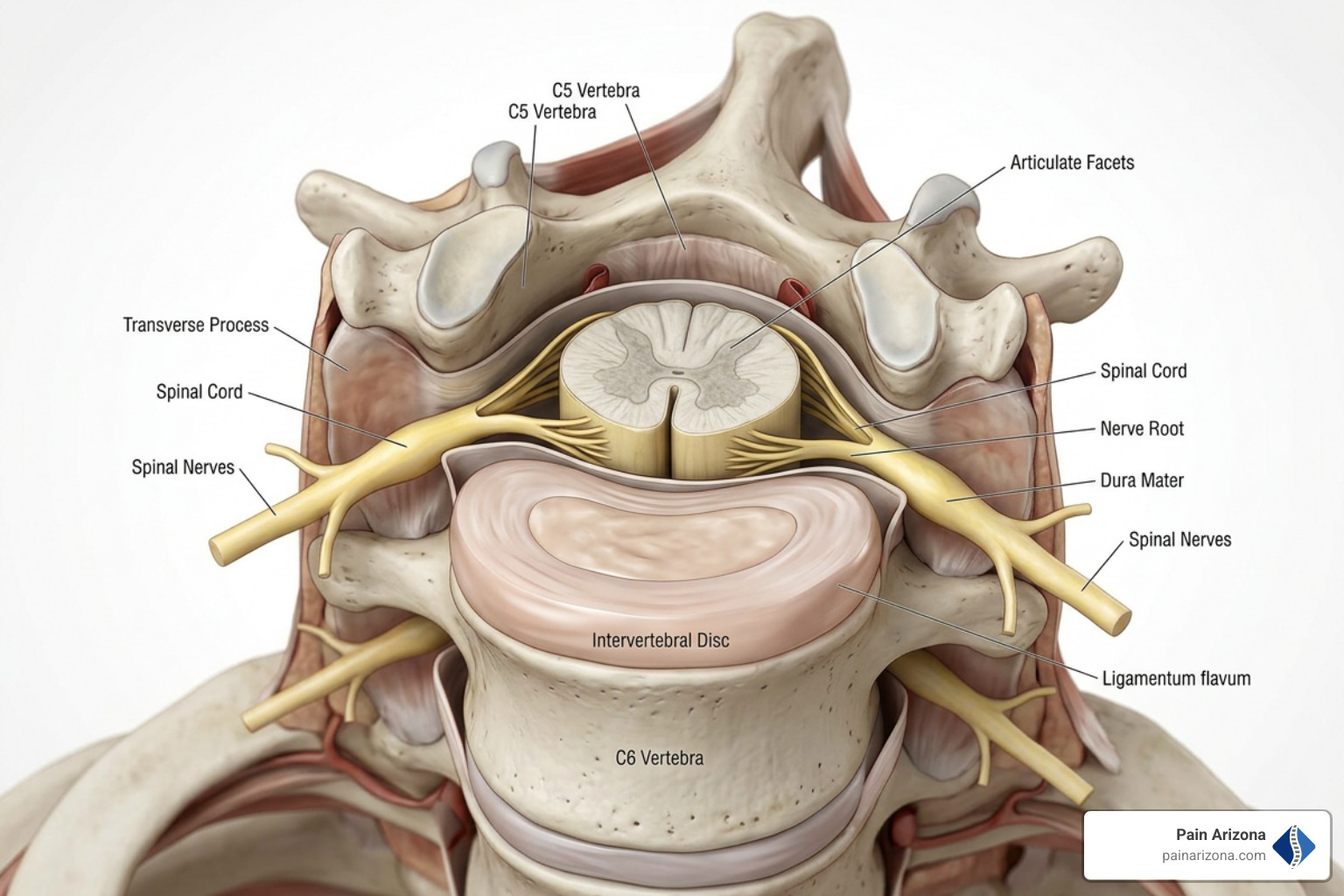
To understand how to treat your neck, we first have to look at the anatomy of the cervical spine. The spine is made of bony vertebrae cushioned by intervertebral discs. These discs function like tiny, jelly-filled shock absorbers.
The C5-C6 spinal segment is located right in the lower portion of your neck. Because this specific level bears the brunt of your head’s weight and handles a massive range of motion, it is highly prone to wear, tear, and injury. In fact, C5-C6 is the most frequently operated cervical disc level, accounting for 34.8% of cervical spine surgeries over a 15-year period. It is also one of the two most common levels for cervical disc pathology and nerve compression worldwide, typically affecting patients between 30 and 50 years of age.
Many people use the terms “bulging disc” and “herniated disc” interchangeably, but they are actually different structural issues:
- Bulging Disc: A bulging disc occurs when the intervertebral disc is compressed and pushed outward, extending beyond its normal boundaries. The tough outer layer (annulus fibrosus) remains intact, but it protrudes symmetrically or asymmetrically into the spinal canal. Think of it like a hamburger patty that is slightly too big for its bun.
- Herniated Disc: A herniated disc occurs when the outer protective ring actually tears, allowing the soft, inner gel-like core (nucleus pulposus) to escape. This gel can directly compress and chemically irritate the nearby nerve roots.
When a bulge or herniation occurs at the C5-C6 level, it frequently compresses the C6 nerve root. This nerve root supplies the biceps muscle and the wrist extensor muscles, and its sensory pathway runs down the side of the arm into the thumb and index finger. Compression here leads to cervical radiculopathy, which is characterized by a burning sensation, sharp electric pain, numbness, or weakness along this pathway. To learn more about how these nerve pathways function, you can read our detailed guide on Decoding Cervical Radiculopathy Symptoms.
Here is a quick comparison of the two conditions:
| Feature | Bulging Disc | Herniated Disc |
|---|---|---|
| Outer Ring (Annulus) | Intact, but stretched and protruding | Torn or ruptured |
| Inner Core (Nucleus) | Contained within the outer ring | Protruding or leaking out |
| Area Affected | Usually covers a wider, symmetrical area | Usually localized to a specific tear site |
| Primary Pain Driver | Mechanical pressure on surrounding tissues | Both mechanical pressure and chemical inflammation |
To explore more about structural disc changes, check out the comprehensive C5-C6 Disc Bulging: Diagnosis, Symptoms, and Treatment guide.
The Best Exercises for C5 C6 Bulging Disc Relief
When we design a physical therapy plan for a cervical disc issue, our primary goal is centralization. Centralization is a clinical phenomenon where pain or numbness moves out of your arm, hand, or shoulder and travels back up toward the center of your neck. Even if your neck pain temporarily feels slightly more intense as the pain retreats from your hand, centralization is a major sign of healing. It means we are successfully taking pressure off the compressed C6 nerve root.
Using targeted posture correction and stabilization exercises can dramatically reduce the mechanical load on your lower neck. Let us walk through the five most effective exercises you can perform at home to find relief.
Why Chin Tucks Are Among the Best Exercises for C5 C6 Bulging Disc Pain
Every single inch your head drifts forward roughly doubles the effective weight and stress placed on your cervical spine. In our modern world of smartphones and computer screens, forward head posture is a leading contributor to C5-C6 disc issues.
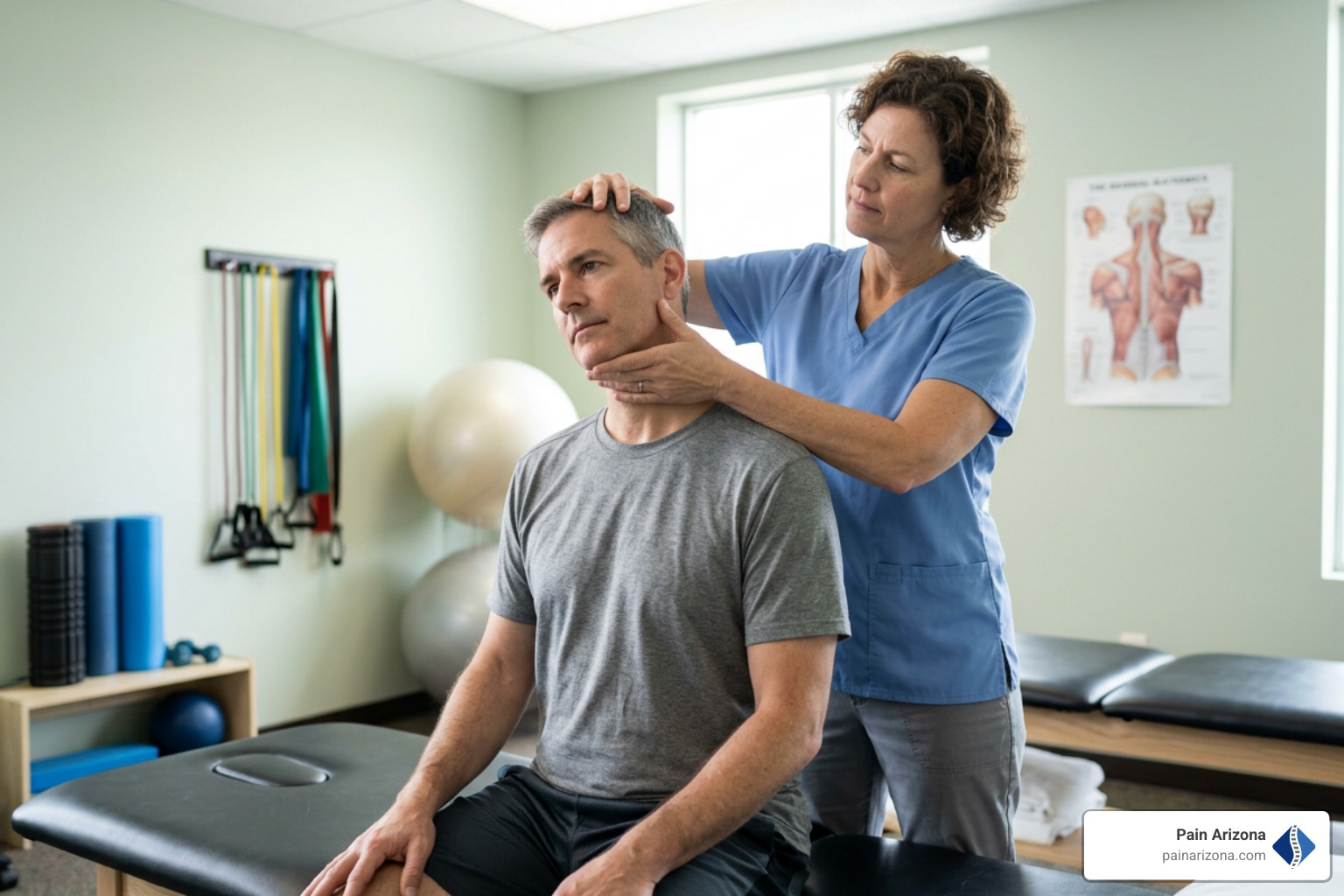
Chin tucks are widely considered one of the best exercises for a C5-C6 bulging disc because they directly counteract forward head posture. This movement activates the deep cervical flexor muscles in the front of your neck while gently stretching the tight muscles at the base of your skull, pulling the upper vertebrae back into proper alignment.
- How to do it:
- Sit or stand upright with your shoulders relaxed and eyes looking straight ahead.
- Gently pull your chin straight back, as if you are trying to make a “double chin.” Do not tilt your head down; keep your eyes level.
- Hold this retracted position for 5 to 10 seconds.
- Slowly return to the starting position.
- Frequency: Perform 10 repetitions, up to 10 times throughout the day. It is an excellent posture reset to do while sitting at your desk.
For more deep-dive exercises that target nerve compression, take a look at our resource on Essential Exercises for Cervical Radiculopathy.
Neck Extensions (Supported)
When a disc bulges backward, gently bending the neck backward (extension) can help “push” the disc material forward, away from the spinal cord and nerve roots. However, unsupported neck extension can sometimes pinch the joints in the back of your neck. Using a towel provides a fulcrum that supports the C5-C6 vertebrae, restoring the natural forward curve of your neck (cervical lordosis) without causing joint irritation.
- How to do it:
- Sit comfortably in a chair with good posture.
- Place a rolled-up hand towel or a specialized physical therapy strap behind your neck, holding the ends in each hand.
- Gently pull the towel forward to create support at the level of your neck pain.
- Slowly look up toward the ceiling, letting your neck bend backward over the towel.
- Hold the stretch at the top for 2 to 3 seconds, then return to the starting position.
- Frequency: Complete 10 controlled repetitions, 2 to 3 times per day.
You can read more about how specialized stretches support recovery in this article on Bulging Disc Exercises: 5 Expert-Approved Stretches.
Scapular Retraction (Shoulder Blade Squeezes)
Your neck does not exist in a vacuum; it is structurally anchored by your upper back and shoulders. Slouching causes your shoulders to round forward, which forces your neck to tilt upward to keep your eyes level. By strengthening the muscles between your shoulder blades (the middle trapezius and rhomboids), you build a stable foundation that naturally keeps your head aligned over your shoulders.
- How to do it:
- Stand tall with your arms relaxed at your sides.
- Gently pull your shoulders back and squeeze your shoulder blades together, as if you are trying to pinch a pencil between them.
- Hold this squeeze firmly for 10 seconds.
- Relax and return to the starting position.
- Frequency: Perform 10 repetitions, 3 to 4 times a day. You can also perform this using a light resistance band to add gentle strengthening.
To see how scapular exercises fit into a structured clinical physical therapy program, review our guide on Cervical Radiculopathy PT Protocols.
Upper Trapezius Stretch
When a C5-C6 disc is bulging, the surrounding neck and shoulder muscles often go into a protective spasm. This guarding behavior causes the upper trapezius muscle to tighten, pulling your shoulders up toward your ears and increasing pressure on the cervical spine. Gently stretching this muscle helps release tension and improves your lateral range of motion.
- How to do it:
- Sit upright in a chair. To keep your shoulder down, anchor your right hand by holding onto the seat of your chair.
- Place your left hand over the top of your head and gently tilt your left ear down toward your left shoulder.
- You should feel a deep, comfortable stretch along the right side of your neck and shoulder.
- Hold the stretch for 20 to 30 seconds.
- Repeat on the opposite side.
- Frequency: Perform 2 to 3 stretches per side, twice daily.
For step-by-step guidance on other neck-specific stretches, check out 5 Exercises for C5-C6 Disc Bulge Instant Relief.
Isometric Neck Strengthening
Building stability in the neck is essential for long-term recovery, but dynamic neck movements under resistance can sometimes aggravate a bulging disc. Isometric exercises are perfect because they activate and strengthen the stabilizing muscles of your neck without actually moving the joint or compressing the disc.
- How to do it (Front and Sides):
- Forward Resistance: Place the palm of your hand flat against your forehead. Gently press your head forward into your palm while resisting the movement with your hand. Your head should not move. Hold for 10 to 15 seconds.
- Lateral Resistance: Place your right hand on the right side of your head. Gently press your head to the right while resisting with your hand. Hold for 10 to 15 seconds, then repeat on the left side.
- Frequency: Perform 5 repetitions in each direction, 2 times per day.
If you are dealing with localized neck inflammation alongside a disc bulge, our detailed resource on Cervical Radiculitis Treatment can provide further helpful context.
Movements and Exercises to Avoid with a Cervical Disc Bulge
While keeping your neck moving is highly beneficial for recovery, performing the wrong exercises can worsen nerve compression or even cause a bulging disc to herniate.
If you have a diagnosed C5-C6 disc bulge, we strongly recommend avoiding the following activities:
- Heavy Overhead Lifting: Exercises like the military press, overhead shoulder presses, or heavy barbell lifts place massive axial loading (downward compression) directly onto the cervical spine.
- Extreme Neck Flexion (Chin-to-Chest): Deep forward bending of the neck pushes the disc material further backward, which can directly pinch the spinal cord or C6 nerve root.
- High-Impact Sports and Activities: Running, jumping, and contact sports create repetitive jarring forces that travel up the spine, irritating inflamed disc tissues.
- Advanced Yoga Poses: Avoid poses that place direct weight on your head or neck, such as headstands, shoulder stands, or deep plow poses.
- Rapid, Jerky Movements: Avoid sudden neck rotations or quick, uncontrolled stretches. Every movement should be slow, steady, and deliberate.
How to Safely Progress with the Best Exercises for C5 C6 Bulging Disc Recovery
The golden rule of rehabilitating a bulging disc is simple: listen to your body.
As you perform these stretches, pay close attention to the behavior of your symptoms. A gentle stretching sensation or mild muscle fatigue is completely normal. However, if you experience sharp, shooting, or electric pain traveling down your arm, stop the exercise immediately.
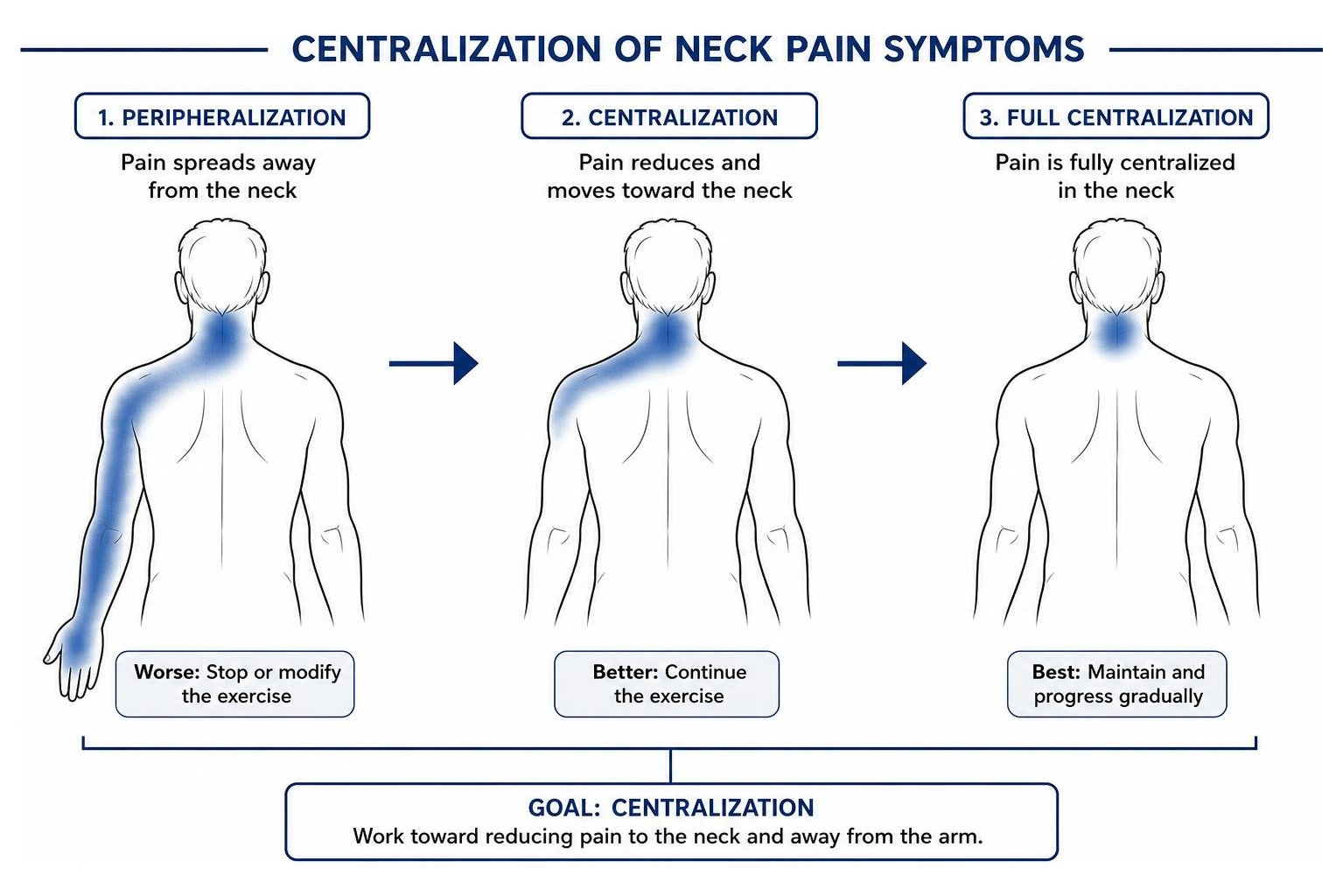
This spread of symptoms down the arm is called peripheralization, and it indicates that the movement is increasing pressure on the nerve root. We always want to modify or pause any exercise that causes peripheralization, focusing instead on movements that promote centralization.
For a complete overview of managing nerve-related pain safely, refer to our comprehensive Radiculopathy Treatment Guide. Additionally, you can find more professional movement recommendations in 5 Best Exercises for Bulging Cervical Neck Disc to Relieve Pain.
Non-Surgical Treatments and Lifestyle Changes for Recovery
While physical exercises are incredibly powerful, they work best when combined with a holistic approach to spinal health. At Pain Arizona, we emphasize conservative, non-surgical therapies to address the root cause of your pain.
- Ergonomic Adjustments: If you work at a computer, ensure your monitor is directly at eye level so you do not have to look down. Keep your feet flat on the floor and use a chair that supports a neutral spine.
- Hydration and Nutrition: Your spinal discs are comprised mostly of water. Staying hydrated is essential for keeping these discs plump and healthy. Incorporating an anti-inflammatory diet rich in leafy greens, berries, and omega-3 fatty acids can also help naturally reduce tissue swelling.
- Spinal Decompression: This non-surgical therapy applies gentle, controlled traction to the cervical spine. By creating negative pressure within the C5-C6 disc space, decompression can help pull the bulging disc material back into place and increase the flow of healing nutrients.
- Targeted Pain Management: If severe pain is preventing you from performing your physical therapy exercises, treatments such as epidural steroid injections or regenerative therapies can calm local inflammation and provide a window of relief so you can comfortably participate in rehab.
To learn more about the advanced, non-operative therapies we offer in the Greater Phoenix Area, explore our dedicated page on Bulging Disc Treatment Options and our guide to Non-Surgical Back Treatment.
For further reading on natural recovery strategies, check out Treatment for a Bulging Disc at C5-C6: A Complete Guide to Effective Care.
Frequently Asked Questions about C5-C6 Bulging Discs
Can a C5-C6 bulging disc heal on its own?
While a bulging disc cannot physically “shrink” back to its original shape entirely on its own, the symptoms associated with it frequently resolve. Over time, the body’s natural healing mechanisms reduce local inflammation, and the disc can adapt so that it no longer presses on the C6 nerve root. Roughly 83% of patients experience significant relief within 6 to 12 weeks of starting a dedicated conservative treatment program.
How does spinal alignment affect a C5-C6 disc bulge?
Your spine relies on balanced curves to distribute weight evenly. If you have an abnormal spinal curve, such as scoliosis or a loss of the natural neck curve (cervical lordosis), it creates uneven mechanical loading. This extra pressure puts immense strain on the C5-C6 segment, making the disc far more vulnerable to bulging or tearing. Addressing these underlying structural issues is a core part of long-term recovery. For a deeper look at this connection, read Conservative C5-C6 Disc Bulge Treatment | Treating Scoliosis.
When should I see a doctor for neck and arm pain?
While most cases of neck pain resolve with conservative care, certain “red flag” symptoms require immediate medical evaluation. You should consult a physician right away if you experience:
- Progressive muscle weakness in your arm, shoulder, or hand (such as dropping coffee cups or difficulty buttoning a shirt).
- Bilateral arm symptoms (pain or numbness in both arms simultaneously).
- Gait disturbances, loss of balance, or clumsiness in your hands, which can indicate degenerative cervical myelopathy (compression of the spinal cord).
- Any sudden changes in bowel or bladder control.
If you are experiencing severe or worsening symptoms in the Phoenix area, read our Herniated Disc Phoenix Complete Guide to learn about your diagnostic and treatment options. You can also watch this helpful video resource: 10 Best Cervical Herniated Disc Exercises & Stretches.
Conclusion
Living with a C5-C6 bulging disc can feel incredibly frustrating, but you do not have to navigate this journey alone. By incorporating the best exercises for a C5-C6 bulging disc into your daily routine and avoiding movements that aggravate your nerves, you can take control of your recovery and find lasting relief.
At Pain Arizona, we specialize in comprehensive, non-surgical chronic pain management across the Greater Phoenix Area, including Mesa, Gilbert, Scottsdale, and Glendale. Our team of double board-certified physicians is dedicated to providing compassionate, evidence-based care that targets the root cause of your pain. We accept most major insurance plans to ensure our treatments remain accessible to our community.
If you are ready to stop managing symptoms and start truly healing, we are here to help. Book an appointment with Pain Arizona today to receive a personalized evaluation and a tailored treatment plan designed just for you.