
Phoenix Spine Relief: Finding the Best Minimally Invasive Kyphoplasty
When Back Pain Won’t Quit: Finding Minimally Invasive Kyphoplasty in Phoenix
Minimally invasive kyphoplasty in Phoenix is available at specialized spine and pain practices — including Pain Arizona — where board-certified physicians treat vertebral compression fractures through a small-incision, outpatient procedure that typically takes about one hour and delivers significant pain relief within 24 hours for most patients.
Quick answers for Phoenix patients:
- What it treats: Vertebral compression fractures caused by osteoporosis, trauma, or spinal tumors
- How it works: A small balloon is inserted into the fractured vertebra, inflated to restore height, then filled with bone cement to stabilize the spine
- Procedure time: About one hour per vertebra, performed outpatient
- Recovery: Most patients walk the same day; significant pain relief within 24 hours
- Success rate: 80–90% of patients report meaningful pain improvement
- Insurance: Most major insurance plans, including Medicare, typically cover kyphoplasty when criteria are met
A vertebral compression fracture can feel like your spine is collapsing under you. The sharp, relentless back pain makes it hard to stand, walk, or sleep. Many Phoenix patients suffer for months — trying pain medications, rest, and bracing — without lasting relief. If that sounds familiar, you’re not alone, and there is a targeted solution.
Kyphoplasty isn’t open surgery. It’s a minimally invasive procedure that addresses the fracture directly — restoring spinal height and stability that conservative care simply cannot provide.
I’m Dr. Nasser — double board-certified in Physical Medicine & Rehabilitation and Pain Medicine, and Chief Medical Officer at Pain Arizona — and I’ve performed tens of thousands of minimally invasive spine procedures, including minimally invasive kyphoplasty for Phoenix-area patients suffering from compression fractures. In this guide, I’ll walk you through everything you need to know to make a confident, informed decision about your spine care.
Minimally Invasive Kyphoplasty Phoenix: Overview and Benefits
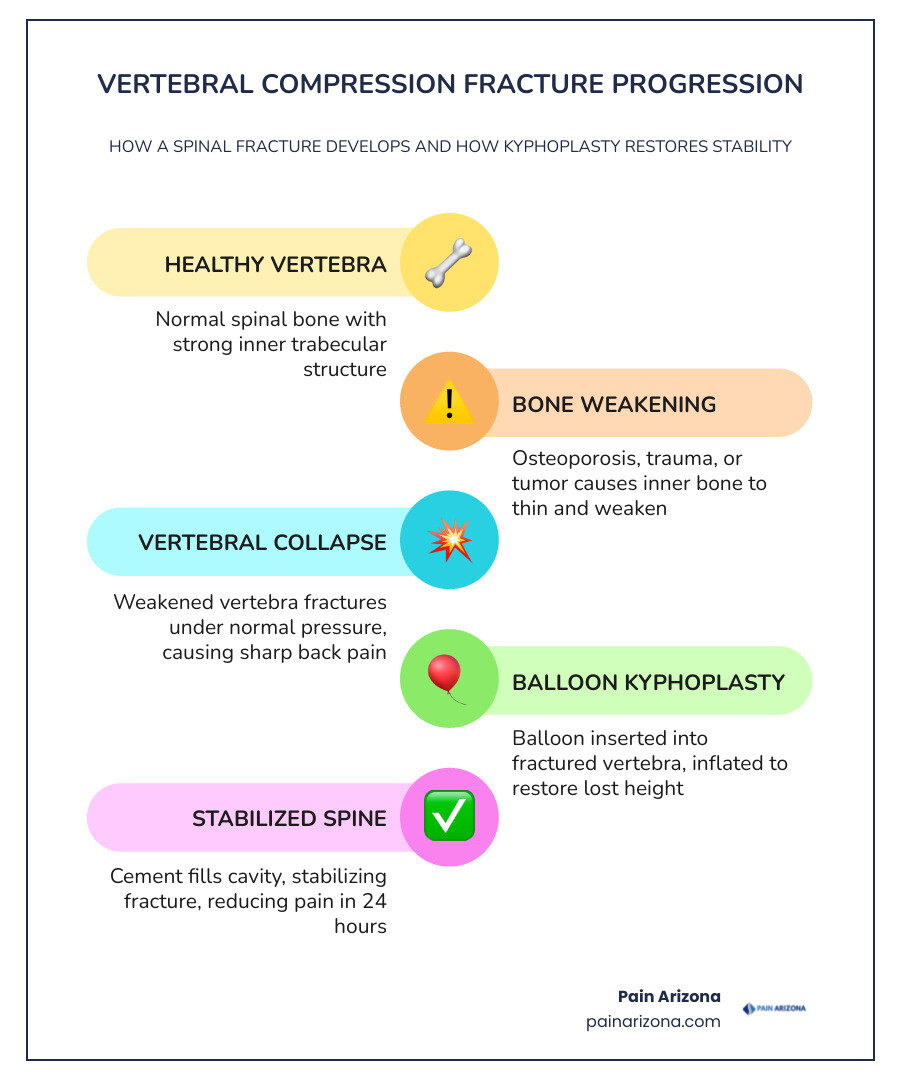
When a vertebra in your spine collapses or fractures, it typically occurs because the inner sponge-like bone tissue weakens—often due to osteoporosis, trauma, or underlying conditions like spinal tumors. This collapse alters your spinal alignment and puts intense pressure on surrounding nerves, muscles, and ligaments.
Minimally invasive kyphoplasty in Phoenix offers a modern, highly effective medical solution to repair this damage without the extensive trauma of traditional back surgery. According to the Cleveland Clinic Kyphoplasty Overview, kyphoplasty is designed specifically to stabilize painful vertebral compression fractures while actively attempting to restore lost vertebral height.
By using specialized fluoroscopic (real-time X-ray) imaging, our interventional spine physicians place a narrow tube into the fractured vertebra. Through this tube, a orthopedic balloon device (often called a balloon tamp) is inserted and carefully inflated. This gentle expansion lifts the collapsed bone back toward its natural shape and height, creating a protected internal cavity. Once the space is prepared, medical-grade bone cement—known as polymethylmethacrylate (PMMA)—is injected to seal and solidify the structure.
How Kyphoplasty Restores Spinal Height
To understand why minimally invasive kyphoplasty Phoenix treatments are so transformational, it helps to look at the mechanical structure of a spinal segment.
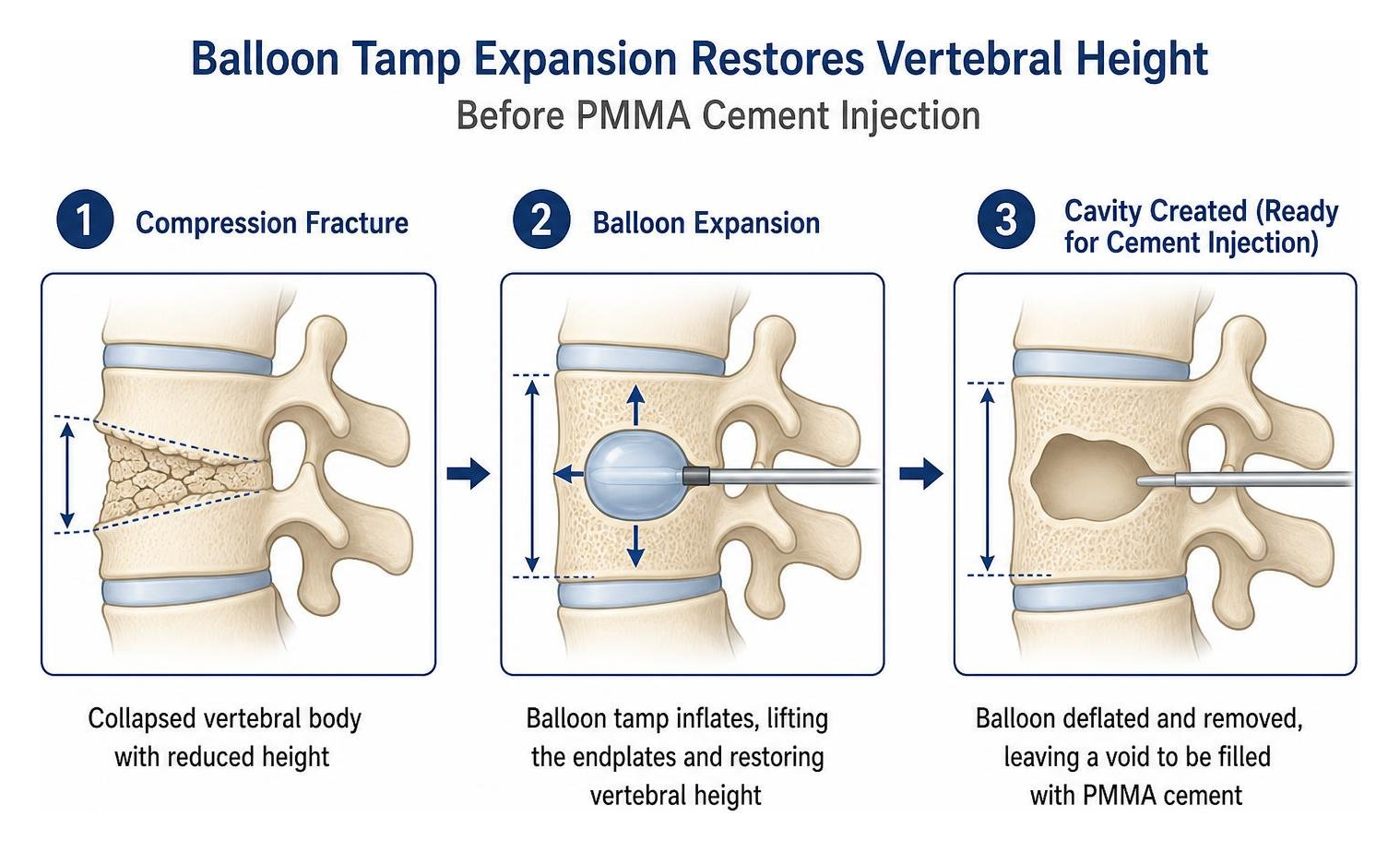
When a vertebral body suffers a compression fracture, the front section of the bone often caves inward, creating a “wedge” shape. Over time, multiple wedge fractures lead to a rounded, forward-curving upper back known as kyphosis (or a “dowager’s hump”).
Kyphoplasty directly combats this progressive deformity through a two-step mechanical restoration:
- Balloon Inflation: By gently expanding a specialized balloon tamp inside the porous interior of the fractured vertebral body, we create a void and compact the surrounding weakened bone outward, effectively lifting the collapsed top plate of the vertebra.
- Cement Stabilization: Once the normal height is retrieved, the balloon is deflated and removed. We then inject quick-setting PMMA bone cement into the newly created cavity under low pressure. The cement hardens within minutes, creating an internal scaffold that stops the micro-motion of broken bone fragments—the primary trigger for severe back pain.
Benefits Over Traditional Open Surgery
For decades, addressing spinal structural failure meant major open surgery involving large incisions, spinal hardware like rods and screws, extensive blood loss, and prolonged hospital stays. For older adults or patients with severe osteoporosis, open surgery carries high risks.
Opting for a minimally invasive approach at Pain Arizona completely changes this equation. To learn more about how smaller surgical footprints revolutionize spinal care, explore our article on All About Minimally Invasive Spine Surgery.
Key advantages of choosing minimally invasive kyphoplasty include:
- Tiny Incisions: The procedure requires only a couple of tiny puncture sites (about the width of a postage stamp or smaller), eliminating the need for major muscle disruption or stitches.
- Outpatient Convenience: Performed right here in the Greater Phoenix Area, patients go home the exact same day.
- Local Anesthesia with Sedation: Most patients do not require general anesthesia, which reduces cardiac and pulmonary risks—especially critical for senior patients.
- Rapid Pain Relief: Studies show that between 80% and 90% of patients experience significant, noticeable back pain relief within 24 to 48 hours.
- Low Risk Profile: Serious surgical complications occur in less than 1% of overall cases.
Kyphoplasty vs. Alternative Compression Fracture Treatments
When evaluating treatment options for a painful spinal fracture, patients in Phoenix, Scottsdale, Mesa, and Gilbert often wonder how kyphoplasty compares to non-surgical conservative care or related procedures like vertebroplasty.
| Treatment Modality | Primary Goal | Height Restoration? | Incision Size | Typical Recovery Time | Success Rate (Pain Relief) |
|---|---|---|---|---|---|
| Conservative Care (Rest, Bracing, Meds) | Manage symptoms while bone heals naturally | No (fracture heals in collapsed position) | None | 8 to 12+ Weeks | Variable (high rate of persistent chronic pain) |
| Vertebroplasty | Stabilize fracture with direct cement injection | Minimal to None | Pinprick | 24 to 48 Hours | 70% – 85% |
| Minimally Invasive Kyphoplasty | Restore spinal height AND stabilize fracture | Yes (creates void via balloon inflation) | Small puncture | 24 to 48 Hours | 80% – 90% |
Key Differences Between Kyphoplasty and Vertebroplasty
Both kyphoplasty and vertebroplasty belong to the family of vertebral augmentation procedures, but they differ in a few crucial ways:
- Cavity Creation & Height Restoration: Vertebroplasty injects liquid bone cement directly into the porous, fractured bone under higher pressure without expanding the bone first. Kyphoplasty introduces a balloon tamp to create a defined cavity and restore lost height before introducing the cement.
- Cement Leakage Risk: Because kyphoplasty creates a pre-formed space, the PMMA bone cement can be injected at a thicker consistency under lower pressure. This significantly lowers the risk of bone cement leaking into surrounding soft tissues or the spinal canal compared to high-pressure vertebroplasty.
- Spinal Alignment Protection: By lifting the compressed vertebra back toward its natural anatomical shape, kyphoplasty helps maintain normal posture, reducing strain on adjacent spinal segments.
Why Non-Surgical Options May Fail
Conservative management—consisting of extended bed rest, prescription pain medications, and rigid back braces—was historically the standard first line of defense. However, reliance on conservative care alone frequently falls short for active patients in the Phoenix Area.
When a compressed vertebra is left to heal naturally without structural support:
- Progressive Collapse: The bone can continue to crumble under the weight of the torso, worsening spinal deformity.
- Chronic Debilitation: Extended bed rest leads to rapid muscle loss, reduced cardiovascular health, decreased bone density, and increased risk of blood clots.
- Persistent Nerve Pressure: A collapsed vertebra can persistently pinch exit nerves, causing radiating pain, numbness, or tingling.
For a deeper dive into understanding fracture progression, check out our comprehensive Vertebral Compression Fracture Guide.
Procedure Prep, Surgical Process, and Recovery Timeline

Understanding what happens before, during, and after your procedure can help ease any anxiety. At Pain Arizona, our team ensures you feel informed and supported every step of the way.
Step-by-Step Minimally Invasive Kyphoplasty Phoenix Guide
- Pre-Operative Preparation and Imaging: Before scheduling your procedure, we perform a thorough physical evaluation and review advanced diagnostic imaging—typically an MRI or specialized CT scan—to confirm that the fracture is acute (recent) and unhealed.
- Positioning and Sedation: On the day of your outpatient procedure, you are comfortable lying face-down on a specialized procedure table. Local anesthetic is applied to numb the back tissue, paired with light intravenous sedation to keep you completely relaxed and pain-free.
- Trocar Placement Under Fluoroscopy: Using real-time continuous X-ray guidance (fluoroscopy), our double board-certified specialist introduces a thin needle (trocar) through a tiny incision into the damaged vertebra.
- Balloon Inflation (Tamping): The specialized balloon is guided through the trocar into the interior of the bone. It is slowly inflated under precise pressure monitors to gently raise the compressed bone plates, recreating natural height and forming an internal cavity.
- Cement Injection: The balloon is deflated and withdrawn. The physician then fills the created cavity with quick-setting PMMA bone cement.
- Hardening and Closure: Within 10 to 15 minutes, the cement completely hardens into a rigid internal bridge. The small insertion instrument is removed, and a small band-aid or light dressing is placed over the puncture site—no stitches required!
Recovery Timeline and Activity Restrictions
Because minimally invasive kyphoplasty Phoenix procedures involve minimal tissue disruption, the recovery timeline is dramatically faster than traditional spinal surgeries.
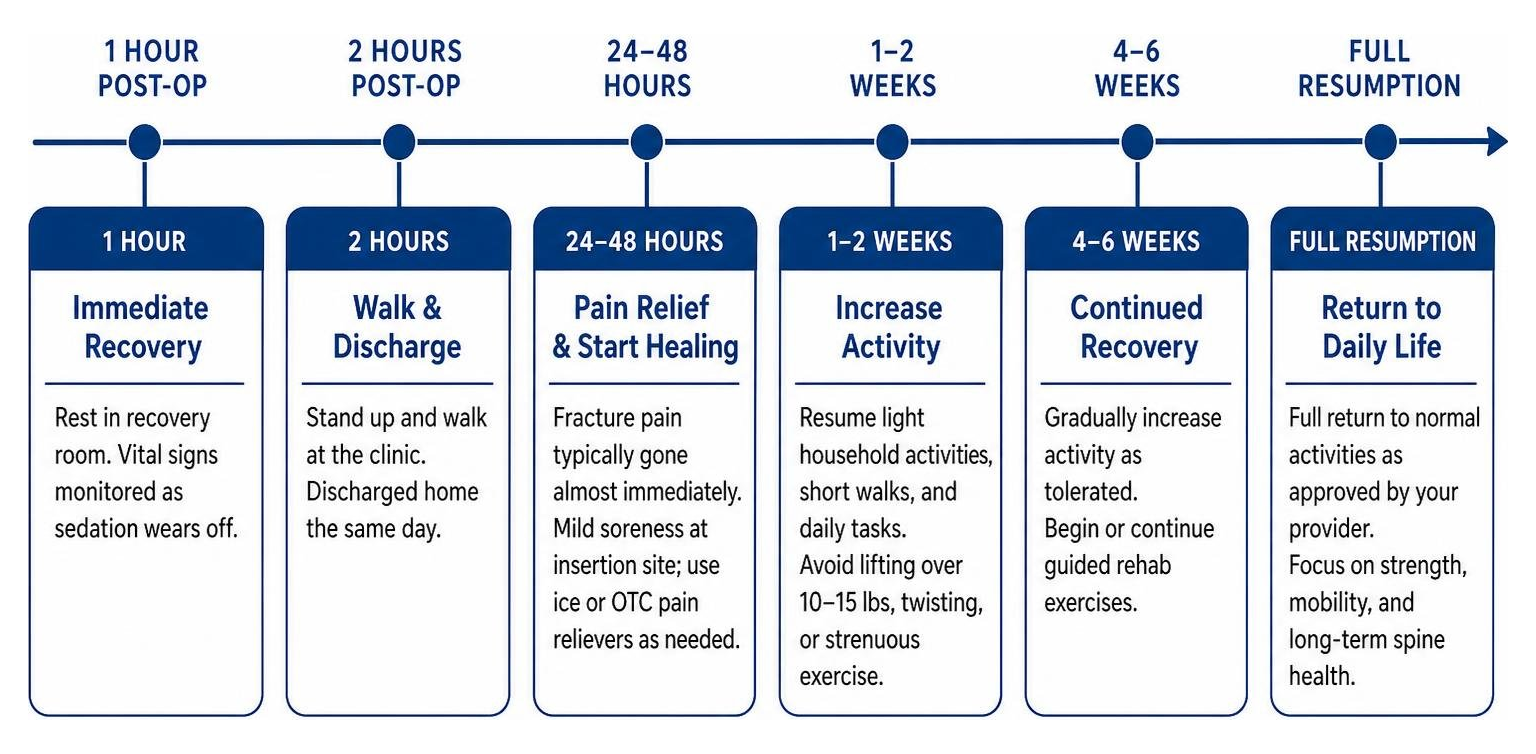
- First 1–2 Hours Post-Op: You will rest comfortably in our post-procedure recovery room while our clinical staff monitors your vital signs as the light sedation wears off.
- Same-Day Discharge: Most patients stand up and walk around the clinic within two hours of completion and are discharged home the very same day.
- First 24 to 48 Hours: The sharp, deep pain caused by the bone fracture typically disappears almost immediately as the cement stabilizes the fracture. You may experience mild soreness at the needle insertion site, which easily responds to ice packs or over-the-counter pain relievers.
- First 1 to 2 Weeks: You can resume light household activities, short walking routines, and daily tasks. We recommend avoiding heavy lifting (anything over 10 to 15 pounds), strenuous twisting, or vigorous exercise during this immediate healing window.
- Long-Term Rehabilitation: To prevent future fractures and strengthen surrounding posture muscles, we often guide patients into personalized physical therapy program strategies. Learn how our local care team helps you maintain lasting mobility through our feature on How Phoenix Specialists Help You Stand Tall After a Spine Fracture.
Candidate Criteria, Insurance, and Phoenix Specialists

While kyphoplasty is a remarkably safe and reliable procedure, selecting the right candidates through thorough clinical evaluation is essential to achieving optimal outcomes.
Candidates for Minimally Invasive Kyphoplasty Phoenix
You may be an ideal candidate for minimally invasive kyphoplasty in Phoenix if you meet the following clinical criteria:
- You have been diagnosed with a painful vertebral compression fracture confirmed by MRI or bone scan as recent/active.
- Your fracture is the result of primary or secondary osteoporosis, physical trauma, or a vertebral body hemangioma/spinal tumor.
- You are experiencing severe, localized back pain that restricts your mobility and quality of life.
- Conservative medical therapies (pain medications, bracing, rest) have failed to provide meaningful relief after 2 to 4 weeks, or your pain is too severe to tolerate conservative care.
Who is NOT a candidate? (Contraindications):
- Patients with completely healed or chronic, old fractures that are no longer actively painful or failing structurally.
- Individuals with an active systemic infection or localized infection at the surgical site.
- Patients with severe, uncorrected bleeding disorders.
- Known severe allergies to PMMA bone cement or contrast media used during fluoroscopy.
For detailed local guidance on evaluation standards, read our complete Arizona Compression Fracture Treatment Guide.
Insurance Coverage, Treatment Costs, and Choosing a Provider
One of the most frequent questions our staff receives involves financial investment and insurance handling.
Does Insurance Cover Kyphoplasty? Yes. Minimally invasive kyphoplasty is widely recognized as a medically necessary, evidence-based procedure. Medicare, AHCCCS, and almost all major commercial health insurance providers cover kyphoplasty when specific clinical criteria (such as imaging evidence of an acute fracture and failed conservative therapy) are documented.
Cost Expectations: We accept most insurance plans. Check with our office manager to see if your plan is accepted. Prior authorizations are handled directly by our dedicated administrative team to ensure smooth navigation of your health benefits.
When selecting a practice for minimally invasive kyphoplasty Phoenix care, look for clinics led by double board-certified physicians in Pain Medicine and Physical Medicine & Rehabilitation who possess specialized fellowship training in interventional spine procedures. At Pain Arizona, our focus is delivering compassionate, root-cause relief close to home—with convenient facilities serving Phoenix, Mesa, Gilbert, Scottsdale, and Glendale.
Frequently Asked Questions About Kyphoplasty
How long does pain relief last after kyphoplasty?
The structural stabilization provided by the hardened bone cement is permanent. The cement remains permanently in place within the treated vertebra to prevent further collapse of that specific bone. Most patients report permanent or long-lasting relief from the specific fracture pain treated during the procedure.
What are the main risks and complications associated with kyphoplasty?
Kyphoplasty is widely considered a safe procedure with an overall serious complication rate of less than 1%. Potential rare risks include localized bleeding, wound infection, allergic reaction to contrast dye or cement, nerve irritation, or minor cement leakage outside the vertebral body. Our double board-certified team utilizes continuous fluoroscopic precision guidance to minimize these risks.
Is kyphoplasty covered by Medicare and health insurance in Arizona?
Yes. Medicare and most commercial health insurance plans covering patients throughout Phoenix, Glendale, Mesa, Gilbert, and Scottsdale offer coverage for kyphoplasty when performed for acute, painful vertebral compression fractures that meet clinical guidelines.
Conclusion
Living with severe back pain from a broken vertebra can feel overwhelming, but you do not have to accept persistent discomfort or loss of independence. With minimally invasive kyphoplasty in Phoenix, you can target the underlying structural damage, restore vertebral height, and regain your active life—often with relief starting within just 24 hours.
At Pain Arizona, led by double board-certified physicians like Dr. Nasser, we take pride in delivering compassionate, evidence-based, and minimally invasive treatments tailored to your unique needs across our Greater Phoenix Area locations.
If you or a loved one are struggling with severe back pain from a suspected or diagnosed compression fracture, Explore Minimally Invasive Spine Treatments with our team today and take your first step toward standing tall again.