
How SPRINT PNS Works to Relieve Pain Without Surgery
When Chronic Pain Keeps You Stuck, Here’s How SPRINT PNS Can Help
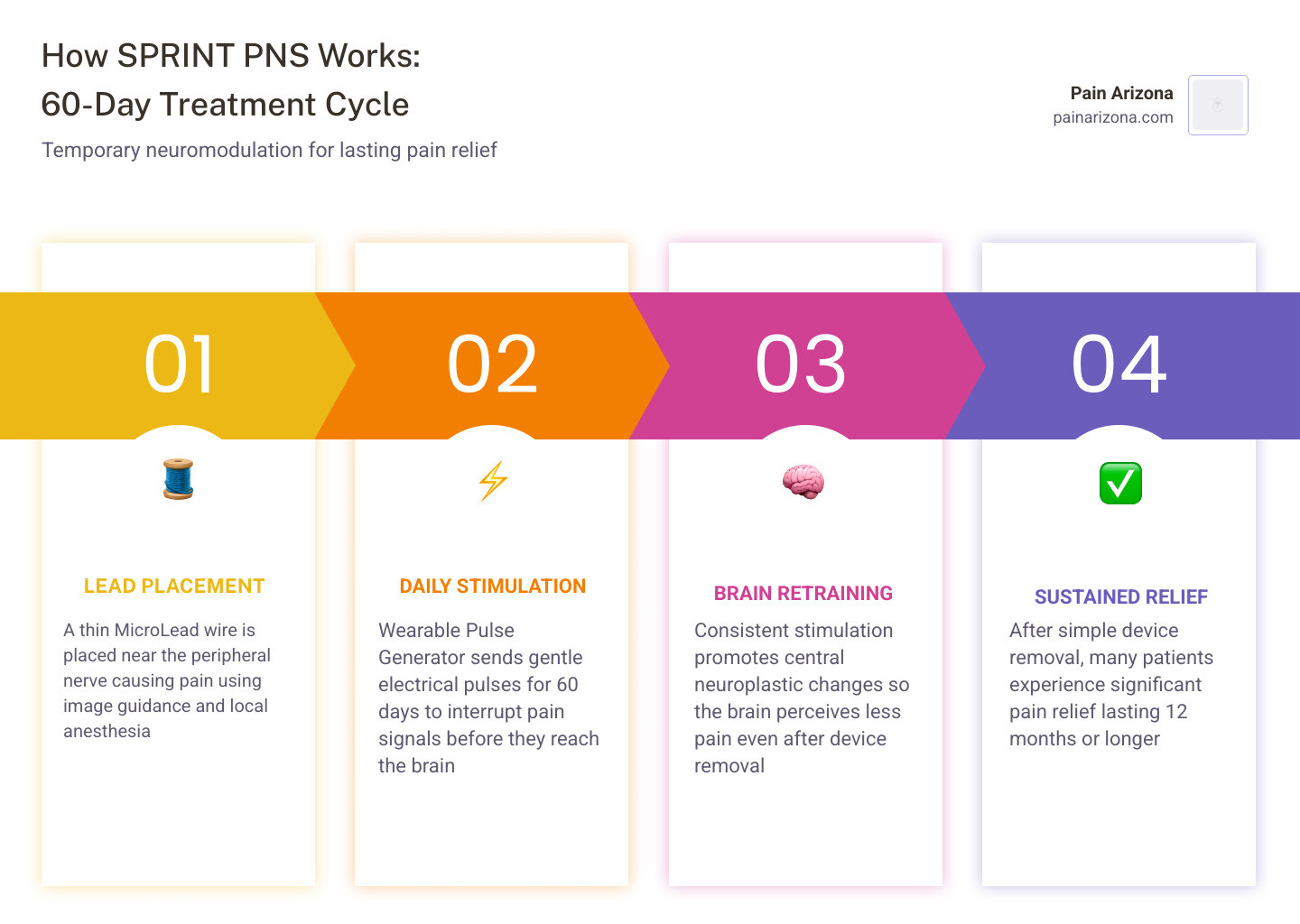
How does SPRINT PNS work to relieve chronic pain? Here’s the short answer:
- A thin wire (MicroLead) is placed near the nerve causing your pain — no surgery, no incision
- A small wearable device (Pulse Generator) sends gentle electrical pulses through that wire
- Those pulses interrupt pain signals before they fully reach your brain
- Over 60 days, this process may “retrain” how your brain perceives pain
- After the device is removed, many patients continue to feel significant relief — sometimes for a year or more
That’s the core of it. A temporary, drug-free treatment designed to produce lasting results.
Chronic pain can make you feel like you’ve run out of options. Medications stop working. Injections wear off. Surgery feels like too big a step. If that sounds familiar, you’re not alone — and you may not have exhausted every path.
SPRINT PNS (Peripheral Nerve Stimulation) is a minimally invasive neuromodulation therapy that targets the actual nerves driving your pain. It doesn’t require permanent hardware, doesn’t rely on opioids, and is done as an outpatient procedure. In clinical studies, more than 70% of patients reported significant, lasting pain relief — even after the device was removed.
I’m Dr. Nasser, a double board-certified PM&R and pain medicine physician with experience in advanced neuromodulation therapies, including SPRINT PNS, and I’ve seen how understanding how does SPRINT PNS work can help patients make confident, informed decisions about their care. In the sections below, I’ll walk you through exactly how this technology works, what the treatment involves, and whether it might be the right fit for you.
What is the SPRINT PNS System?
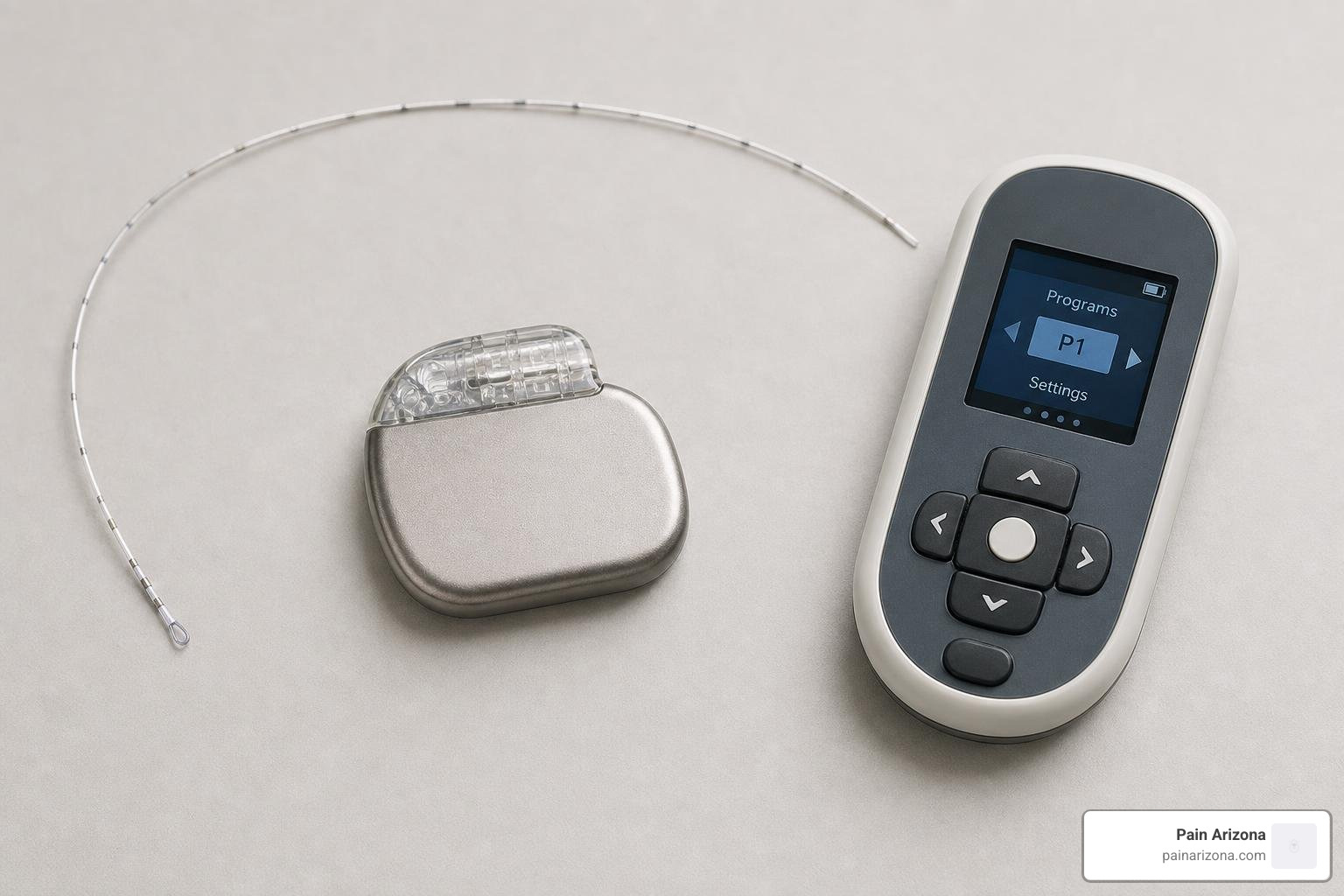
To understand how does SPRINT PNS work, we first need to look at what the system actually is. SPRINT PNS is a temporary, non-surgical peripheral nerve stimulation system cleared by the FDA. Unlike traditional neuromodulation systems, it is designed to be used for exactly 60 days, after which the entire system is removed.
This temporary nature makes it a highly attractive option for patients who want to explore advanced pain therapies without committing to a permanent implant inside their body. If you have been researching options through resources like Sprint PNS System Reviews: Is It Worth It?, you already know that the absence of permanent hardware is one of its most celebrated features.
The system is made up of a few highly engineered, patient-friendly components:
- The MicroLead™: This is the heart of the system. It is a microscopic, thread-like wire that is about twice the thickness of a human hair (or roughly 25% of the diameter of conventional neurostimulation leads). Its coiled design is specifically engineered to encourage tissue ingrowth, which helps keep the lead securely in place and minimizes the risk of migration.
- The Pulse Generator: A matchbox-sized, lightweight stimulator that is worn externally. It is secured directly to your skin using a small adhesive mounting pad. This wearable device contains the battery and the electronics that generate the mild electrical pulses.
- The Hand-Held Remote and Patient App: You don’t have to guess if the device is working. You control the stimulation intensity yourself using a simple, wireless hand-held remote or an app on your smartphone, allowing you to customize your pain relief in real-time.
By keeping the technology simple and external, SPRINT PNS provides a powerful alternative to invasive spinal surgeries or permanent stimulator implants. To see how this fits into a broader spectrum of modern, non-surgical interventions, check out Your Guide to Cutting-Edge Pain and Spine Care.
How Does SPRINT PNS Work to Relieve Chronic Pain?
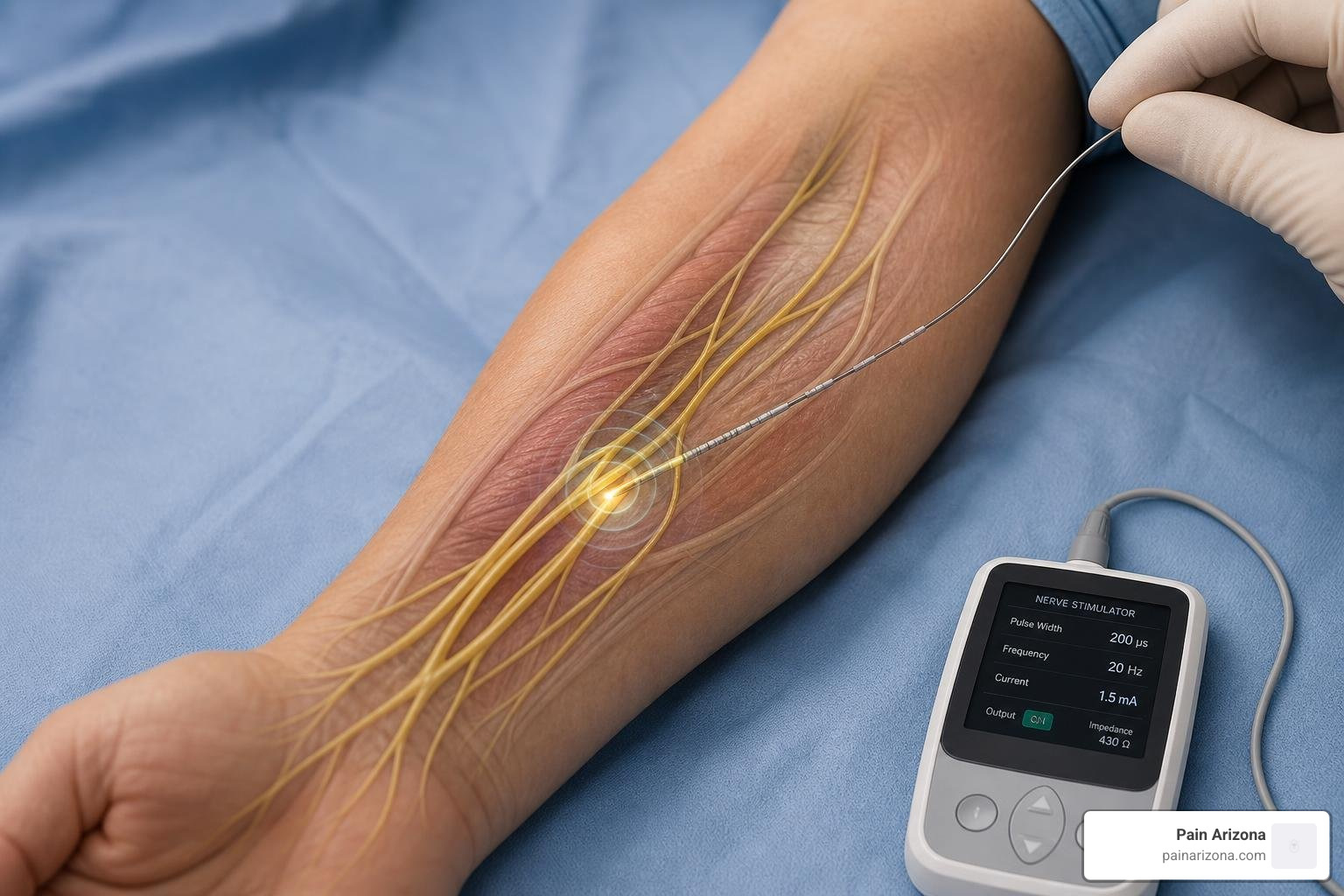
Now, let’s dive into the core question: how does SPRINT PNS work to quiet your chronic pain?
Our peripheral nervous system is like a massive highway of electrical cables running from our limbs and torso up to our spinal cord and brain. When tissue is damaged or a nerve is compressed, those cables send continuous, rapid-fire “pain” signals to the brain. Your brain processes these signals, and you feel chronic pain.
Traditional treatments, like nerve blocks, attempt to “numb” or cut off these signals entirely. Other neuromodulation techniques, which you can read about in our Dorsal Root Ganglion Stimulation Guide, target the sensory gateways right at the spine. SPRINT PNS takes a different, highly localized approach by targeting the peripheral nerve directly.
During the treatment, the MicroLead delivers mild, rapid electrical impulses directly to the targeted peripheral nerve. These pulses do two primary things:
- Interrupt the Pain Signals: The electrical pulses act as a “roadblock” on the nerve highway. They interfere with the pain messages traveling along the nerve, masking or blocking them before they can reach the brain.
- Replace Pain with a Gentle Tingling: Instead of sharp, burning, or aching pain, you will feel a mild, comfortable physical sensation known as paresthesia. Most patients describe it as a gentle vibration or a soothing tingle.
This dual-action approach is detailed extensively in the manufacturer’s guide on How It Works – SPR, which outlines how targeted stimulation can disrupt even the most stubborn, intractable pain cycles.
Understanding How Does SPRINT PNS Work to Retrain the Brain
One of the most remarkable aspects of SPRINT PNS is that the pain relief often continues long after the 60-day treatment period ends and the device is removed. How is that possible?
The secret lies in a medical concept called central plasticity (or neuroplasticity).
When you experience chronic pain over months or years, your brain and spinal cord actually adapt to become better at feeling pain. The neural pathways associated with pain become hyper-sensitized—a phenomenon sometimes called “wind-up.”
By delivering continuous, non-pain stimulation directly to the nerve for 60 days, SPRINT PNS essentially “re-programs” or “conditions” these neural pathways. It floods the brain with healthy, non-pain signals. Over the course of the 8-week treatment, this conditioning helps rebalance the central nervous system, reducing hyper-sensitivity and retraining your brain to perceive signals from that area normally again.
This is why many patients enjoy sustained pain relief for months, a year, or in some documented clinical cases, up to five years after the micro-wire is completely removed.
Step-by-Step: How Does SPRINT PNS Work During the 60-Day Treatment
Your day-to-day experience with SPRINT PNS is designed to be simple, predictable, and completely under your control:
- Step 1: Powering On: You use your wireless remote to turn on the stimulation at the start of your day or keep it running continuously as directed by your physician.
- Step 2: Finding Your “Sweet Spot”: You will feel a soft, localized tingling sensation in the area where you usually feel pain. Using the remote, you can adjust the intensity up or down depending on what feels most comfortable.
- Step 3: Living Your Life: The matchbox-sized pulse generator sits flat against your skin under your clothes. You can go to work, walk, exercise, and run errands without anyone knowing you are wearing it.
- Step 4: Disconnecting for Self-Care: When it is time to shower, you simply turn off the stimulation and disconnect the external pulse generator from the magnetic coupler. The tiny wire remains safely in place under your skin, protected by a waterproof bandage.
- Step 5: Reconnecting: Once you are clean and dry, you snap the pulse generator back onto the magnetic coupler, turn it on, and resume your therapy.
For a detailed breakdown of daily maintenance, skin care, and remote control settings, patients can consult the official PATIENT INSTRUCTIONS FOR USE.
The SPRINT PNS Implantation Procedure and Treatment Timeline
Many patients are relieved to learn that receiving the SPRINT PNS system does not require a trip to an operating room, general anesthesia, or surgical incisions.
The entire placement process is a minimally invasive outpatient procedure performed right in our clinic. Here is what you can expect during the timeline:
1. The Placement Visit (Day 1)
The procedure typically takes less than an hour.
- Numbing: We apply a local anesthetic to numb the skin over the target nerve area. You will remain awake and comfortable throughout.
- Guidance: Using high-resolution ultrasound or fluoroscopic (X-ray) imaging, we precisely locate the target peripheral nerve.
- Placement: We insert a thin, sterile introducer needle containing the MicroLead. Once the needle is positioned near the nerve, we test the stimulation to ensure it targets your pain perfectly. You will provide real-time feedback, telling us when you feel the gentle tingle in the right spot.
- Securing: Once the lead is in the optimal position, the needle is withdrawn, leaving only the thread-like MicroLead behind. We secure the external Pulse Generator to your skin with a comfortable adhesive pad and connect it to the lead via a magnetic coupler—a safety feature that easily disconnects if the wire is accidentally pulled, preventing the lead from being dislodged.
2. The 60-Day Treatment Period
You wear the device for up to 60 days. During this time, you will have regular check-ins with our team to monitor your progress, adjust stimulation parameters if needed, and ensure your skin remains healthy and free of irritation.
3. The Removal Visit (Day 61)
At the end of the 60 days, you return to our office. Removing the MicroLead is incredibly simple and takes only a few seconds. We gently pull the thread-like wire out of the skin. No incisions, no stitches, and no local anesthesia are required. The exit site is covered with a small bandage, and you are ready to go home immediately.
This simple, non-destructive approach is a cornerstone of Evidence-Based Pain Management, allowing us to provide significant relief while preserving your natural anatomy.
Benefits, Risks, and Candidate Selection for SPRINT PNS
To help you evaluate your options, let’s look at how SPRINT PNS compares to other common interventional pain treatments:
| Feature | SPRINT PNS | Permanent Spinal Cord Stimulator (SCS) | Radiofrequency Ablation (RFA) |
|---|---|---|---|
| Treatment Duration | 60 Days (Temporary) | Permanent (Requires surgical battery) | Semi-permanent (6–18 months) |
| Invasiveness | Minimally Invasive (Needle-only) | Surgical (Incisions, pocket for battery) | Minimally Invasive (Needle-only) |
| Nerve Impact | Non-destructive (Preserves nerve) | Non-destructive | Destructive (Burns/deactivates nerve) |
| Anesthesia | Local anesthetic | Conscious sedation or general | Local anesthetic |
| Hardware Left Behind | None | Yes (Leads and battery generator) | None |
What Conditions Does SPRINT PNS Treat?
SPRINT PNS is incredibly versatile and can be used to treat a wide variety of acute and chronic pain conditions, including:
- Chronic low back pain
- Post-surgical pain (such as persistent pain after a knee or hip replacement)
- Shoulder pain (including rotator cuff issues)
- Neuropathic pain and peripheral neuropathy
- Complex Regional Pain Syndrome (CRPS)
- Occipital neuralgia (chronic headaches originating from the neck)
- Phantom limb pain or post-amputation pain
What the Clinical Data Shows
As of June 2026, the clinical evidence supporting SPRINT PNS is stronger than ever. Multiple clinical trials and real-world registries have demonstrated its efficacy:
- Over 70% of patients in clinical studies reported significant, long-lasting pain relief (defined as a 50% or greater reduction in pain or pain interference).
- In the largest retrospective review of real-world PNS data, which evaluated over 6,100 patients, more than 71% of participants demonstrated significant pain relief and dramatic improvements in their overall quality of life following the 60-day percutaneous treatment.
- Many patients continue to experience meaningful pain relief for 12 months, and in some clinical trial follow-ups, patients reported sustained relief for up to five years post-removal.
Risks and Contraindications
Like any medical procedure, SPRINT PNS carries some minor risks. The most common side effect is mild skin irritation or redness from the adhesive patch, which occurs in about 6% of patients. There is also a very low risk of local skin infection at the lead exit site or minor discomfort during the first week of placement as your tissue adjusts.
Contraindications: SPRINT PNS is not suitable for patients with active implanted devices like cardiac pacemakers or defibrillators. Additionally, because the system is MR Unsafe, you cannot undergo an MRI while the device is implanted (though you can safely get an MRI once the 60-day treatment is complete and the lead is removed). SPRINT PNS is also not intended for placement in regions innervated by cranial or facial nerves.
Frequently Asked Questions About SPRINT PNS
Does the SPRINT PNS implantation procedure hurt?
No, the procedure is highly tolerable. We use a local anesthetic to completely numb the skin and deeper tissues before placing the MicroLead. Most patients report feeling a light pressure or a brief pinch during the numbing process, but no sharp pain during the lead placement itself. Because there are no incisions or stitches, post-procedure soreness is minimal and easily managed with ice or over-the-counter pain relievers.
Can I shower or swim with the SPRINT PNS device?
You can absolutely shower! Before stepping into the shower, you simply turn off the stimulation and unplug the external Pulse Generator from the magnetic coupler. You leave the waterproof bandage covering the lead exit site in place. Once you are done showering, pat the area dry, reconnect the Pulse Generator, and turn your therapy back on.
However, you cannot swim, soak in a bathtub, or use a hot tub during the 60-day treatment period, as submerging the exit site in water increases the risk of infection and could wash away the adhesive.
Can the SPRINT PNS treatment be repeated if pain returns?
Yes! Because SPRINT PNS is completely non-destructive and does not damage your nerves or surrounding tissues, the procedure can be safely repeated in the future if your pain eventually returns. This makes it an excellent, repeatable, long-term tool for managing chronic pain conditions without resorting to permanent implants or major surgeries.
Conclusion
If you are tired of managing chronic pain with daily pills, temporary injections, or the looming worry of major surgery, SPRINT PNS offers a scientifically proven, drug-free alternative. By temporarily stimulating your peripheral nerves for 60 days, this innovative technology works to disrupt pain signals and retrain your brain for long-term, durable relief.
At Pain Arizona, our double board-certified physicians specialize in delivering compassionate, evidence-based, and minimally invasive treatments tailored to your unique lifestyle. We serve patients across the Greater Phoenix Area—including Phoenix, Mesa, Gilbert, Scottsdale, and Glendale. We accept most insurance plans, and our office manager is always available to help you verify your coverage.
If you are ready to take your life back from chronic pain, we invite you to explore our advanced interventional therapies, including minimally invasive spine care. Contact our team today to schedule your consultation and find out if SPRINT PNS is the breakthrough you’ve been waiting for.