
The Truth About SI Joint Injection Pain
What to Know Before Your SI Joint Injection (And How Much It Actually Hurts)
How painful is a sacroiliac joint injection is one of the most common questions patients ask before the procedure — and the honest answer is: less than most people fear.
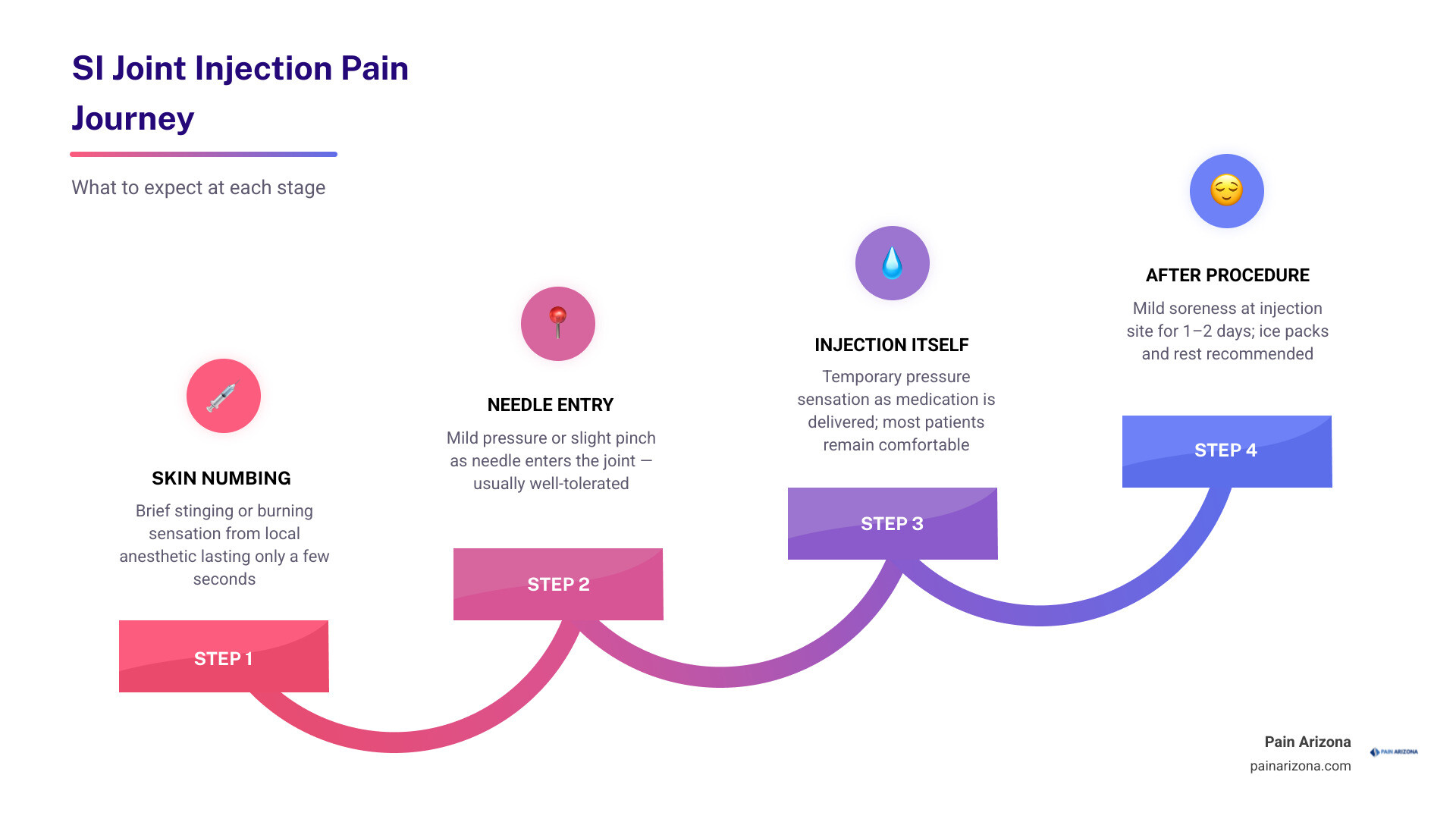
Here’s a quick summary:
| Stage | What You’ll Feel |
|---|---|
| Skin numbing (local anesthetic) | Brief stinging or burning for a few seconds |
| Needle entering the joint | Mild pressure or a slight pinch |
| Injection itself | Temporary pressure — usually well-tolerated |
| After the procedure | Mild soreness at the site for 1–2 days |
The bottom line: Most patients tolerate the procedure without sedation. The most uncomfortable part is typically the local anesthetic numbing the skin — not the injection itself. One patient described it simply: “It will hurt some, but you won’t jump off the table.”
If you’ve been living with chronic lower back, buttock, or hip pain and a doctor has recommended this injection, it’s natural to feel anxious. But understanding exactly what happens — and why — can make a real difference in how you experience it.
I’m Dr. Nasser, a double board-certified PM&R and pain medicine physician with extensive experience performing fluoroscopy-guided SI joint injections, and I know how painful a sacroiliac joint injection can feel from a clinical perspective — and more importantly, how to minimize that discomfort for every patient. Let’s walk through everything you need to know so you can go into your procedure feeling informed and confident.
Handy how painful is a sacroiliac joint injection terms:
How Painful is a Sacroiliac Joint Injection?

When patients ask us how painful is a sacroiliac joint injection, we often tell them to think of it on a scale of 1 to 10. Most patients rate the actual procedural discomfort around a 2 or 3. It is a quick, outpatient procedure designed to be as minimally invasive and comfortable as possible.
The level of pain you feel depends heavily on two main sensations:
- The local anesthetic (The “Pinch and Burn”): Before we insert the treatment needle, we numb the skin and superficial tissues. We use a very fine needle to inject a local anesthetic (like lidocaine). This causes a brief, localized burning or stinging sensation that lasts for just a few seconds. Ironically, this is often described by patients as the most uncomfortable part of the entire process!
- Joint pressure (The “Dull Ache”): Once the skin is numb, we guide a slightly deeper spinal needle into the sacroiliac joint. As the needle enters the joint space and the medication is administered, you will likely feel a sensation of deep pressure or a mild, dull ache. This is because the joint space is very tight, and adding fluid temporarily stretches the joint capsule.
Patient tolerance varies, but the vast majority of people find the procedure highly tolerable. To ensure maximum comfort and safety, we never perform these injections “blindly.”
According to clinical data, blind SI joint injections (performed without imaging guidance) only successfully reach the joint space 12% to 22% of the time. Misplaced needles not only make the procedure ineffective, but they can also cause unnecessary pain by irritating surrounding ligaments and muscles. By utilizing state-of-the-art live X-ray guidance, we ensure the needle goes exactly where it needs to, minimizing tissue trauma and procedural discomfort.
To learn more about the clinical efficacy and precise techniques used to make these procedures highly tolerable, you can read the Scientific research on SI joint injection efficacy and find More info about sacroiliac joint injection treatments we offer.
Understanding How Painful is a Sacroiliac Joint Injection Compared to Knee Injections
It is common for patients to compare joint injections to other procedures they may have had, such as knee injections or epidural steroid injections. However, the anatomy of the sacroiliac joint makes the experience unique.
The knee is a large, superficial joint with a spacious cavity. Injections into the knee are relatively straightforward because the joint is easily accessible and can accommodate a larger volume of fluid without a dramatic increase in pressure.
In contrast, the sacroiliac joint is a dense, weight-bearing joint located deep beneath layers of muscle and strong ligaments at the junction of your spine and pelvis. In adults, the SI joint has very limited motion—only about 2 to 4 degrees of rotation and a couple of millimeters of sliding. Because the joint space is so narrow and tight, the pressure sensation during an SI joint injection can feel more intense and deep than a knee injection, even though we use a very small volume of medication (typically under 2.5 mL).
Compared to epidural steroid injections, which target the epidural space around the spinal cord, an SI joint injection is localized further to the side (in the gluteal/buttock region). While epidurals can sometimes cause a brief “shock-like” sensation down the legs if a nerve root is irritated, SI joint injections generally produce a localized, deep pressure sensation in the buttock.
| Feature | Sacroiliac Joint Injection | Knee Joint Injection | Epidural Steroid Injection |
|---|---|---|---|
| Primary Sensation | Deep pressure, localized dull ache | Mild pinch, fullness in the knee cap | Pressure in the lower back, occasional nerve “zing” |
| Needle Depth | Deep (requires a 3.5 to 5-inch spinal needle) | Superficial to moderate | Deep (spinal canal) |
| Volume of Fluid | Very low (typically < 2.5 mL) | Moderate to high (up to 5–10 mL) | Moderate (typically 5–10 mL) |
| Anatomy | Narrow, rigid, weight-bearing joint | Large, flexible, easily accessed joint | Epidural space surrounding spinal nerves |
Diagnostic vs. Therapeutic Injections: Does the Purpose Affect Pain?
Did you know that an SI joint injection can serve two entirely different purposes? Depending on what we are trying to achieve, the procedure may be diagnostic, therapeutic, or both.
- Diagnostic Injections (The “Numbing” Test): If we suspect your lower back or buttock pain is coming from your SI joint, we will perform a diagnostic block. For this, we inject only a local anesthetic (like lidocaine or bupivacaine) directly into the joint. The goal is to temporarily numb the joint. If you experience an immediate pain reduction of 75% or more over the next few hours, it successfully confirms that the SI joint is indeed the primary source of your pain.
- Therapeutic Injections (The “Healing” Treatment): If we already know the SI joint is the culprit, we perform a therapeutic injection. This contains both a fast-acting local anesthetic and a long-lasting corticosteroid (anti-inflammatory medication). The steroid works to reduce swelling, inflammation, and pain in the joint over several weeks or months.
Because both types of injections begin with local numbing of the skin, the immediate sensation during the procedure is virtually identical. However, the post-procedure experience differs.
With a diagnostic injection, the numbing medicine wears off in 1 to 6 hours, and your original pain will return. We will ask you to keep a detailed pain diary during this window to track how much relief you felt.
With a therapeutic injection, you might experience a temporary “steroid flare” or increased soreness for 1 to 2 days after the local anesthetic wears off, before the steroid begins to reduce your chronic inflammation (which can take up to a week).
For an in-depth clinical look at how these dual-purpose injections help patients find lasting relief, explore this Evidence-based review of image-guided injections and read More info about unlocking relief with SI joint injections.
What to Expect During the Procedure: Step-by-Step Sensations

Knowing exactly what is going to happen step-by-step is one of the best ways to reduce procedural anxiety. Here is what you will experience from the moment you lie down on the procedure table:
- Positioning: You will lie face down (prone) on a comfortable fluoroscopy table. We often place a small pillow under your abdomen to flatten your lower back, making it easier to access the joint.
- Skin Preparation: We thoroughly clean the skin over your lower back and buttocks with an antiseptic solution. This will feel cool to the touch. We then drape the area to maintain a completely sterile environment.
- Numbing the Skin: I will let you know when we are about to apply the local anesthetic. You will feel a tiny pinch followed by a brief stinging or burning sensation as the lidocaine goes in. Within seconds, the skin and superficial tissues will go completely numb.
- Fluoroscopy Guidance (Live X-Ray): We position a specialized live X-ray machine (called a fluoroscope) over your pelvis. By rotating the machine about 20 to 30 degrees, we can clearly visualize the narrow gap of your sacroiliac joint.
- Needle Placement: Using the live X-ray as our map, we gently guide a thin, 22- to 25-gauge spinal needle through the numbed tissue and into the lower portion of the SI joint. You may feel a sensation of deep, dull pressure as the needle moves through the deeper ligaments, but it should not be sharp.
- Contrast Dye Confirmation: Before injecting any medication, we administer a tiny amount of contrast dye. This allows us to see on the X-ray screen that the fluid is distributing perfectly within the joint space and has not entered a blood vessel.
- The Injection: Once placement is confirmed, we slowly inject the medication (anesthetic or steroid mixture). You will feel a deep, expanding pressure or a mild ache in your buttock as the fluid enters the tight joint. This sensation lasts only for the few seconds it takes to complete the injection.
- Bandaging: We gently remove the needle and apply a small bandage over the insertion site. The entire procedure takes less than 15 minutes!
To read a detailed anatomical breakdown of this technique, check out this Radiology reference on SI joint injection technique and find More info about the sacral iliac joint procedure.
Managing Post-Procedure Discomfort and Recovery
Once the injection is complete, you will be taken to a comfortable recovery area where our clinical team will monitor you for 30 to 60 minutes. Because of the local anesthetic used in the joint, you may feel immediate, significant relief from your typical chronic pain.
However, it is also common to experience some temporary numbness or a “heavy” feeling in your leg on the treated side. This happens because the numbing medication can occasionally spread to nearby nerves. This is completely temporary and will wear off within a few hours as the anesthetic is absorbed.
Once we confirm you are stable and moving comfortably, you will be discharged to go home. You must have a designated driver take you home, as driving is restricted for the rest of the day for your safety.
Over the first 24 to 48 hours, it is normal to experience some mild soreness, tenderness, or bruising at the needle insertion site. Additionally, some patients experience a “steroid flare”—a temporary increase in localized joint pain caused by the steroid medication irritating the joint before its anti-inflammatory properties kick in.
To help manage this temporary discomfort, you can apply an ice pack to the injection site for 20 minutes at a time, several times a day. We recommend taking it easy and resting for the remainder of the day of your procedure, but most patients are able to return to their normal daily activities and work within 24 hours.
For more clinical insights on managing post-procedure recovery, read this Systematic review of SI joint pain treatments and find More info about navigating SI joint injections and managing discomfort.
Actionable Tips on How Painful is a Sacroiliac Joint Injection Recovery Period
To ensure your recovery is as smooth, safe, and comfortable as possible, we recommend following these practical steps:
- Keep a Pain Diary: Especially during the first 6 hours post-injection, track your pain levels on a scale of 1 to 10. Write down which movements feel easier or if certain pain triggers are temporarily gone. This information is incredibly valuable for us to confirm your diagnosis.
- Avoid Submerging in Water: You can take a warm shower 24 hours after your procedure, but avoid submerging the injection site in water (no baths, hot tubs, or swimming) for at least 24 hours to prevent infection. Keep the small bandage on for the first day.
- Monitor Blood Sugar Levels: If you have diabetes, keep a close eye on your blood sugar for 1 to 2 days after the injection. Corticosteroids can cause a temporary, self-resolving spike in blood sugar.
- Use Ice, Not Heat: For post-procedure soreness at the injection site, use ice packs. Avoid applying heating pads directly to the area for the first 48 hours, as heat can increase blood flow and worsen local swelling or inflammation from the needle.
- Gentle Movement is Good: Don’t overexert yourself or lift heavy objects, but do try to move gently. Testing the joint with light walking can help you gauge how well the numbing medication worked.
For a comprehensive guide on managing sacroiliac joint health before and after interventional treatments, read More info about the sacroiliac joint pain ultimate guide.
Frequently Asked Questions About SI Joint Injections
How long does it take for the steroid to start working?
While the local anesthetic in the injection provides immediate numbing that lasts for a few hours, the corticosteroid medication takes time to work.
Generally, patients begin to feel the anti-inflammatory benefits of the steroid within 2 to 3 days, but it can take up to 7 days to reach its full effect. During this one-week window, you might experience a temporary increase in localized soreness before the long-term pain relief begins.
For those who respond well, a therapeutic injection can provide relief lasting anywhere from 2 to 4 months, and in some cases, up to a year. For more information, you can read this Clinical overview of SI joint injections.
Can I get sedation or anesthesia for the procedure?
Yes! While the vast majority of our patients tolerate the procedure exceptionally well with just local anesthesia (the numbing medicine applied to the skin), we understand that some individuals have a lower pain threshold or experience severe anxiety around needles.
We believe in strong patient advocacy. If you feel you need extra help to relax, you can discuss sedation options with us prior to your procedure. We can administer mild IV conscious sedation (sometimes called “twilight sedation”) to help you feel completely relaxed and comfortable during the injection. If you choose sedation, you will need to fast (no food or drink) for 8 hours before the procedure.
What are the risks of a sacroiliac joint injection?
An SI joint injection is a very safe, routine procedure, but like any medical intervention, it carries a few minor risks. These can include:
- Temporary leg weakness or numbness: Caused by the local anesthetic spreading near the sciatic nerve or surrounding nerves. This resolves on its own within a few hours.
- Infection or bleeding: Extremely rare due to our strict sterile techniques and live imaging guidance.
- Temporary blood sugar spikes: Common in diabetic patients for 1 to 2 days following a steroid injection.
- Allergic reactions: Rare, but possible, in response to the contrast dye or medications used.
Conclusion
Living with chronic lower back, buttock, or hip pain can be exhausting, but you don’t have to navigate it alone. At Pain Arizona, our double board-certified pain management specialists are dedicated to providing compassionate, evidence-based, and minimally invasive treatments to address the root cause of your discomfort.
We serve patients throughout the Greater Phoenix Area—including Phoenix, Mesa, Gilbert, Scottsdale, and Glendale. We accept most major insurance plans to ensure our high-quality care remains accessible.
If you are ready to take the first step toward lasting relief and want to discuss whether an SI joint injection is right for you, we invite you to Schedule a consultation for joint injections with our expert team today. We are here to help you get back to doing what you love, pain-free!