
From Ache to Answer: Understanding What’s Causing Your Back Pain
Why Your Back Hurts: A Leading Cause of Disability
Why does my back hurt is a common question, and for good reason. Back pain affects approximately 80% of adults at some point in their lives, making it the leading cause of disability worldwide. Causes range from simple muscle strains to complex spinal conditions. Understanding what’s happening is the first step toward relief.
Common reasons your back might hurt include:
- Muscle or ligament strain from lifting, twisting, or poor posture
- Herniated or bulging discs pressing on spinal nerves
- Arthritis causing joint inflammation and stiffness
- Spinal stenosis narrowing the space around your spinal cord
- Degenerative disc disease from age-related wear and tear
- Sciatica causing radiating pain down the leg
- Structural issues like scoliosis or spondylolisthesis
The challenge is that around 90% of cases lack an immediately identifiable cause on imaging alone, which is why a thorough evaluation by an experienced pain specialist is crucial.
I’m Dr. Nasser, Chief Medical Officer at Pain Arizona. I’ve dedicated my career to helping patients understand why their back hurts and find lasting, evidence-based solutions. My training in Physical Medicine, Rehabilitation, and Pain Medicine has taught me that accurate diagnosis is the foundation of effective treatment.
Most back pain improves within weeks with proper care, but knowing when to seek help can prevent a short-term problem from becoming chronic. Let’s explore what might be happening and how you can take control.
Decoding Your Pain: Types and Locations
When asking why does my back hurt, understanding the pain’s nature and location provides important clues. Back pain isn’t one-size-fits-all; its variations tell a story about what’s happening in your body.

First, let’s consider how long your pain has lasted. Pain lasting a few days to a few weeks is acute pain. It usually comes from an injury or strain and often resolves within three months with proper care.
Pain lasting 4 to 12 weeks is subacute pain. At this stage, healing is taking longer than expected, and it’s a good time to check in with a specialist.
If your discomfort has lasted longer than 12 weeks, you’re experiencing chronic pain. This indicates your body needs more comprehensive support. Chronic back pain often requires a multifaceted approach, which is what we specialize in at Pain Arizona.
Your pain’s location is also revealing. Lower back pain is the most common complaint. Your lumbar spine carries most of your body weight, taking the brunt of daily movements. Around 75% to 85% of Americans will experience lower back pain, affecting an estimated 619 million people worldwide.
Mid-back pain is less common because the thoracic spine is less mobile. It often feels like muscle tightness, stiffness, or a dull ache. Upper back pain also affects the thoracic region, from the base of your neck to the bottom of your rib cage, and is typically caused by poor posture, muscle overuse, or injury.
Now, let’s talk about what your pain feels like. A dull, achy sensation often points to muscle fatigue, poor posture, or general inflammation. Sharp, shooting, or stabbing pain usually signals something more urgent, like nerve irritation or a torn muscle.
A burning sensation is frequently a sign of nerve involvement. When pain radiates—traveling from your back down your legs or into your arms—it’s a red flag for nerve compression or irritation. The classic example is sciatica, where pain shoots down your leg. You can learn more in our article on Sciatica Demystified.
All these details help us piece together the puzzle of why does my back hurt. The more accurately we identify your pain, the more effectively we can treat it.
So, Why Does My Back Hurt? Common Culprits and Causes
Now that you understand the types and locations of back pain, let’s dig into the causes. The answer to why does my back hurt usually falls into three categories: mechanical issues, structural problems, or underlying medical conditions.
Mechanical Issues and Injuries
Often, back pain relates to how we move our bodies daily.
Muscle or ligament strain is the most common culprit. You might experience Muscle Strains after heavy lifting, a sudden twist, or repetitive movements. The pain is often sudden, sharp, and worsens with movement.
Improper lifting technique is a frequent offender. Bending at your waist instead of your knees to lift something puts excessive strain on your back.
Sudden awkward movements like twisting unexpectedly can trigger muscle spasms and pain.
Then there’s poor posture. Slouching at a desk, hunching over a phone, or standing unevenly puts constant stress on your spine. Over time, this leads to muscle fatigue, stiffness, and persistent Muscle Pain and Spasm.
Structural Problems in the Spine
Sometimes, the cause isn’t a recent activity but rather changes happening inside your spine.
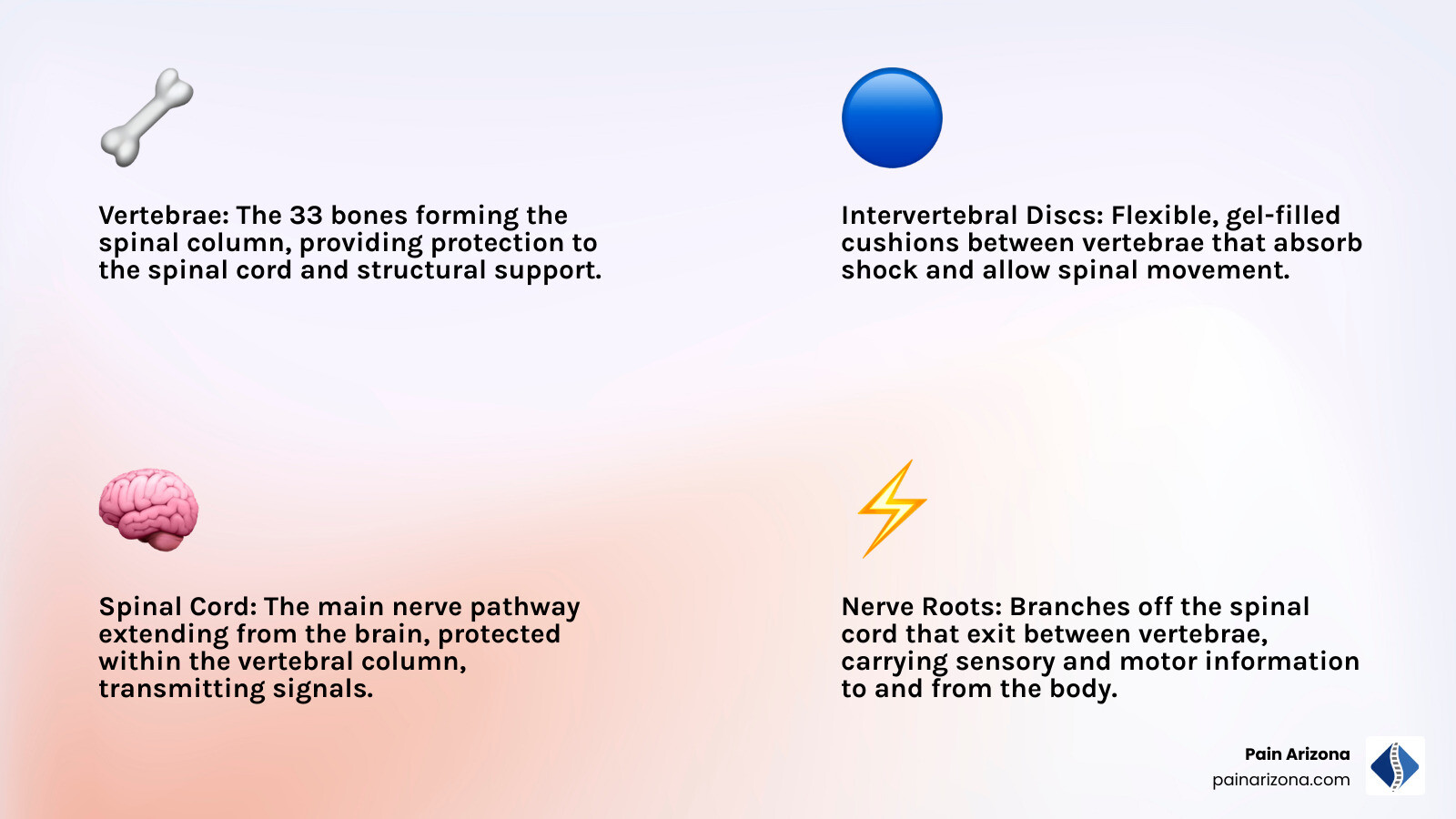
Your spinal discs act as cushions between your vertebrae. A Herniated Disc occurs when a disc bulges or ruptures, pressing on nearby nerves. This can cause sharp pain, numbness, or weakness that travels down your arms or legs.
As we age, our discs naturally wear down through Degenerative Disc Disease. The discs lose moisture and become thinner, reducing shock absorption. While a normal part of aging, this can cause chronic pain and stiffness.
Arthritis, particularly osteoarthritis, can attack the small facet joints in your spine. This inflammation and stiffness, often worse in the morning, can develop into Facet Joint Syndrome.
Spinal Stenosis occurs when spaces within your spine narrow, putting pressure on the spinal cord and nerves. This typically causes pain, numbness, or weakness in the legs after standing or walking. Patients often report their legs feel heavy and that they need to sit down frequently.
Finally, osteoporosis weakens bones, making them prone to fractures. Even minor stress or a fall can cause painful vertebral compression fractures, leading to sudden, severe back pain.
Underlying Conditions and Other Factors
Sometimes back pain is a symptom of another issue.
Sciatica is a specific type of nerve pain. When a herniated disc or bone spur presses on the sciatic nerve, it causes pain that shoots from the lower back down the leg, often described as an electric shock. I’ve written about Sciatica Demystified if you want to learn more.
Inflammatory conditions like ankylosing spondylitis are different from typical arthritis. This inflammatory arthritis targets the spine, causing stiffness and pain that is worse in the morning but improves with movement.
Kidney stones or infections can cause intense pain in your lower back or side. If back pain is accompanied by fever, painful urination, or nausea, the kidneys—not the spine—might be the problem.
For women, endometriosis can cause pelvic pain that radiates into the lower back.
Back pain during pregnancy is very common, resulting from hormonal changes, weight gain, and a shifting center of gravity.
Rarely, back pain can signal serious conditions like spinal infections or tumors. This is why a thorough evaluation is so important to get to the root of why does my back hurt.
Red Flags: When to See a Doctor
Most back pain improves with self-care, but some symptoms signal something more urgent. Knowing when to call a doctor versus heading to the emergency room can make all the difference.
Emergency Warning Signs
Some symptoms with back pain are red flags needing immediate attention. I’m Dr. Nasser, and I know that catching these warning signs early can prevent permanent damage.
- Loss of bowel or bladder control with back pain is a medical emergency. Seek help immediately.
- The same goes for numbness in your groin or “saddle” area. This symptom, called saddle anesthesia, signals critical nerve compression.
- Fever combined with back pain could indicate a spinal infection requiring immediate treatment.
- If back pain started after a major injury or trauma like a car accident, get evaluated right away to rule out fractures or other serious damage.
- Sudden, severe weakness in both legs is alarming and could indicate serious nerve compression or a rare spinal cord stroke.
One condition combining several of these symptoms is Cauda equina syndrome. This occurs when nerves at the base of the spinal cord are severely compressed, causing leg weakness, loss of control, and saddle anesthesia. It requires emergency surgery to prevent permanent nerve damage.
When to Schedule a Doctor’s Visit
Not every symptom is an emergency, but you shouldn’t ignore them. You should ask a healthcare professional why does my back hurt in several situations:
- Pain lasting more than a few weeks: Most back pain improves within two weeks. If yours isn’t, something else may be going on.
- Severe pain that doesn’t improve with rest: This indicates that rest alone isn’t the solution.
- Pain that spreads down one or both legs, especially below the knee, often signals nerve compression like sciatica.
- Weakness, numbness, or tingling in your legs suggests nerve irritation. Addressing nerve issues early improves the chances of a full recovery.
- Unexplained weight loss with back pain can be a warning sign of a more serious issue and should be investigated.
At Pain Arizona, we have locations throughout the Greater Phoenix Area, including Phoenix, Mesa, Gilbert, Scottsdale, and Glendale. We accept most insurance plans, so check with our office manager to see if your plan is covered. Don’t ignore these signs—early diagnosis can prevent a manageable problem from becoming a chronic one.
Taking Control: Prevention and Management Strategies
Once you know why does my back hurt, you can take action to prevent and manage it. The good news is you have more control than you might think.
Why does my back hurt and how can I prevent it with lifestyle changes?

Your daily habits play a huge role in back health, and small changes can make a big difference in protecting your spine.
Maintaining a healthy weight is highly effective. Extra weight, especially around your midsection, strains your spine. Losing even five to ten pounds can significantly reduce this strain.
Regular low-impact exercise like walking, swimming, and bicycling strengthens muscles without jarring your spine. Aim for 30 minutes of activity most days to prevent stiffness and pain.
Core muscle strengthening is crucial. Strong abdominal and back muscles act as a natural brace for your spine, taking pressure off your vertebrae and discs. Physical Therapy can teach you targeted exercises.
Quitting smoking can dramatically improve back health. Smoking reduces blood flow to your spinal discs, accelerates their degeneration, and increases osteoporosis risk. The act of coughing can even contribute to herniated discs. Quitting is one of the best things you can do for your back.
Don’t underestimate stress management. Chronic stress can amplify pain signals, making back pain feel worse. Techniques like meditation, deep breathing, and nature walks can help break this cycle.
Why does my back hurt and how can proper posture help?
Good posture protects your spine from unnecessary wear and tear.
When sitting, your feet should be flat on the floor with your knees and hips level. Use a small pillow for lower back support if needed. Importantly, change positions every 30 minutes, as even perfect posture held too long is problematic.
An ergonomic workspace is vital. Position your computer screen at eye level and keep your keyboard and mouse within easy reach to avoid hunching. Your chair should support your back, with your forearms resting comfortably on the desk.
When standing for long periods, imagine a straight line through your ears, shoulders, and hips. Use a low footstool and switch feet every few minutes to take pressure off your lower back.
Safe lifting techniques prevent many back injuries. The golden rule is to bend at your knees, not your waist, keeping your back straight. Hold objects close to your body and lift with your powerful leg muscles. Never twist while lifting—move your feet instead. For heavy or awkward items, ask for help or use a dolly.
What are common treatments for back pain?
When prevention isn’t enough, many effective treatments can provide relief.
For home relief, try ice and heat therapy. Ice packs can reduce swelling and numb pain in the first 48 hours after an injury. Afterward, heat can relax tight muscles and promote healing. Many patients find alternating between them beneficial.
Over-the-counter medications like ibuprofen can help manage pain and inflammation.
Physical Therapy is a cornerstone of treatment. A physical therapist will design a custom program with exercises to strengthen, stretch, and correct movement patterns. They may also use manual therapy to reduce pain and restore mobility.
Chiropractic Adjustments can restore movement to restricted spinal joints. These adjustments can reduce pain and improve function, especially for mechanical back pain.
For nerve pain, Epidural Steroid Injections deliver anti-inflammatory medication directly to the source. These injections can provide significant relief for conditions like herniated discs or spinal stenosis. We also offer targeted Lumbar Epidural Steroid Injection for lower back issues.
For chronic pain, Spinal Cord Stimulation offers hope. This advanced treatment uses a small implanted device to send mild electrical pulses that block pain signals from reaching your brain. Our Spinal Cord Stimulator Implants have helped many patients reclaim their lives.
We also offer specialized treatments like Trigger Point Injections and Manual Therapy to address issues like Muscle Pain and Spasm. The right treatment depends on your specific condition, which is why we create a personalized plan for every patient. We accept most insurance plans—check with our office manager to see if yours is accepted.
Frequently Asked Questions about Back Pain
We hear these questions all the time at our offices in Phoenix, Mesa, Gilbert, Scottsdale, and Glendale. Let’s tackle the most common ones.
Can stress and anxiety cause back pain?
Absolutely. While stress and anxiety don’t cause structural damage like a herniated disc, they can significantly complicate the answer to why does my back hurt. When stressed, your muscles—especially in the neck, shoulders, and back—naturally tense up. This constant tension can lead to fatigue, spasms, and physical pain.
Chronic stress also triggers inflammation and can change how your brain processes pain. Many patients find their back pain improves dramatically when we address their stress levels. Managing mental well-being is an essential part of recovery.
Is walking good for relieving back pain?
In most cases, yes—walking is excellent for your back, unless your doctor has advised against it for your specific condition. Walking keeps muscles flexible, increases blood flow to the spine, strengthens support muscles, and helps maintain a healthy weight. For most back pain, movement is medicine.
The old advice of prolonged bed rest is now known to be counterproductive. It leads to muscle weakness and stiffness, which can prolong recovery. If you’re in pain, start slowly with five to ten minutes of gentle walking, gradually increasing the duration as you feel able. Listen to your body, but don’t let fear keep you sedentary.
What is the best sleeping position for lower back pain?
Finding the right sleeping position can significantly improve sleep quality and reduce morning stiffness.
If you’re a side sleeper, place a pillow between your knees. This keeps your hips, pelvis, and spine aligned, preventing your top leg from pulling on your back. A body pillow can also be effective.
For back sleepers, place a pillow under your knees. This maintains the natural curve of your lower back, taking pressure off the spine. A small rolled towel can offer extra support.
Stomach sleeping is generally the worst position, as it flattens your spine’s natural curve and forces your neck to twist. If you must sleep this way, place a pillow under your pelvis to reduce strain and use a flat pillow for your head, or none at all.
The best position is one that feels comfortable while keeping your spine neutral. A supportive, medium-firm mattress that prevents sagging without creating pressure points is also key.
Finding Lasting Relief from Your Back Pain
When you ask why does my back hurt, you’re not alone. We’ve explored many possible reasons, from simple muscle strains and poor posture to complex issues like herniated discs and spinal stenosis.
What matters most is getting an accurate diagnosis. Since around 90% of cases don’t show obvious causes on imaging alone, a comprehensive evaluation by an experienced pain specialist is essential. We listen to your story and analyze your symptoms to find the true cause of your pain and treat it effectively.
The encouraging news is that most back pain is highly treatable without surgery. Effective solutions are available, and many of our patients find relief through a combination of lifestyle modifications, physical therapy, and targeted minimally invasive treatments.
At Pain Arizona, we help people throughout the Greater Phoenix Area—including Phoenix, Mesa, Gilbert, Scottsdale, and Glendale—find lasting relief. Our double board-certified physicians provide compassionate, evidence-based care that addresses the root cause of your pain, not just the symptoms.
We accept most insurance plans; please check with our office manager to confirm your coverage.
You don’t have to let back pain control your life. If you’re struggling with daily activities, we’re here to help you get back to doing what you love. Explore our advanced back pain treatments and take that first step toward feeling like yourself again.