
Sciatica has a way of announcing itself that nobody forgets: a hot, electric line of pain that starts in the low back or buttock and shoots down the leg, sometimes all the way to the foot. It can make sitting through dinner miserable, turn a round of golf into a limp back to the cart, and keep you up at night shifting from one side to the other. If you are researching sciatica treatment Scottsdale clinics offer, you have probably already discovered that the advice online ranges from “just stretch” to “you need surgery.” I am Dr. Paul Lynch, CEO of Pain Arizona and a double board-certified pain care physician and anesthesiologist with 17 years in the Valley. In this guide I will explain what sciatica actually is, how we treat it at our Scottsdale clinic, and how to tell which step makes sense for you, from therapy and injections to the less common options beyond them.
What Sciatica Really Is (and Is Not)
Sciatica is not a diagnosis by itself. It is a description of a symptom pattern: pain, numbness, tingling, or weakness that follows the path of the sciatic nerve down the back of the leg. The sciatic nerve is formed from several nerve roots that exit the lower spine, and when one of those roots is irritated or compressed, the pain shows up along its route.
The most common causes include:
- A herniated disc, where disc material presses on or inflames a nearby nerve root. This is especially common in adults in their thirties to fifties.
- Spinal stenosis, a narrowing of the spaces where nerves travel, more common in older adults and often worse with walking and better with sitting or leaning forward.
- Degenerative changes such as bone spurs or a slipped vertebra that crowd the nerve.
- Piriformis-related irritation, where a muscle deep in the buttock irritates the nerve. This is less common than people think, but it does happen.
The National Library of Medicine’s MedlinePlus sciatica overview is a good plain-language reference if you want to read more. The key point is that effective sciatica treatment depends on finding which of these causes is behind your symptoms. You can learn more on our sciatica condition page.
The Good News: Many Cases Improve with Conservative Care
Here is something I tell every patient with new sciatica: many cases improve significantly over several weeks to a few months, especially those caused by a disc herniation. The body can reabsorb some herniated disc material, and inflammation around the nerve often settles with time. That is why my philosophy has always been conservative first.
Early conservative care often includes:
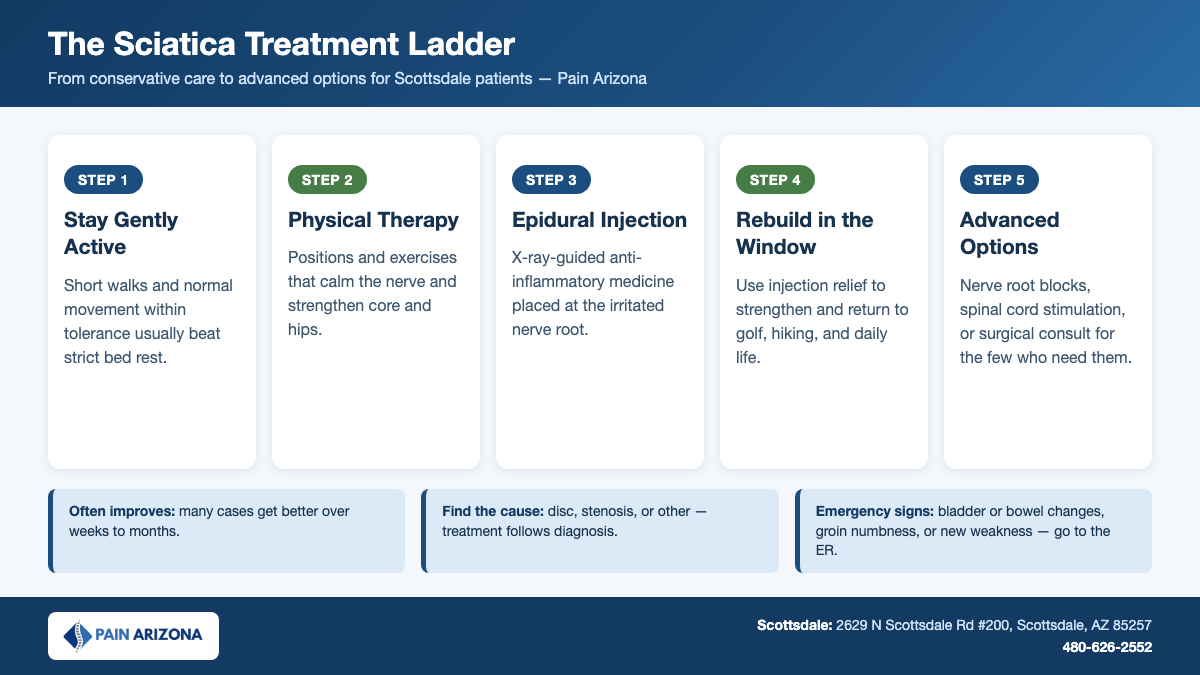
- Staying gently active. Prolonged bed rest is generally discouraged. Short walks and normal daily movement, within tolerance, tend to help.
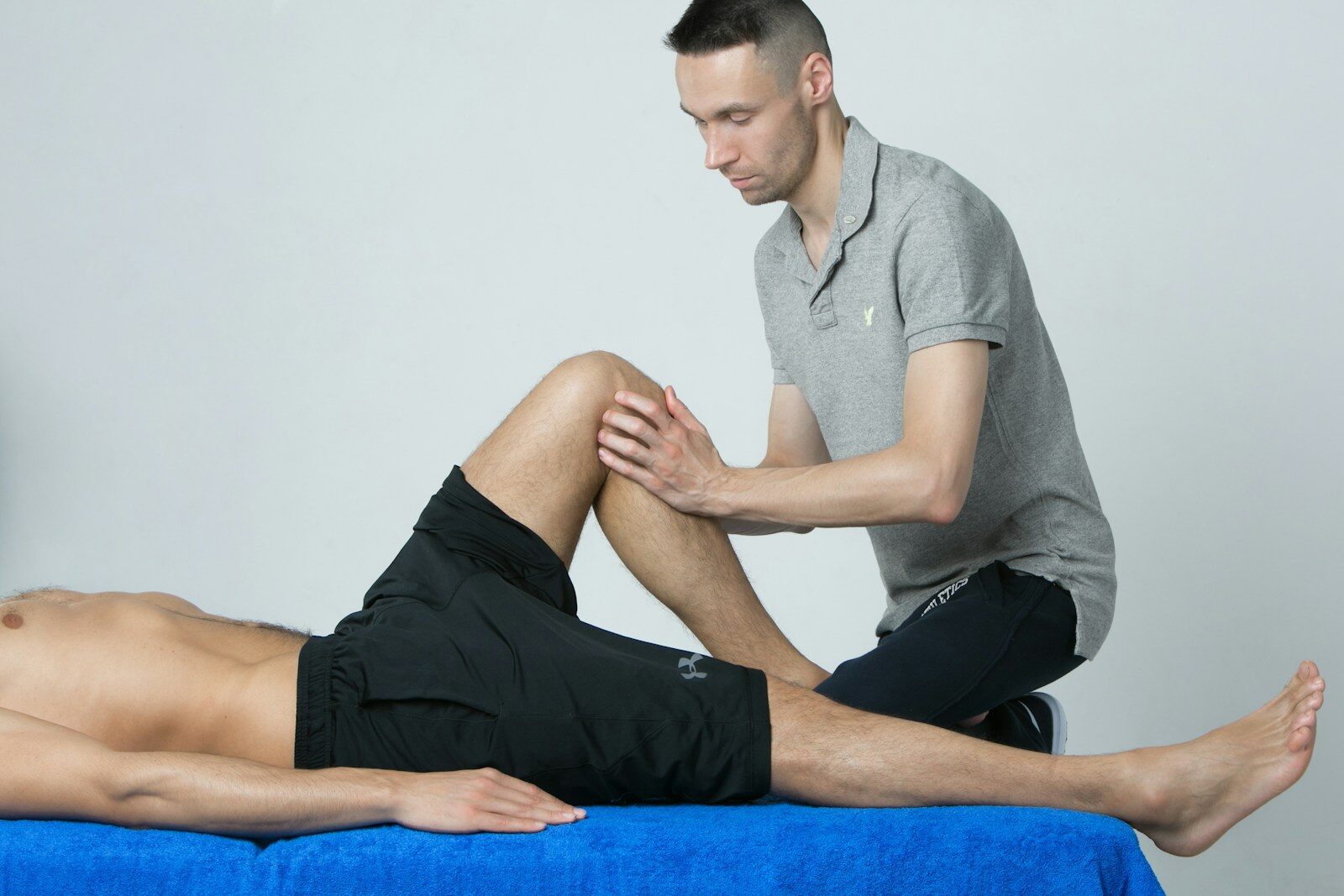
- Physical therapy. A good therapist teaches positions and exercises that reduce nerve irritation, strengthen the core and hips, and improve how you move.
- Short-term medication. Anti-inflammatories or other medications may help in the early phase, used carefully and for a limited time.
- Activity and ergonomic changes. Adjusting how long you sit, how you lift, and how you sleep can take pressure off an irritated nerve.
For many Scottsdale patients, that is all they need. But conservative care has limits, and waiting indefinitely is not a plan. If sciatica is not improving after several weeks, is severe enough to disrupt sleep and work, or keeps coming back, it is time to look at more targeted sciatica treatment Scottsdale specialists can provide.
Leg pain that won’t let up? Get a clear diagnosis from our Scottsdale team.
Pain Arizona – Scottsdale
2629 N Scottsdale Rd #200, Scottsdale, AZ 85257
Call 480-626-2552
Epidural Steroid Injections: The Workhorse of Sciatica Treatment Scottsdale Patients Ask About
When conservative care is not enough, the most common next step is an epidural steroid injection. The goal is simple: deliver anti-inflammatory medication directly to the inflamed nerve root rather than sending it through your whole body in a pill.
At our Scottsdale clinic, the procedure is performed under live X-ray guidance, which lets us place the medication precisely where it is needed. Most patients are in and out in well under an hour and go home the same day with a driver. For sciatica from the lower spine, a lumbar epidural steroid injection is the most common approach, and we choose the specific technique based on your imaging and symptoms.
What can you expect? Many patients notice improvement over several days to two weeks as the inflammation calms. Relief varies from person to person: some patients get lasting relief from a single injection, others need a series, and some do not respond as hoped. When an injection works, the relief window is valuable, because it is the best time to make real progress in physical therapy and rebuild strength that protects your spine going forward.
I want to be clear about one thing: an injection is not meant to be an endless subscription. If we are repeating injections without lasting progress, that is a signal to step back, revisit the diagnosis, and consider other options.
Therapy, Movement, and Why They Still Matter After an Injection
Patients sometimes treat an injection as the finish line. I see it as the starting gun. The relief an injection provides is an opportunity to do the work that pain may have made impossible: core strengthening, hip mobility, posture correction, and graded return to walking, golf, hiking, or whatever you love doing in Scottsdale’s beautiful fall and winter weather.
That combination, targeted injection plus targeted therapy, is the backbone of the sciatica treatment Scottsdale patients receive from our team, and it tends to produce better long-term outcomes than either alone. It also addresses an important truth: pain is not just physical. Months of sciatica can erode sleep, mood, and confidence in your own body. Rebuilding movement rebuilds trust, and that matters just as much as the nerve itself.
Beyond Injections: Options for Persistent Sciatica
For a smaller group of patients, sciatica persists despite conservative care and well-placed injections. In those cases, a thorough reassessment comes first. Sometimes repeat imaging or additional testing reveals something new. Then we discuss the next rung on the ladder, which may include:
- Selective nerve root blocks, which can both relieve pain and help confirm exactly which nerve root is responsible.
- Medication strategies aimed at nerve pain, which work differently from standard pain relievers and may help some patients.
- Spinal cord stimulation, an option for selected patients with persistent nerve pain, particularly after prior spine surgery, that uses mild electrical signals to change how pain is perceived. A trial period typically comes first so patients can see how it works for them before committing.
- Surgical consultation, for patients with significant nerve compression, progressive weakness, or pain that has not responded to other measures. We coordinate with trusted spine surgeons when that conversation is warranted.
Most patients never need these steps, but knowing they exist can take some of the fear out of the process. There is almost always another option to explore, and a complete approach to sciatica treatment Scottsdale patients deserve should lay out that whole ladder from the very first visit.
Warning Signs That Need Urgent Attention
Most sciatica is painful but not dangerous. However, certain symptoms need emergency evaluation, not a scheduled appointment:
- Loss of bladder or bowel control
- Numbness in the groin, genitals, or inner thighs
- New or rapidly worsening weakness in a leg or foot
- Sciatica accompanied by fever, unexplained weight loss, or a history of cancer
If any of these apply, go to an emergency department right away. These can be signs of serious nerve compression or another condition that needs immediate care. Planned sciatica treatment Scottsdale clinics provide is for the far more common situation: steady, frustrating pain that is not an emergency but is not getting better either.
Find out which sciatica treatment fits your diagnosis, not someone else’s.
Pain Arizona – Scottsdale
2629 N Scottsdale Rd #200, Scottsdale, AZ 85257
Call 480-626-2552
What to Expect at Our Scottsdale Clinic
Your first visit for sciatica treatment Scottsdale patients receive at our office on North Scottsdale Road begins with a conversation. We want to know when the pain started, where it travels, what makes it better or worse, and what you have already tried. We perform a focused exam to check strength, reflexes, sensation, and nerve tension, and we review any imaging you already have. If imaging is needed, we will explain why before ordering it.
You should leave that first visit with a clear, staged plan in plain language: what we try first, what we try if that is not enough, and how we will measure progress. Our team verifies your insurance benefits and explains estimated costs before any procedure. And because credentials matter, you are always welcome to verify a physician’s board certification through the American Board of Medical Specialties before you begin.
Our mission at Pain Arizona is to save one million lives, and for sciatica patients that often means something very practical: getting back to sleeping through the night, sitting through a movie, walking the dog along the canal, or picking up a grandchild without wincing. Good sciatica treatment Scottsdale residents can trust should be measured by those wins, not just by a pain score.
Frequently Asked Questions
How long does sciatica usually last?
It varies widely. Many cases improve significantly within several weeks to a few months with conservative care, especially when a disc herniation is the cause. Some cases linger or recur. If your symptoms are not improving after several weeks, or are severe, an evaluation can help you avoid waiting longer than necessary.
Do epidural steroid injections cure sciatica?
An injection reduces inflammation around the irritated nerve, which can relieve pain and create a window for healing and therapy. It does not remove a herniated disc or reverse stenosis. Results vary: some patients get long-lasting relief, others need more than one injection, and some do not respond. A good plan pairs injections with therapy and a clear follow-up.
Is surgery ever necessary for sciatica?
Sometimes, but far less often than many people fear. Surgery is generally considered for significant or progressive weakness, emergency symptoms, or pain that persists despite well-executed conservative and interventional care. When it is warranted, we coordinate with spine surgeons and help you understand your options.
Can I keep golfing or hiking with sciatica?
Often, with modifications. Gentle activity generally helps more than strict rest, but certain movements, such as the rotation in a golf swing or steep downhill hiking, may aggravate symptoms during a flare. A physical therapist or pain specialist can help you adjust your activity so you stay active without making things worse.
The Bottom Line for Scottsdale Sciatica Sufferers
Sciatica is common, frequently improves, and in most cases does not require surgery. But that does not mean you have to grit your teeth through months of pain. The best sciatica treatment Scottsdale patients can get starts with an accurate diagnosis, uses conservative care first, adds precise image-guided injections when needed, and keeps more advanced options in reserve for the few who need them. After 17 years of treating this condition, I can tell you that the right plan, started at the right time, often turns sciatica from the thing that runs your life back into a bad memory.
— Dr. Paul Lynch is a double board-certified pain physician and anesthesiologist and CEO of Pain Arizona. Connect with him on LinkedIn.
This article is for educational purposes only and is not medical advice. It does not replace an evaluation by a licensed medical professional. Candidacy, risks, benefits, costs, and results vary from patient to patient; please consult a qualified physician about your specific situation. If you experience loss of bladder or bowel control, groin numbness, or rapidly worsening leg weakness, seek emergency care immediately.
Ready to get back to your Scottsdale routine? Start with a sciatica evaluation.
Pain Arizona – Scottsdale
2629 N Scottsdale Rd #200, Scottsdale, AZ 85257
Call 480-626-2552