
Background and Overview
Plantar fasciitis is a common foot condition that causes pain and discomfort in the heel and bottom of the foot. It occurs when the plantar fascia—a thick band of tissue connecting the heel bone to the toes—becomes inflamed or strained. This condition is a leading cause of heel pain and is particularly common among runners, athletes, and individuals who spend long hours on their feet.
Though plantar fasciitis can be debilitating, understanding its causes, symptoms, and treatment options can help individuals manage the condition effectively and return to their regular activities with confidence.
Symptoms and Causes
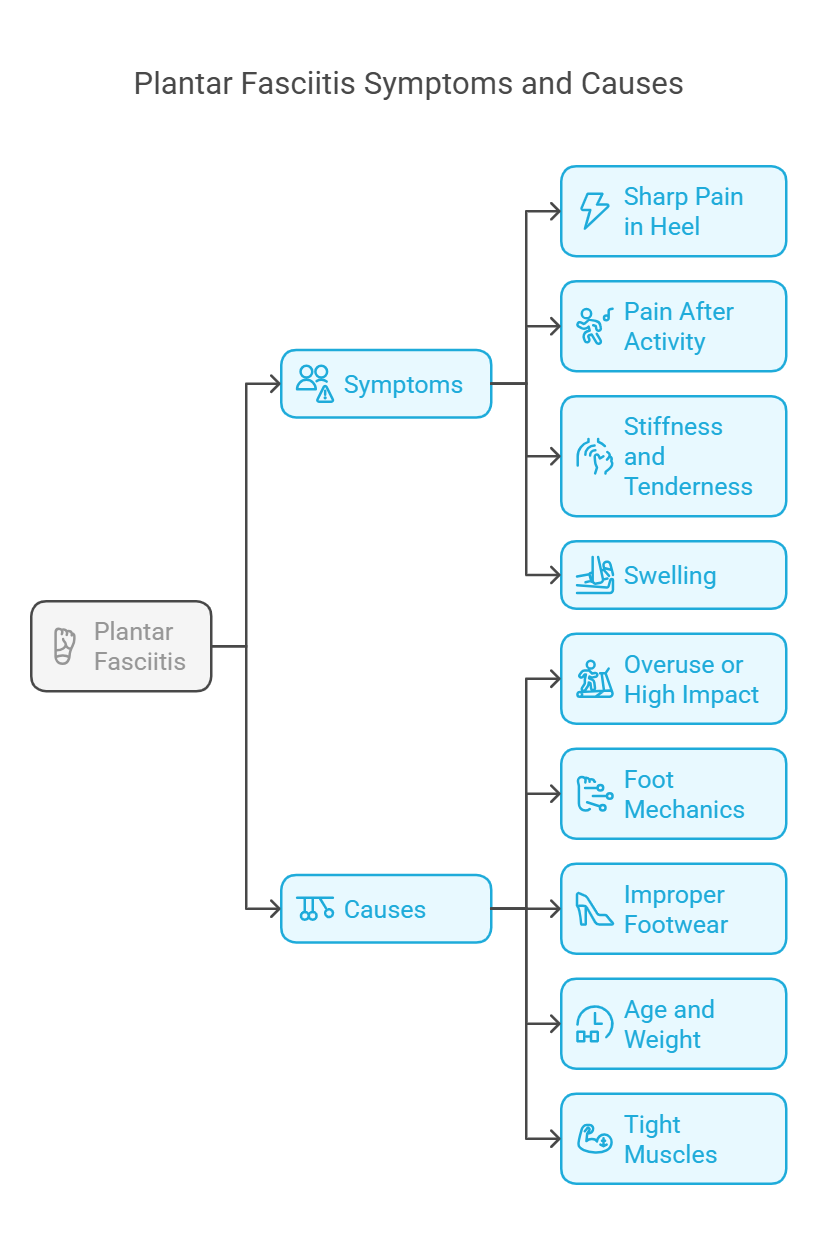
Symptoms The hallmark symptom of plantar fasciitis is heel pain, which may vary in intensity and timing. Common symptoms include:
- Sharp Pain in the Heel: Often felt during the first steps in the morning or after long periods of rest.
- Pain After Activity: Discomfort that worsens after exercise rather than during it.
- Stiffness and Tenderness: Felt along the arch of the foot and near the heel.
- Swelling: In some cases, the bottom of the foot may appear swollen or red.
Causes Plantar fasciitis develops when the plantar fascia experiences excessive tension or stress, leading to small tears and inflammation. Contributing factors include:
- Overuse or High Impact:
- Activities like running, dancing, or prolonged standing can strain the plantar fascia.
- Foot Mechanics:
- Flat feet, high arches, or abnormal walking patterns can increase stress on the tissue.
- Improper Footwear:
- Shoes with inadequate support or cushioning may exacerbate the condition.
- Age and Weight:
- Middle-aged individuals and those who are overweight are at higher risk.
- Tight Muscles:
- Tight calf muscles or Achilles tendons can contribute to plantar fascia strain.
Diagnosis and Tests
Diagnosing plantar fasciitis typically involves a physical examination and a review of symptoms. In some cases, additional tests may be performed to rule out other conditions.
Key Diagnostic Methods:
- Physical Examination:
- Doctors check for tenderness along the plantar fascia and observe foot mechanics and gait.
- Imaging Tests:
- X-rays: May reveal bone spurs, which are sometimes associated with plantar fasciitis.
- Ultrasound or MRI: Used to assess the plantar fascia for signs of thickening or inflammation.
- Medical History:
- A detailed history of activities, footwear, and symptoms helps pinpoint potential triggers.
Early diagnosis allows for prompt treatment, reducing the risk of chronic pain and complications.
Management and Treatment
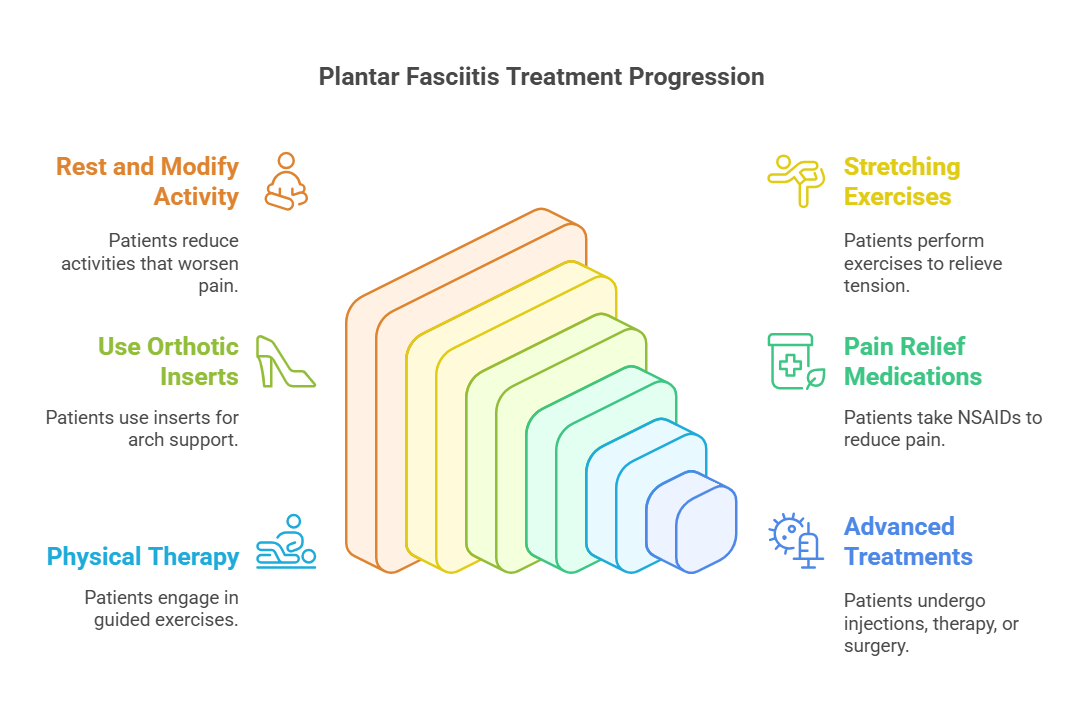
Treatment for plantar fasciitis aims to reduce pain, improve mobility, and prevent recurrence. Options range from conservative measures to advanced therapies.
Non-Surgical Treatments:
- Rest and Activity Modification:
- Avoid activities that aggravate the condition and give the feet time to heal.
- Stretching Exercises:
- Regular stretching of the calf muscles and plantar fascia helps relieve tension.
- Orthotic Inserts:
- Custom or over-the-counter shoe inserts provide arch support and cushion the heel.
- Pain Relief Medications:
- Nonsteroidal anti-inflammatory drugs (NSAIDs) reduce inflammation and pain.
- Physical Therapy:
- A therapist may guide exercises to strengthen the foot and improve flexibility.
Advanced Treatments:
- Corticosteroid Injections:
- Used in severe cases to reduce inflammation directly in the affected area.
- Shockwave Therapy:
- High-energy sound waves stimulate healing and reduce pain.
- Surgery:
- Rarely required, but may be an option for chronic cases unresponsive to other treatments.
Prevention
Preventing plantar fasciitis involves maintaining healthy foot mechanics and minimizing stress on the plantar fascia.
Tips to Prevent Plantar Fasciitis:
- Wear Supportive Shoes:
- Choose footwear with proper arch support and cushioning, especially for high-impact activities.
- Stretch Regularly:
- Stretch the calves, Achilles tendons, and plantar fascia to maintain flexibility.
- Gradual Activity Increase:
- Avoid sudden increases in exercise intensity or duration.
- Maintain a Healthy Weight:
- Reducing excess weight minimizes strain on the feet.
- Avoid Prolonged Standing:
- Take breaks to sit or change positions if standing for long periods is unavoidable.
Outlook and Prognosis
The prognosis for plantar fasciitis is generally positive with early and consistent treatment. Most individuals experience significant improvement within weeks to months of initiating therapy.
- Mild to Moderate Cases: Respond well to conservative treatments like stretching and orthotics.
- Chronic Cases: May require more intensive interventions, but outcomes are often favorable with proper care.
- Untreated Plantar Fasciitis: Can lead to chronic pain and compensatory issues, such as knee or hip problems.
By addressing symptoms early and adopting preventive measures, individuals can reduce the risk of plantar fasciitis and enjoy a more active, pain-free lifestyle.
Plantar fasciitis may be a common foot condition, but with the right knowledge and proactive approach, it is entirely manageable. By understanding its triggers and remedies, you can take confident steps toward a pain-free future.