
Background/Overview
Fibromyalgia is a chronic condition that causes widespread pain, fatigue, and tenderness in the muscles, ligaments, and tendons throughout the body. It’s one of the most common pain disorders, affecting millions of people worldwide, most of whom are women. The exact cause of fibromyalgia remains unclear, but it’s believed to be related to an abnormal response of the nervous system, amplifying pain signals in the body.
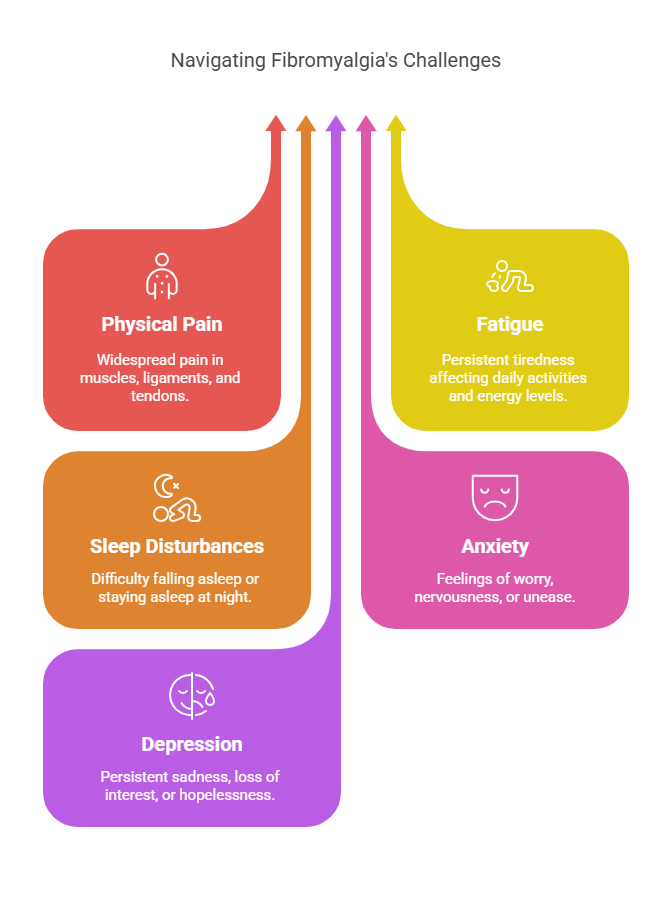
While fibromyalgia primarily manifests as physical pain, it often comes with emotional and mental health challenges, including sleep disturbances, anxiety, and depression. Living with fibromyalgia can feel isolating, especially when the condition is not widely understood, but with the right care and coping strategies, individuals can manage their symptoms and regain control over their lives.
Symptoms/Causes
The symptoms of fibromyalgia are often broad and vary in intensity, making it a complex condition to diagnose and manage. The most common symptoms include:
- Widespread Pain: The hallmark of fibromyalgia is persistent pain that affects multiple areas of the body. This pain is often described as a deep, aching sensation and can vary in intensity from mild to severe. The pain tends to be more noticeable in the neck, shoulders, back, and hips.
- Fatigue: People with fibromyalgia often experience extreme tiredness, even after a full night’s sleep. This fatigue is not just a sense of being tired but a feeling of constant exhaustion that doesn’t improve with rest.
- Sleep Disturbances: Fibromyalgia frequently disrupts sleep, with individuals experiencing difficulty falling asleep or staying asleep. They may also wake up feeling unrefreshed, contributing to the ongoing fatigue.
- Cognitive Issues: Many individuals with fibromyalgia experience “fibro fog,” which includes memory problems, difficulty concentrating, and mental fatigue. This cognitive impairment can make it challenging to perform everyday tasks.
- Tender Points: Specific areas of the body, such as the shoulders, neck, and lower back, are more sensitive to touch in people with fibromyalgia. These tender points can be painful when pressed, often making physical activity or even simple movements uncomfortable.
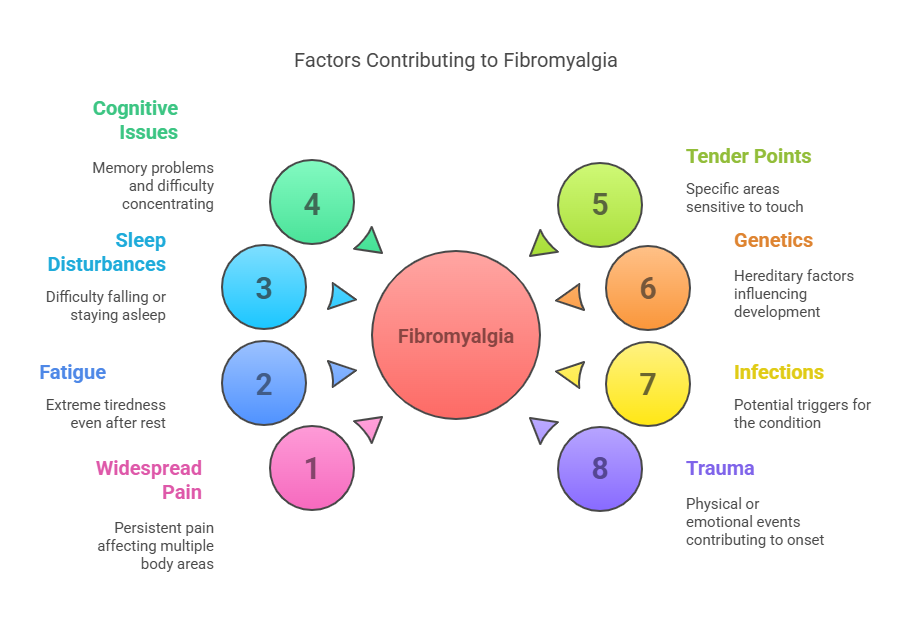
The exact cause of fibromyalgia is still being researched, but factors such as genetics, infections, and physical or emotional trauma are believed to contribute to its development. It’s also thought that the brain and spinal cord of individuals with fibromyalgia may process pain differently, amplifying sensations that would normally be mild or unnoticed.
Diagnosis/Tests
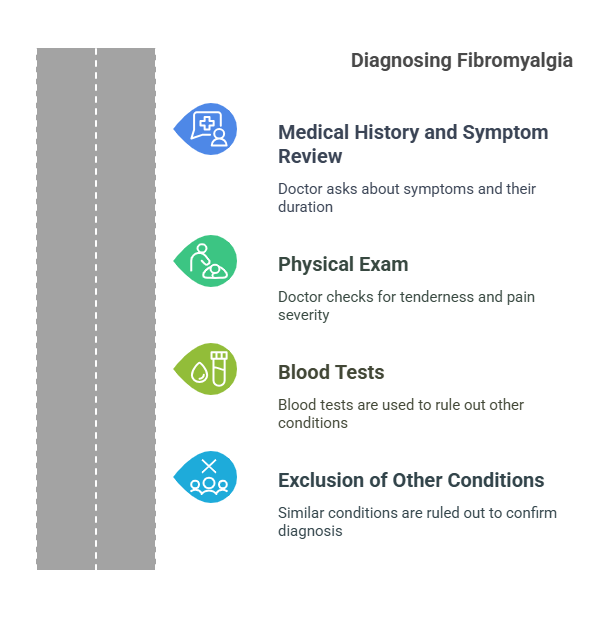
Diagnosing fibromyalgia can be challenging because its symptoms overlap with many other conditions, and there’s no specific test for it. Doctors typically rely on a combination of physical exams, medical history, and ruling out other possible conditions. The process includes:
- Medical History and Symptom Review: The doctor will ask about your symptoms, their duration, and any factors that might trigger or alleviate the pain. The hallmark of fibromyalgia is widespread pain lasting for at least three months.
- Physical Exam: A physical exam helps identify areas of tenderness and assess the severity of pain. Doctors may apply pressure to tender points to see if they cause discomfort, though this test is now less commonly used in diagnosing fibromyalgia.
- Blood Tests: While no specific blood tests exist to diagnose fibromyalgia, doctors may use blood tests to rule out other conditions that cause similar symptoms, such as autoimmune diseases, thyroid disorders, or infections.
- Exclusion of Other Conditions: Fibromyalgia is often diagnosed by a process of elimination. Conditions such as rheumatoid arthritis, lupus, and chronic fatigue syndrome share similar symptoms and must be ruled out to confirm the diagnosis of fibromyalgia.
Given that fibromyalgia symptoms can vary greatly, an accurate diagnosis is key to developing an effective treatment plan.
Management/Treatment
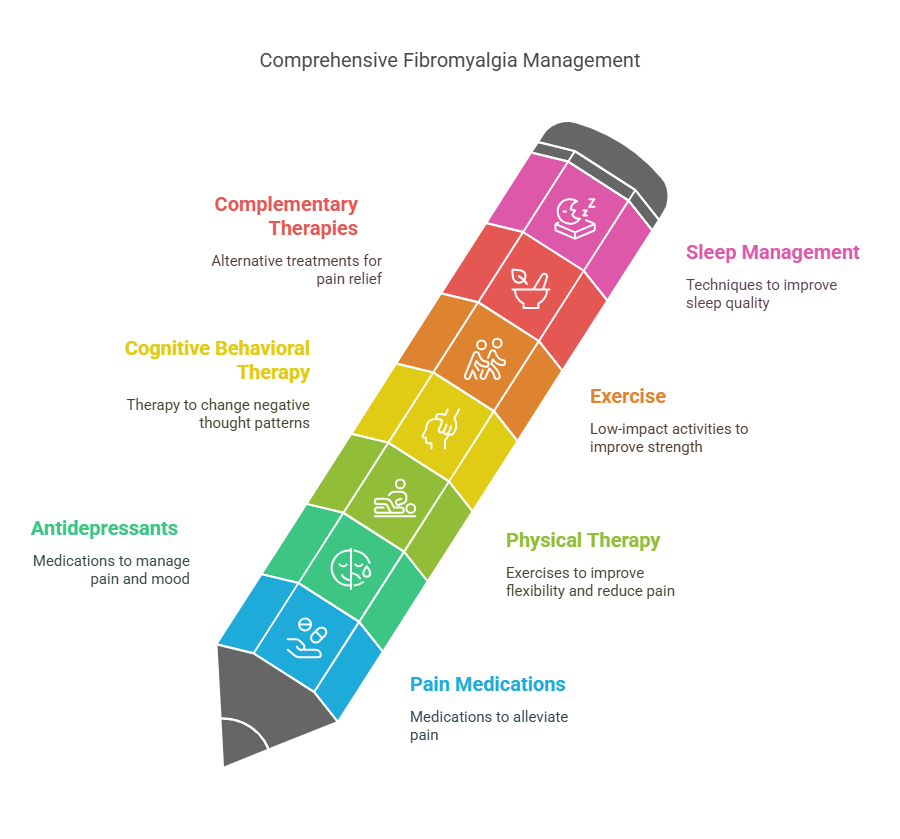
While there is no cure for fibromyalgia, a combination of therapies can help manage the symptoms and improve quality of life. Treatment is highly individualized and may include:
- Pain Medications: Over-the-counter pain relievers like ibuprofen or acetaminophen can help with mild pain. For more severe symptoms, doctors may prescribe stronger medications, such as tramadol or medications designed for nerve pain, like pregabalin or duloxetine.
- Antidepressants: Some antidepressants, such as amitriptyline and duloxetine, are used to help manage pain and improve sleep quality. These medications can help balance chemicals in the brain that influence pain perception and mood.
- Physical Therapy: A physical therapist can design a program of gentle stretching and strengthening exercises to reduce pain and improve flexibility. Regular movement can also help alleviate stiffness and improve overall function.
- Cognitive Behavioral Therapy (CBT): CBT is a form of therapy that helps individuals change negative thought patterns and develop coping strategies. It has been shown to be effective in managing both the physical and emotional aspects of fibromyalgia, including stress and anxiety.
- Exercise: Low-impact exercises, such as walking, swimming, or yoga, can improve strength, flexibility, and endurance, while also reducing pain. It’s important to start slowly and gradually increase activity levels to avoid flare-ups.
- Complementary Therapies: Alternative treatments such as acupuncture, massage therapy, and chiropractic care can offer additional pain relief and relaxation. Many people with fibromyalgia find these therapies helpful in managing their symptoms.
- Sleep Management: Addressing sleep issues is crucial in managing fibromyalgia. Techniques such as maintaining a consistent sleep schedule, creating a relaxing bedtime routine, and reducing caffeine and alcohol intake can improve sleep quality.
A comprehensive treatment plan that incorporates both medical interventions and lifestyle changes is the most effective way to manage fibromyalgia.
Prevention
Since the exact cause of fibromyalgia is not fully understood, there is no surefire way to prevent it. However, certain practices can help reduce the risk of flare-ups and manage symptoms:
- Manage Stress: Chronic stress can worsen fibromyalgia symptoms, so adopting stress-reducing practices like mindfulness, meditation, or deep-breathing exercises can help.
- Regular Physical Activity: Engaging in regular, gentle exercise can help keep muscles strong and flexible, which can reduce pain and improve overall well-being.
- Balanced Diet: Eating a healthy diet rich in anti-inflammatory foods, such as fruits, vegetables, and omega-3 fatty acids, may help reduce inflammation and manage pain.
- Adequate Sleep: Ensuring you get enough restorative sleep is crucial for managing fibromyalgia. Good sleep hygiene, such as a consistent bedtime routine and a cool, dark sleeping environment, can help improve sleep quality.
- Avoid Overexertion: Pacing yourself and listening to your body is important in managing fibromyalgia. Avoiding overexertion and taking breaks throughout the day can help prevent flare-ups and fatigue.
Outlook/Prognosis
The outlook for individuals with fibromyalgia can vary, but with the right treatment and support, many people are able to lead active, fulfilling lives. While the condition is chronic, its symptoms can be managed effectively with a combination of medical treatments, physical activity, and stress management.
It’s important for individuals with fibromyalgia to work closely with their healthcare providers to develop a personalized treatment plan that addresses both the physical and emotional aspects of the condition. Support from loved ones, a strong self-care routine, and a positive mindset can also go a long way in improving the quality of life for those living with fibromyalgia.